Showing posts with label disease: rheumatoid arthritis. Show all posts

Wednesday, December 30, 2009

Arthritis

Arthritis

by Djehuty Ma'at-Ra
LINK TO FULL ARTICLE BELOW

Most modern day suffers of arthritis (and tendonitis and gout) are fighting the symptoms of these inflammatory diseases with pharmaceutical grade drugs. Even though God instructed Bible believers to heal themselves with herbs (Revelations 22:2, Ezekiel 47:12, and Pslams 104:14), in their strange obedience to God, they take the enemy's pharmaceutical drugs that prolong the arthritis. Why and how? Because pharmaceutical grade drugs, though made from alkaloids, eventually break down into ACID (especially ascetic acid, which eats your red blood cells up) in the body, and acid produces inflammation, so how intelligent is it to take something to target the symptom which eventually lengthens and worsen the initial condition?
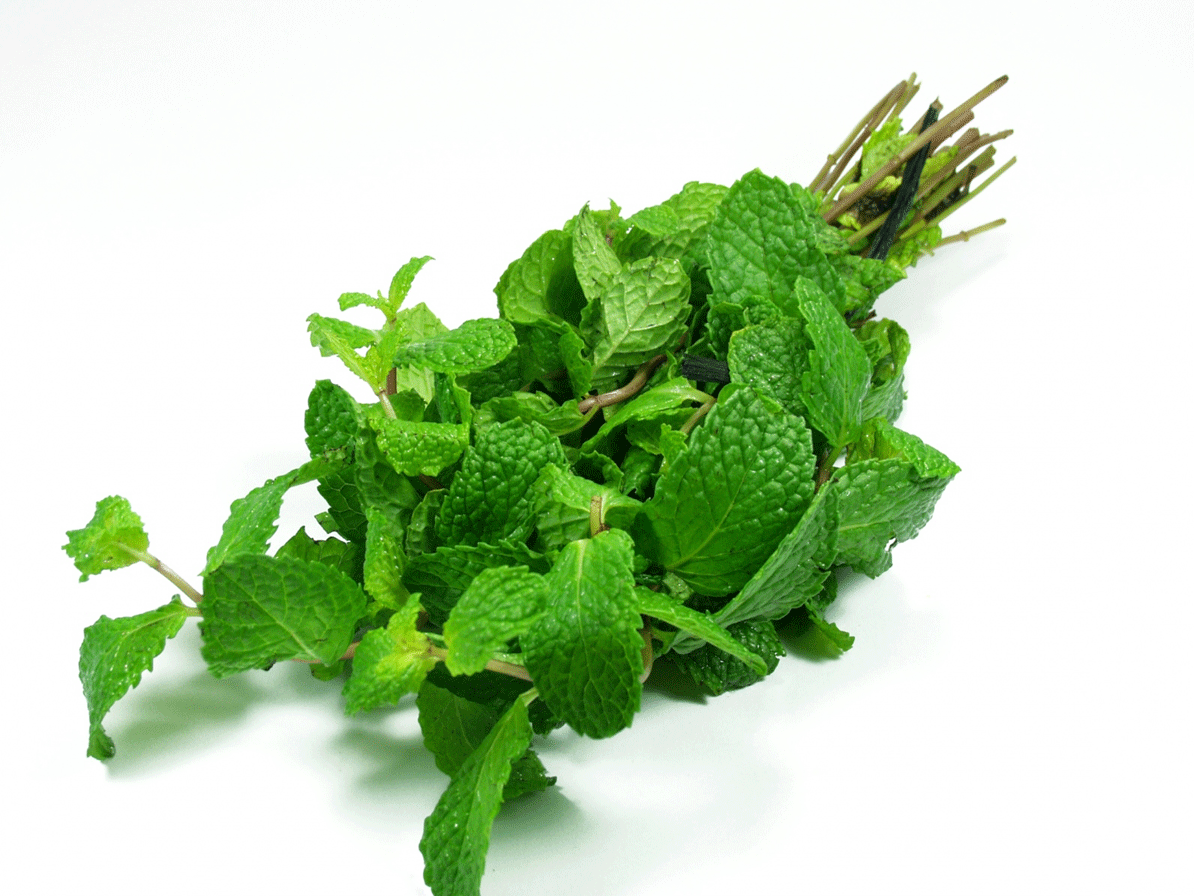
Mother Nature has provided healing for arthritis and other inflammatory diseases. To heal from arthritis, all one needs to consume is certain herbs. Herbs that are anti-inflammatory in nature are the best to heal from arthritis. These herbs include Meadowsweet, Peppermint, Wintergreen, Birch, White and Black Willow Bark and Balm of Gilead.

However, other certain herbs work synergistically with the herbs supra. Personally, no healing from arthritis can take place efficiently without the following herbs: Devil's Claw, Boswellia (Frankincense), Uva Ursi, Mullein leaves, Saffron, Cayenne pepper, Feverfew, and Guaiac wood.

Devil's Claw, Boswellia, Uva Ursi, and Mullein are the paramount arthritis herbs. They greatly counteract mucus, which is the byproduct of acid, which causes inflammation.

Organic sulfur, commonly called MSM Sulfur, is also great in healing arthritis. So is Noni juice!

You can make your own healing salve as well from a base butter or oil such as shea or cocoa butter, coconut, olive, or almond oil (or any other good oil) and add in a few drops (10-15 drops) of the following essential oils: Peppermint, Clove, Wintergreen, Eucalyptus, Birch, and/or Spearmint.

You can rub this salve directly on your joints or other problems area. It is very soothing and healing.

And of course, as an herbalist, I have formulated my own Joint Formula that consists of all the herbs mentioned above that is a powerful little formula that works wonders for me when my wrists start to hurt from excessive typing (typing up all that legal pleading).

I can't forget about magnet therapy as well for arthritis. Magnets make a problem or injured area alkaline and also enhances circulation to the problem area so that healing can begin.

I should also mention the importance of pineapple enzymes called Bromelain for the healing of arthritis and other acid conditions. Bromelain or pineapple enzymes are anti-inflammatory in nature and effect and therefore provide healing for arthritis. They taste just like candy and are chewable and you can chew as much as you like, although 3-6 tablets after dinner ought to get the job done. You can find Bromelain at most good health food stores.

Soaking inflamed body parts in hot water and essential oils of Peppermint and Eucalyptus is also beneficial for arthritis.

But most importantly in fighting arthritis is modified diet. Cut out or cut down on meat and dairy products. These are two of the biggest culprits in causing arthritis. A vegetable cocktail consisting of celery, parsley, apple and/or carrot (for sweetness and base) 3-4 times weekly will greatly remove acid buildup in the joints. By all means, avoid all acidic beverages (beer, soda pop, milk, orange juice, wine, coffee, etc.).

Please read this excellent article and many others at: http://www.dherbs.com/articles/causes-arthritis-34.html

Thursday, January 22, 2009

Can a gluten-free vegan diet help people with rheumatoid arthritis?

Can a gluten-free vegan diet help people with rheumatoid arthritis?
From the BMJ Group
Thursday 20 March 2008

http://www.guardian.co.uk/lifeandstyle/besttreatments/2008/mar/20/can-a-glutenfree-vegan-diet-help-people-with-rheumatoid-arthritis/print
http://www.guardian.co.uk/lifeandstyle/besttreatments/2008/mar/20/can-a-glutenfree-vegan-diet-help-people-with-rheumatoid-arthritis

You may have read reports of a study that showed a vegan diet can be helpful for people with rheumatoid arthritis. But is it true? There are lots of problems with the way the study was carried out, and the results are far from clear.
What do we know already?

Rheumatoid arthritis is a painful condition that causes stiffness and swelling in your joints. It happens because of a problem with your immune system. Your immune system fights infections in your body, but if you have rheumatoid arthritis, it also attacks healthy tissue in your joints. People with rheumatoid arthritis have a higher risk of heart attacks and strokes.

There are lots of treatments for rheumatoid arthritis. Many people take ibuprofen or a similar drug to help with pain and swelling. Other drugs can be used to slow down the damage to your joints.

There has been a lot of interest in whether eating particular types of food can help with the symptoms of arthritis. One small study suggests a Mediterranean diet, which includes lots of fruit, vegetables and fish and little meat, might help reduce the joint pain people get from rheumatoid arthritis. Researchers have also studied fish oil and vegetarian diets.

Researchers have now done a study looking at whether a vegan, gluten-free diet could help people with rheumatoid arthritis. A vegan diet involves no animal products of any kind. Gluten is found in wheat and some other cereals. Avoiding gluten means cutting out most types of bread, pasta, pizza, pastry and cakes. In the study, one group followed this strict diet, while another group followed a healthy, balanced diet that wasn't vegan.

All the people in the study carried on taking their usual medicines for rheumatoid arthritis.
What does the new study say?

People in the study who ate the vegan, gluten-free diet lost some weight. But as they were normal weight to begin with, we don't know if that's a good thing. They also saw very small drops in their cholesterol levels, compared to the start of the study.

They had a slightly higher amount of a natural antibody that helps fight the damage caused by rheumatoid arthritis. But we don't know what, if any, effect this had on the disease.

The researchers didn't look at whether the people on the diet had less pain or joint damage from rheumatoid arthritis. So we don't know if it had any effect on the main problems from the disease.

It's also obvious from the study that a vegan, gluten-free diet is very hard to stick to. Out of 38 people who tried the diet, eight gave up within three months. Another eight dropped out before the end of the study, which lasted a year. And this was despite having a week of training about how to prepare vegan food, and continuing support from doctors, nurses and dietitians. No-one dropped out of the study from the group who were asked to eat a balanced, non-vegan diet.
Where does the study come from?

The study was done by researchers from the Rheumatology Unit at Karolinska University Hospital in Stockholm, Sweden. It appeared in the journal Arthritis Research and Therapy, published by a company called BioMed Central.
How reliable are the findings?

This study has a number of problems that make it hard to rely on the findings. It was a small study, and only looked at 66 people to start with. Of these, 16 people who were supposed to eat a vegan diet dropped out before the end of the study.

The researchers only looked at the results of the people who didn't drop out. This means that they ignored results for all the people who found the diet hard to stick to, or perhaps had to stop the diet for health reasons.

The researchers compared the weights and cholesterol levels of the two groups against their figures at the start of the study, not against the other group. This makes it hard to draw conclusions about whether one diet worked better than the other.
What does this mean for me?

Rheumatoid arthritis is a painful condition, and it's only natural to consider anything that might help. But this study is a long way from proving that a gluten-free or vegan diet can help with rheumatoid arthritis. The most the researchers could say was that there's a "potential" benefit.
What should I do now?

There's no need to make drastic changes to your diet as a result of this study. It doesn't show that a vegan diet helps people with rheumatoid arthritis.

And strict diets, like a vegan diet, can make it hard to get all the nutrients your body needs. It's a good idea to talk to a doctor or dietitian before making big changes to what you eat, especially if you plan to completely cut out particular foods.

The Food Standards Agency (FSA), which advises on food safety in the UK, says vegans need to take special care that they get enough:

* Protein (found in beans, lentils and soya products)
* Iron (from green vegetables)
* Selenium (from nuts, especially brazils)
* Vitamin B12 (from yeast extract, bread or fortified breakfast cereals).

It's important to remember that the people in the study were taking medicines for arthritis as well as eating a vegan diet. The research doesn't suggest that a diet can be used instead of drugs. Not getting the right medicines for rheumatoid arthritis can mean you're in pain, and also mean more damage to your joints.

If you have rheumatoid arthritis and your treatment isn't helping, make an appointment to see your doctor. Changing the drug or drugs you're taking may help to reduce your symptoms.
From:

Elkan A, Sjoberg B, Kolsrud B, et al. Gluten-free vegan diet induces decreased LDL and oxidized LDL levels and raised atheroprotective natural antibodies against phosphorylcholine in patients with rheumatoid arthritis: a randomized study. Arthritis Research and Therapy. 2008; 10: R34.

Monday, October 27, 2008

Rheumatoid Arthritis Rising Among US Women

Rheumatoid Arthritis Rising Among U.S. Women
Cases have increased since the mid-1990s, study shows
Posted October 27, 2008

Source: usnews.com

MONDAY, Oct. 27 (HealthDay News) -- The number of American women with rheumatoid arthritis (RA) is growing again after four decades of decline, according to a Mayo Clinic study.

The researchers tracked 350 adult patients, averaging 56.5 years of age, from Olmsted County, Minn. Of those patients, 69 percent were women.
Related News

* Video: Health News & Features
* Join a Discussion
* More from Health

In the United States, the incidence of RA had steadily declined from 1955 to 1994. But that changed in the mid-1990s, the study found. The Mayo researchers' analysis of data from early 1995 to the start of 2005 revealed that both the incidence and prevalence of RA were rising.

During those 10 years, the incidence of RA among women increased to 54 per 100,000, compared to 36 per 100,000 in the previous 10 years. The incidence of RA among men remained at about 29 per 100,000.

The rate of RA in the overall population increased from 0.85 percent to 0.95 percent.

The reason for the increase isn't clear, but environmental factors may play a role in the rise of the joint disease among women, the researchers suggested.

The study was to be presented at the annual meeting of the American College of Rheumatology/Association of Rheumatology Health Professionals, in San Francisco.

More information

The Arthritis Foundation has more about rheumatoid arthritis.
Related Posts with Thumbnails