Sunoco Will Stop Selling Bisphenol A For Use In Children's Food Products
The oil and chemical giant is the first manufacturer to acknowledge health concerns. The FDA still has not
by Dan Shapely
3.13.2009
http://www.thedailygreen.com/print-this/environmental-news/latest/bisphenol-a-47031302
http://www.thedailygreen.com/environmental-news/latest/bisphenol-a-47031302?src=nl&mag=tdg&list=dgr&kw=ist
Sunoco will stop selling Bisphenol A for use in food packaging that goes to children and babies.
Just a week after six more companies said they'd stop selling baby bottles and other products for young children if they will stop selling baby bottles and other products for babies that are made with Bisphenol A, one company that makes the controversial chemical pledged not to sell it for use in any food product for children.
Sunoco, in a letter to investors, has said it will stop selling Bisphenol A to customers who use it in packaging for children's foods, according to yet another groundbreaking report in the Milwaukee Journal Sentinel, where watchdog reporters Meg Kissinger and Susanne Rust have been exposing how harmful and suspect chemicals continue to be used widely, in the absence of effective government regulation.
The chemical industry as a whole is still standing behind Bisphenol A, and the Food and Drug Administration, which regulates its use, has to date relied on industry studies, rather than peer-reviewed independent science in affirming the chemical's supposed safety.
Canada has banned Bisphenol A in many products for babies and young children, and Suffolk County, N.Y. could become the first U.S. government to do so. The National Toxicology Program has raised concerns about Bisphenol A's potential to disrupt the normal development of fetuses and babies, and the Environmental Protection Agency has been criticized for failing to consider the cumulative effect of hormone-disrupting chemicals that Americans are routinely exposed to.
Showing posts with label toxin: Bisphenol A. Show all posts
Showing posts with label toxin: Bisphenol A. Show all posts
Saturday, March 14, 2009


Thursday, October 23, 2008
Consuming Acrylamides Boost Kidney Cancer Rate by 59 percent
Consuming Acrylamides Boosts Kidney Cancer Rate by 59 Percent
by David Gutierrez
Source: Natural News - Consuming Acrylamides Boosts Kidney Cancer Rate by 59 Percent
(NaturalNews) According to a new study conducted by researchers from the Netherlands, consuming high levels of acrylamide increases people's risk of kidney cancer by 59 percent,
Kidney cancer is the tenth most common cancer in the world. According to Marji McCullough, a nutritional epidemiologist for the American Cancer Society, smoking and obesity are well-known risk factors for the disease.
"It's best not to smoke and to maintain an ideal body weight," McCullough said. "One way to maintain a healthy body weight is a healthy diet."
But increasing evidence is emerging that dietary factors may also play a role.
Acrylamide is found in coffee and in starchy foods like grains and potatoes that have been baked, fried, roasted or toasted. It has been classified as a probable human carcinogen by the International Agency for Research on Cancer since 1994, due to its documented genotoxic and carcinogenic effects in laboratory animals.
In the most recent study, researchers looked directly at the effects of dietary acrylamide on cancer risk by studying data from the Netherlands Cohort Study on diet and cancer, which includes more than 120,000 adult female and male participants between the ages of 55 and 69. Researchers from Maastricht University, the Dutch Food and Consumer Product Safety Authority, and TNO Quality of Life calculated the dietary acrylamide intake of 5,000 random participants, based on food frequency questionnaires filled out when the cohort study began.
The results are presented in the article "Dietary acrylamide intake and the risk of renal cell, bladder, and prostate cancer" by J.G. Hogervorst, L.J. Schouten, E.J. Konings, R.A. Goldbohm, P.A. van den Brandt, published in the American Journal of Clinical Nutrition (May 2008, Volume 87, Number 5, pp. 1428-1438).
The researchers found that after 13.3 years, those who had the highest dietary acrylamide intake experienced a 59 percent higher risk of renal cell carcinoma than those with the lowest intake. Renal cell carcinoma is responsible for more than 80 percent of kidney cancer cases.
"We found some indications for a positive association between dietary acrylamide and renal cell cancer risk," the researchers wrote.
A total of 339 cases of kidney cancer, 1,210 cases of bladder cancer and 2,246 cases of prostate cancer were observed among study participants. The researchers did not observe any connection between acrylamide intake and cancer of the bladder or prostate.
The highest average acrylamide intake was 40.8 micrograms per day, while the lowest was 9.5 micrograms per day. Average intake was 21.8 micrograms per day, or slightly less than the amount found in a 2.5-ounce serving of French fries. Every 10 microgram increase in daily intake appeared to increase a person's risk of kidney cancer by 10 percent. Among smokers, the effect of dietary intake was even stronger.
Coffee was the biggest source of dietary acrylamide for the study participants. Among participants in the group with the highest average intake, however, the biggest source was a popular baked snack called Dutch spiced cake.
Prior to 2002, acrylamide was known only as an industrial chemical that consumers might be exposed to through cigarette smoke, cosmetics or the breakdown of certain environmental contaminants such as the herbicide glyphosate (Roundup). Then researchers from the Swedish Food Administration discovered that the chemical also formed at high levels in many popular foods, such as potato chips and bread. Since then, research has suggested that it may also form in dried fruit.
Although acrylamide is generally accepted to pose health risks in humans, some researchers have questioned whether typical dietary intakes are actually high enough to have an effect. The recent study is only one of the latest to suggest that dietary intake is indeed a significant source of exposure to the chemical.
In earlier research conducted by the same team of scientists, also using data from the Netherlands Cohort Study, dietary acrylamide was found to increase women's risk of ovarian cancer by 78 percent and their risk of endometrial cancer (in the lining of the uterus) by 29 percent. Among women who had never smoked, the increase in risk was much higher: 122 percent for ovarian cancer and 99 percent for endometrial cancer.
Researcher J.G. Hogervorst recommended that people limit their acrylamide intake, including from their diet.
"In preparing food at home, fry potatoes at temperatures below 175 degrees Celsius [347 degrees Fahrenheit] and fry them to gold-yellow, not dark brown," Hogervorst said. "The same goes for making toast and cookies."
The darker a food is fried or baked, the more acrylamide it contains. Foods that are steamed or boiled do not contain acrylamide.
Sources for this story include: www.washingtonpost.com, www.foodnavigator-usa.com ;
by David Gutierrez
Source: Natural News - Consuming Acrylamides Boosts Kidney Cancer Rate by 59 Percent
(NaturalNews) According to a new study conducted by researchers from the Netherlands, consuming high levels of acrylamide increases people's risk of kidney cancer by 59 percent,
Kidney cancer is the tenth most common cancer in the world. According to Marji McCullough, a nutritional epidemiologist for the American Cancer Society, smoking and obesity are well-known risk factors for the disease.
"It's best not to smoke and to maintain an ideal body weight," McCullough said. "One way to maintain a healthy body weight is a healthy diet."
But increasing evidence is emerging that dietary factors may also play a role.
Acrylamide is found in coffee and in starchy foods like grains and potatoes that have been baked, fried, roasted or toasted. It has been classified as a probable human carcinogen by the International Agency for Research on Cancer since 1994, due to its documented genotoxic and carcinogenic effects in laboratory animals.
In the most recent study, researchers looked directly at the effects of dietary acrylamide on cancer risk by studying data from the Netherlands Cohort Study on diet and cancer, which includes more than 120,000 adult female and male participants between the ages of 55 and 69. Researchers from Maastricht University, the Dutch Food and Consumer Product Safety Authority, and TNO Quality of Life calculated the dietary acrylamide intake of 5,000 random participants, based on food frequency questionnaires filled out when the cohort study began.
The results are presented in the article "Dietary acrylamide intake and the risk of renal cell, bladder, and prostate cancer" by J.G. Hogervorst, L.J. Schouten, E.J. Konings, R.A. Goldbohm, P.A. van den Brandt, published in the American Journal of Clinical Nutrition (May 2008, Volume 87, Number 5, pp. 1428-1438).
The researchers found that after 13.3 years, those who had the highest dietary acrylamide intake experienced a 59 percent higher risk of renal cell carcinoma than those with the lowest intake. Renal cell carcinoma is responsible for more than 80 percent of kidney cancer cases.
"We found some indications for a positive association between dietary acrylamide and renal cell cancer risk," the researchers wrote.
A total of 339 cases of kidney cancer, 1,210 cases of bladder cancer and 2,246 cases of prostate cancer were observed among study participants. The researchers did not observe any connection between acrylamide intake and cancer of the bladder or prostate.
The highest average acrylamide intake was 40.8 micrograms per day, while the lowest was 9.5 micrograms per day. Average intake was 21.8 micrograms per day, or slightly less than the amount found in a 2.5-ounce serving of French fries. Every 10 microgram increase in daily intake appeared to increase a person's risk of kidney cancer by 10 percent. Among smokers, the effect of dietary intake was even stronger.
Coffee was the biggest source of dietary acrylamide for the study participants. Among participants in the group with the highest average intake, however, the biggest source was a popular baked snack called Dutch spiced cake.
Prior to 2002, acrylamide was known only as an industrial chemical that consumers might be exposed to through cigarette smoke, cosmetics or the breakdown of certain environmental contaminants such as the herbicide glyphosate (Roundup). Then researchers from the Swedish Food Administration discovered that the chemical also formed at high levels in many popular foods, such as potato chips and bread. Since then, research has suggested that it may also form in dried fruit.
Although acrylamide is generally accepted to pose health risks in humans, some researchers have questioned whether typical dietary intakes are actually high enough to have an effect. The recent study is only one of the latest to suggest that dietary intake is indeed a significant source of exposure to the chemical.
In earlier research conducted by the same team of scientists, also using data from the Netherlands Cohort Study, dietary acrylamide was found to increase women's risk of ovarian cancer by 78 percent and their risk of endometrial cancer (in the lining of the uterus) by 29 percent. Among women who had never smoked, the increase in risk was much higher: 122 percent for ovarian cancer and 99 percent for endometrial cancer.
Researcher J.G. Hogervorst recommended that people limit their acrylamide intake, including from their diet.
"In preparing food at home, fry potatoes at temperatures below 175 degrees Celsius [347 degrees Fahrenheit] and fry them to gold-yellow, not dark brown," Hogervorst said. "The same goes for making toast and cookies."
The darker a food is fried or baked, the more acrylamide it contains. Foods that are steamed or boiled do not contain acrylamide.
Sources for this story include: www.washingtonpost.com, www.foodnavigator-usa.com ;
Wednesday, October 1, 2008
CANNED FOODS ARE NOT SAFE TO EAT
Are Canned Foods Safe? What are Their Potential Risks and Healthier Options Instead?
by www.SixWise.com
Ever since 1812, when the first canning facility opened in the United States and began canning everything from oysters to meats to fruits and vegetables, canned foods have become a mainstay of American life.
|
Canned goods have been treasured for their convenience and shelf life for nearly two centuries! |
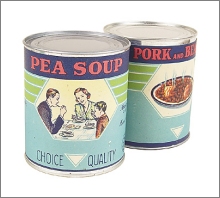
No one can deny that they're convenient, economical and handy to have on hand for a last-minute dinner, but are canned foods really safe, or ideal?
Well, many health advocates say that fresh foods are best, followed by frozen and bringing up the rear are canned goods. Why? Largely because of the heat involved in the processing, and the potential toxins in the cans themselves.
What Does High Heat do to Canned Foods?
When a food is packed into a can, it is then heated to an extreme temperature to kill all known microorganisms. There is some debate as to what extent this form of pasteurization degrades nutrients and destroys enzymes in the food, but it is known to destroy at least some.
According to the U.S. Food and Drug Administration (FDA), "The heating process during canning destroys from one-third to one-half of vitamins A and C, riboflavin, and thiamin. For every year the food is stored, canned food loses an additional 5 to 20% of these vitamins. However, the amounts of other vitamins are only slightly lower in canned food than in fresh food."
The argument for canned food proponents is that canned facilities are usually just a few miles from the point of harvest, meaning foods are canned quite quickly after being picked. Fresh foods, meanwhile, may lose nutrients as they sit in shipping warehouses and during transportation.
"Most produce will begin to lose some of its nutrients when harvested. When produce is handled properly and canned quickly after harvest, it can be more nutritious than fresh produce sold in stores," says the FDA. "When refrigerated, fresh produce will lose half or more of some of its vitamins within 1 to 2 weeks. If it's not kept chilled or preserved, nearly half of the vitamins may be lost within a few days of harvesting. For optimum nutrition, it is generally recommended that a person eat a variety of foods."
|
Like canned foods, soda cans also typically contain BPA in their lining. |

The Known Downside to Canned Foods
Assuming that many nutrient levels in canned foods are similar to fresh ones, why might you STILL want to opt for fresh or frozen over canned? Because of Bisphenol A (BPA).
BPA is a chemical used in countless plastic food and beverage containers, including plastic bottles and also the linings of most tin cans and soda cans. Not only has BPA been linked to fertility and reproductive problems and cancer, but recently it was also linked to an increased risk of heart disease, diabetes and liver disease.
Companies began using BPA in metal can linings in the 1950s and 1960s, and now there is widespread concern that chronic exposure to low doses of the chemical is causing serious health problems.
The FDA estimates that 17 percent of the U.S. diet is composed of canned foods, yet there are currently no government safety standards limiting the amount of BPA in canned food. However, a study by the Environmental Working Group (EWG) found some concerning findings.
| Keep Your Healthy Fruits and Veggies Fresh Longer! Once you invest in fresh produce for the health of your family, protect your investment using the MiniMate Refrigerator Unit. The MiniMate deodorizes (replacing baking soda boxes in the fridge) and kills potentially dangerous food-borne bacteria. This extends the freshness and life of many foods 3 to 4 times longer! Plus, the MiniMate:
|

The group contracted a national analytic laboratory to test 97 cans of food purchased at three major chain supermarkets in the United States. Thirty brands of food were tested, including varieties such as soda, canned tuna, peaches, pineapples, green beans, corn, infant formula and tomato and chicken noodle soups. What did they find?
-
One in 10 cans of food tested -- and one in three cans of infant formula -- contained enough BPA in a single serving to expose a woman or infant to BPA levels more than 200 times the government's traditional safe level of exposure for industrial chemicals.
-
Among the worst foods tested -- chicken soup, infant formula and ravioli -- just one to three servings of the food contained levels of BPA that caused serious adverse effects in animal tests.
-
The bulk of BPA exposure definitely comes from food," says Jovana Ruzicic, a spokesperson for the Environmental Working Group.
As an aside, many canned goods also contain additives such as MSG, artificial flavors, preservatives, salt and artificial colors.
What are Your Options for Truly Safe Food?
If you choose to limit canned foods in your diet either because of nutrient concerns or the potential of toxic BPA, there are many other options. The top tips include:
-
Choose fresh produce that's locally grown. This way the produce is just-picked and the nutrients are still at their peak. To keep your produce fresher, longer, simply put a MiniMate Refrigerator Unit in your fridge (it keeps food fresh for three to four times longer than normal!).
-
Choose glass instead of cans. Many popular canned foods, such as soup, beans, soda and more, are available in glass jars or bottles.
-
Choose frozen veggies instead of canned varieties. They're just as convenient, without the plastic tin-can linings.
-
If you do buy canned foods, try to buy organic varieties and always read labels. Watch out for excess amounts of salt, sugar, corn syrup or any artificial ingredients and preservatives.
Recommended Reading
Warning: Diabetes, Liver, and Heart Disease Linked to Everyday Plastics What's Your Exposure Level?!
12 Dangerous Food Additives: The Dirty Dozen Food Additives You Really Need to be Aware Of
Sources
Environmental Working Group March 5, 2007
Subscribe to:
Posts (Atom)