The Best Form of Exercise to Improve Your Mood?
by www.SixWise.com
Exercise is a well-known natural mood booster. You’ve heard of a “runner’s high”? This refers to the euphoric feeling many people get after a challenging run … and research has confirmed that, indeed, endorphins -- your brain’s feel-good, pain-relieving chemicals -- are produced during running.
What’s more, those endorphins attach to areas of your brain associated with emotions, including the intense, positive emotions experienced during love affairs. So the runner’s high is not just a myth … it’s a very real mood boost that runners and other active exercisers get to experience.
But as intense as a runner’s high can be, it may pale in comparison to the mood boost offered by another type of exercise … yoga.
Yoga May Boost Your Mood Better Than Any Other Type of Exercise
A new study has revealed that yoga increases the levels of gamma-aminobutyric acid (GABA) in your brain. GABA helps to regulate nerve activity and lower levels are linked to mood and anxiety disorders. Drugs that increase GABA activity are used to treat anxiety and improve mood … and it appears yoga may help to increase GABA activity, offering potential antidepressant benefits, naturally.
In fact, yoga was found to boost mood better than walking and other forms of exercise,
"This is important work that establishes some objective bases for the effects that highly trained practitioners of yoga therapy throughout the world see on a daily basis …,” Kim A. Jobst, editor-in-chief of The Journal of Alternative and Complementary Medicine, told Science Daily.
Please read the full article:
http://www.sixwise.com/Newsletters/2010/December/01/The-Best-Form-of-Exercise-to-Improve-Your-Mood.htm
Showing posts with label heal: exercise heals you. Show all posts
Showing posts with label heal: exercise heals you. Show all posts
Sunday, December 5, 2010


Monday, May 10, 2010
Exercise can forestall osteoporosis
Exercise can forestall osteoporosis
04/29/10
The stage for osteoporosis is set well before menopause--but exercise can help rewrite the script, according to Medical College of Georgia researchers.
Declining estrogen levels have long been associated with osteoporosis, but bone density starts to decline years before these levels drop, according to Dr. Joseph Cannon, Kellet Chair in Allied Health Sciences and principal investigator of the National Institute of Aging-funded study. It's during that time that levels of follicle-stimulating hormone, released by the pituitary gland to help regulate ovarian function, actually increase.
...
Additionally, they found that study participants who exercised more than 180 minutes a week retained greater bone density.
Continue Reading: http://www.vegsource.com/news/2010/04/exercise-can-forestall-osteoporosis.html
Share this on Facebook: Share
04/29/10
The stage for osteoporosis is set well before menopause--but exercise can help rewrite the script, according to Medical College of Georgia researchers.
Declining estrogen levels have long been associated with osteoporosis, but bone density starts to decline years before these levels drop, according to Dr. Joseph Cannon, Kellet Chair in Allied Health Sciences and principal investigator of the National Institute of Aging-funded study. It's during that time that levels of follicle-stimulating hormone, released by the pituitary gland to help regulate ovarian function, actually increase.
...
Additionally, they found that study participants who exercised more than 180 minutes a week retained greater bone density.
Continue Reading: http://www.vegsource.com/news/
Share this on Facebook: Share
Tuesday, August 18, 2009
Exercise May Beat Fatigue in Prostate Cancer
Exercise May Beat Fatigue in Prostate Cancer
By Amy Norton Link to full article below
NEW YORK (Reuters Health) - Staying active through moderate walking may
help prevent fatigue in men undergoing radiation therapy for prostate
cancer, a UK study shows.
Cancer patients commonly develop fatigue as the stress of the illness and
the physical effects of treatment take their toll. It's common for
patients undergoing treatment to be told to take it easy, and some may
self-impose limits on their daily activities, according to the study's
lead author Dr. Phyllis M. Windsor.
But in her team's study of 66 men with cancer confined to the prostate
gland, those who were physically active during their month of radiation
treatment showed no substantial increase in fatigue. The same was not true
of patients in the non-exercising "control" group, according to findings
published in the August issue of the journal Cancer.
To read the full article: http://story.news.yahoo.com/news?tmpl=story2&u=/nm/20040818/hl_nm/cancer_prostate_dc
******************************************************
If you enjoyed this, would you please make a donation?
Even $1 or $5 helps us to serve you.

By Amy Norton Link to full article below
NEW YORK (Reuters Health) - Staying active through moderate walking may
help prevent fatigue in men undergoing radiation therapy for prostate
cancer, a UK study shows.
Cancer patients commonly develop fatigue as the stress of the illness and
the physical effects of treatment take their toll. It's common for
patients undergoing treatment to be told to take it easy, and some may
self-impose limits on their daily activities, according to the study's
lead author Dr. Phyllis M. Windsor.
But in her team's study of 66 men with cancer confined to the prostate
gland, those who were physically active during their month of radiation
treatment showed no substantial increase in fatigue. The same was not true
of patients in the non-exercising "control" group, according to findings
published in the August issue of the journal Cancer.
To read the full article: http://story.news.yahoo.com/
If you enjoyed this, would you please make a donation?
Even $1 or $5 helps us to serve you.
Tuesday, June 30, 2009
Top 5 Time-Saving Workout Moves
Top 5 Time-Saving Workout Moves
http://life.gaiam.com/gaiam/p/SHAPEs-Top-5-TimeSaving-Workout-Moves.html
http://life.gaiam.com/gaiam/p/SHAPEs-Top-5-TimeSaving-Workout-Moves.html
Thursday, June 4, 2009
Getting Enough Exercise Is Easier than You Think
Getting Enough Exercise Is Easier than You Think
A new Gallup poll shows most of us lack motivation to exercise even though we know it’s important.
Start with walking, which has the lowest dropout rate of any form of exercise. Stick to your plan with friends, or even gamble on your chances with a new online resource
By Emily Main
05-29-09
http://www.rodale.com/print/1020
http://www.rodale.com/staying-motivated-exercise?cm_mmc=DailyNewsNL-_-2009_05_29-_-Top5-_-NA
Not only are we spending more money on candy and cigarettes these days, but according to a recent Gallup-Healthways Poll, very few Americans are exercising more than three days a week, and even fewer are exercising the recommended four to five days per week. And yet, many of us know that exercising can cure a whole host of ills, so why aren’t we doing it?
THE DETAILS: The poll of more than 400,000 American adults found that 49 percent of people work out less than three days a week, while only 27 percent exercise the recommended five or more days. Not surprisingly, of the 27 percent that exercised the most, a third had healthy body weights, and more of them reported lower stress levels and higher levels of energy and happiness than people who never exercised.
WHAT IT MEANS: Exercise is a solution for practically every major health problem we face: diabetes, chronic pain, depression, breast cancer, heart attack. “The benefits of exercise are not in question, and most individuals know that they should exercise, but what seems to be lacking is the motivation,” writes Healthways lead researcher Amy Neftzger.
To read the full article: http://www.rodale.com/staying-motivated-exercise?cm_mmc=DailyNewsNL-_-2009_05_29-_-Top5-_-NA
A new Gallup poll shows most of us lack motivation to exercise even though we know it’s important.
Start with walking, which has the lowest dropout rate of any form of exercise. Stick to your plan with friends, or even gamble on your chances with a new online resource
By Emily Main
05-29-09
http://www.rodale.com/print/1020
http://www.rodale.com/staying-motivated-exercise?cm_mmc=DailyNewsNL-_-2009_05_29-_-Top5-_-NA
Not only are we spending more money on candy and cigarettes these days, but according to a recent Gallup-Healthways Poll, very few Americans are exercising more than three days a week, and even fewer are exercising the recommended four to five days per week. And yet, many of us know that exercising can cure a whole host of ills, so why aren’t we doing it?
THE DETAILS: The poll of more than 400,000 American adults found that 49 percent of people work out less than three days a week, while only 27 percent exercise the recommended five or more days. Not surprisingly, of the 27 percent that exercised the most, a third had healthy body weights, and more of them reported lower stress levels and higher levels of energy and happiness than people who never exercised.
WHAT IT MEANS: Exercise is a solution for practically every major health problem we face: diabetes, chronic pain, depression, breast cancer, heart attack. “The benefits of exercise are not in question, and most individuals know that they should exercise, but what seems to be lacking is the motivation,” writes Healthways lead researcher Amy Neftzger.
To read the full article: http://www.rodale.com/staying-motivated-exercise?cm_mmc=DailyNewsNL-_-2009_05_29-_-Top5-_-NA
Thursday, May 14, 2009
Your Heart Needs More Than Housework
Your Heart Needs More Than Housework
Mix some cardiovascular exercise into your cleaning and gardening routines for better heart health.
Be active at home, but also carve out a half hour from your day and go for a walk or jog.
Active housework has health benefits, but you should exercise, too
By Leah Zerbe Topics: exercise
05-12-09
http://www.rodale.com/burn-calories-cleaning-house?cm_mmc=DailyNewsNL-_-2009_05_12-_-Top5-_-NA
RODALE NEWS, EMMAUS, PA—Those with green thumbs and ultratidy homes generally live longer, but heavy-duty housework and gardening isn’t enough alone to fully protect your heart health, according to a study published in this month’s American Journal of Epidemiology.
THE DETAILS: Scottish researchers looked at data from three national health survey samples to see how intense domestic physical activity (IDPA), such as heavy housework, intense gardening, and do-it-yourself projects, affected longevity and cardiovascular health. As it turns out, people who spend a lot of time digging in the dirt and cleaning house enjoyed a 31 percent lower risk of dying. Their risk of cardiovascular disease was not reduced, though, suggesting that you need continuous forms of moderate-to-vigorous exercise to help protect your heart.
To read the full article: Your Heart Needs More Than Housework
Mix some cardiovascular exercise into your cleaning and gardening routines for better heart health.
Be active at home, but also carve out a half hour from your day and go for a walk or jog.
Active housework has health benefits, but you should exercise, too
By Leah Zerbe Topics: exercise
05-12-09
http://www.rodale.com/burn-calories-cleaning-house?cm_mmc=DailyNewsNL-_-2009_05_12-_-Top5-_-NA
RODALE NEWS, EMMAUS, PA—Those with green thumbs and ultratidy homes generally live longer, but heavy-duty housework and gardening isn’t enough alone to fully protect your heart health, according to a study published in this month’s American Journal of Epidemiology.
THE DETAILS: Scottish researchers looked at data from three national health survey samples to see how intense domestic physical activity (IDPA), such as heavy housework, intense gardening, and do-it-yourself projects, affected longevity and cardiovascular health. As it turns out, people who spend a lot of time digging in the dirt and cleaning house enjoyed a 31 percent lower risk of dying. Their risk of cardiovascular disease was not reduced, though, suggesting that you need continuous forms of moderate-to-vigorous exercise to help protect your heart.
To read the full article: Your Heart Needs More Than Housework
Friday, March 20, 2009
Exercise: How Much Do I Need Each Week?
Exercise: How much do I need every day?
How much should the average adult exercise every day?
Answer
from Edward R. Laskowski, M.D.
http://www.mayoclinic.com/health/exercise/AN01713
For most healthy adults, the Department of Health and Human Services recommends:
* At least two hours and 30 minutes a week of moderate aerobic activity (think brisk walking or swimming) or one hour and 15 minutes a week of vigorous aerobic activity (such as running) — preferably spread throughout the week
* Strength training exercises at least twice a week
As a general goal, include at least 30 minutes of physical activity in your daily routine. If you want to lose weight or meet specific fitness goals, you may need to increase your activity even more. If you can't set aside time for a longer workout, try 10-minute chunks of activity throughout the day. Remember, the more active you are, the greater the benefits.
How much should the average adult exercise every day?
Answer
from Edward R. Laskowski, M.D.
http://www.mayoclinic.com/health/exercise/AN01713
For most healthy adults, the Department of Health and Human Services recommends:
* At least two hours and 30 minutes a week of moderate aerobic activity (think brisk walking or swimming) or one hour and 15 minutes a week of vigorous aerobic activity (such as running) — preferably spread throughout the week
* Strength training exercises at least twice a week
As a general goal, include at least 30 minutes of physical activity in your daily routine. If you want to lose weight or meet specific fitness goals, you may need to increase your activity even more. If you can't set aside time for a longer workout, try 10-minute chunks of activity throughout the day. Remember, the more active you are, the greater the benefits.
Saturday, March 14, 2009
Aerobic Exercise: Top 10 Reasons To Get Physical
Aerobic exercise: Top 10 reasons to get physical
http://www.mayoclinic.com/print/aerobic-exercise/EP00002/METHOD=print
http://www.mayoclinic.com/health/aerobic-exercise/EP00002
At least 30 minutes of daily aerobic activity — such as walking, bicycling or swimming — can help you live longer and healthier. See how aerobic exercise affects your heart, lungs and blood flow. Then get motivated to reap the rewards!
How your body responds to aerobic exercise
During aerobic activity, you repeatedly move large muscles in your arms, legs and hips. You'll notice your body's responses quickly.
You'll breathe faster and more deeply. This maximizes the amount of oxygen in your blood. Your heart will beat faster, which increases blood flow to your muscles and back to your lungs. Your small blood vessels (capillaries) will widen to deliver more oxygen to your muscles and carry away waste products, such as carbon dioxide and lactic acid. Your body will even release endorphins, natural painkillers that promote an increased sense of well-being.
What aerobic exercise does for your health
Regardless of age, weight or athletic ability, aerobic activity is good for you. As your body adapts to regular aerobic exercise, you'll get stronger and more efficient. Consider 10 ways that aerobic activity can help you feel better and enjoy life to the fullest.
Aerobic activity can help you:
1. Keep excess pounds at bay. Combined with a healthy diet, aerobic exercise helps you lose weight — and keep it off.
2. Increase your stamina. Aerobic exercise may make you tired in the short term. But over the long term, you'll enjoy increased stamina and reduced fatigue.
3. Ward off viral illnesses. Aerobic exercise activates your immune system. This leaves you less susceptible to minor viral illnesses, such as colds and flu.
4. Reduce health risks. Aerobic exercise reduces the risk of many conditions, including obesity, heart disease, high blood pressure, type 2 diabetes, stroke and certain types of cancer. Weight-bearing aerobic exercises, such as walking, reduce the risk of osteoporosis.
5. Manage chronic conditions. Aerobic exercise helps lower high blood pressure and control blood sugar. If you've had a heart attack, aerobic exercise helps prevent subsequent attacks.
6. Strengthen your heart. A stronger heart doesn't need to beat as fast. A stronger heart also pumps blood more efficiently, which improves blood flow to all parts of your body.
7. Keep your arteries clear. Aerobic exercise boosts your high-density lipoprotein (HDL), or "good," cholesterol and lowers your low-density lipoprotein (LDL), or "bad," cholesterol. The potential result? Less buildup of plaques in your arteries.
8. Boost your mood. Aerobic exercise can ease the gloominess of depression, reduce the tension associated with anxiety and promote relaxation.
9. Stay active and independent as you get older. Aerobic exercise keeps your muscles strong, which can help you maintain mobility as you get older. Aerobic exercise also keeps your mind sharp. At least 30 minutes of aerobic exercise three days a week seems to reduce cognitive decline in older adults.
10. Live longer. People who participate in regular aerobic exercise appear to live longer than those who don't exercise regularly.
Start slowly
Aerobic activity is safe for most people, but sometimes it's important to get a doctor's OK first — especially if you have a chronic health condition. When you're ready to begin exercising, start slowly. You might walk five minutes in the morning and five minutes in the evening. The next day, add a few minutes to each walking session. Pick up the pace a bit, too. Soon, you could be walking briskly for at least 30 minutes a day — and reaping all the benefits of regular aerobic activity.
Other options might include cross-country skiing, aerobic dancing, swimming, stair climbing, bicycling, jogging, elliptical training or rowing. If you have a condition that limits your ability to participate in aerobic activities, ask your doctor about alternatives. If you have arthritis, for example, aquatic exercises may give you the benefits of aerobic activity without stressing your joints.
http://www.mayoclinic.com/print/aerobic-exercise/EP00002/METHOD=print
http://www.mayoclinic.com/health/aerobic-exercise/EP00002
At least 30 minutes of daily aerobic activity — such as walking, bicycling or swimming — can help you live longer and healthier. See how aerobic exercise affects your heart, lungs and blood flow. Then get motivated to reap the rewards!
How your body responds to aerobic exercise
During aerobic activity, you repeatedly move large muscles in your arms, legs and hips. You'll notice your body's responses quickly.
You'll breathe faster and more deeply. This maximizes the amount of oxygen in your blood. Your heart will beat faster, which increases blood flow to your muscles and back to your lungs. Your small blood vessels (capillaries) will widen to deliver more oxygen to your muscles and carry away waste products, such as carbon dioxide and lactic acid. Your body will even release endorphins, natural painkillers that promote an increased sense of well-being.
What aerobic exercise does for your health
Regardless of age, weight or athletic ability, aerobic activity is good for you. As your body adapts to regular aerobic exercise, you'll get stronger and more efficient. Consider 10 ways that aerobic activity can help you feel better and enjoy life to the fullest.
Aerobic activity can help you:
1. Keep excess pounds at bay. Combined with a healthy diet, aerobic exercise helps you lose weight — and keep it off.
2. Increase your stamina. Aerobic exercise may make you tired in the short term. But over the long term, you'll enjoy increased stamina and reduced fatigue.
3. Ward off viral illnesses. Aerobic exercise activates your immune system. This leaves you less susceptible to minor viral illnesses, such as colds and flu.
4. Reduce health risks. Aerobic exercise reduces the risk of many conditions, including obesity, heart disease, high blood pressure, type 2 diabetes, stroke and certain types of cancer. Weight-bearing aerobic exercises, such as walking, reduce the risk of osteoporosis.
5. Manage chronic conditions. Aerobic exercise helps lower high blood pressure and control blood sugar. If you've had a heart attack, aerobic exercise helps prevent subsequent attacks.
6. Strengthen your heart. A stronger heart doesn't need to beat as fast. A stronger heart also pumps blood more efficiently, which improves blood flow to all parts of your body.
7. Keep your arteries clear. Aerobic exercise boosts your high-density lipoprotein (HDL), or "good," cholesterol and lowers your low-density lipoprotein (LDL), or "bad," cholesterol. The potential result? Less buildup of plaques in your arteries.
8. Boost your mood. Aerobic exercise can ease the gloominess of depression, reduce the tension associated with anxiety and promote relaxation.
9. Stay active and independent as you get older. Aerobic exercise keeps your muscles strong, which can help you maintain mobility as you get older. Aerobic exercise also keeps your mind sharp. At least 30 minutes of aerobic exercise three days a week seems to reduce cognitive decline in older adults.
10. Live longer. People who participate in regular aerobic exercise appear to live longer than those who don't exercise regularly.
Start slowly
Aerobic activity is safe for most people, but sometimes it's important to get a doctor's OK first — especially if you have a chronic health condition. When you're ready to begin exercising, start slowly. You might walk five minutes in the morning and five minutes in the evening. The next day, add a few minutes to each walking session. Pick up the pace a bit, too. Soon, you could be walking briskly for at least 30 minutes a day — and reaping all the benefits of regular aerobic activity.
Other options might include cross-country skiing, aerobic dancing, swimming, stair climbing, bicycling, jogging, elliptical training or rowing. If you have a condition that limits your ability to participate in aerobic activities, ask your doctor about alternatives. If you have arthritis, for example, aquatic exercises may give you the benefits of aerobic activity without stressing your joints.
Friday, March 13, 2009
Barriers to Fitness: Overcoming Common Problems
Barriers to fitness: Overcoming common problems
http://www.mayoclinic.com/print/fitness/SM00085_D/METHOD=print
http://www.mayoclinic.com/health/fitness/SM00085_D
Sticking to a regular exercise schedule isn't easy. After all, there are plenty of potential hindrances — time, boredom, injuries, self-confidence. But these issues don't need to stand in your way. Consider practical strategies for overcoming common barriers to fitness.
Barrier: I don't have enough time to exercise
Setting aside time to exercise can be a challenge. Use a little creativity to get the most out of your time.
* Squeeze in a few 10-minute walks throughout the day. If you don't have time for a full workout, don't sweat it. Shorter spurts of exercise spaced throughout the day offer benefits, too.
* Get up earlier. If your days are packed and the evening hours are just as hectic, get up 30 minutes earlier twice a week to exercise. Once you've adjusted to early-morning workouts, add another day or two to the routine.
* Claim the back row of the parking lot as your own. Or park a few blocks away and walk quickly to your destination.
* Rethink your rituals. Your weekly Saturday matinee with the kids or your best friend could be reborn as your weekly Saturday bike ride, rock-climbing lesson or trip to the pool.
Barrier: Exercise is boring
It's natural to grow weary of a repetitive workout day after day, especially when you're going it alone. But exercise doesn't have to be boring.
* Think of it as an activity. If you choose activities you enjoy, you're more likely to stay interested. Remember, anything that gets you moving counts.
* Vary the routine. Rotate among several activities — such as walking, swimming and cycling — to keep you on your toes while conditioning different muscle groups.
* Join forces with friends, relatives, neighbors or co-workers. Enjoy the camaraderie, and offer encouragement to one another when the going gets tough.
* Check out exercise classes or sports leagues at a recreation center or health club. Learn new skills while getting a great workout.
Barrier: I'm self-conscious about how I look when I exercise
Don't get down on yourself! Remind yourself what a great favor you're doing for your cardiovascular health, or focus on how much stronger you feel after a workout. Praise yourself for improving your stamina and making a commitment to lifelong fitness.
If you're still uncomfortable exercising in the presence of others, go solo at first. Try an exercise video or an activity-oriented video game. Consider investing in a stationary bicycle, treadmill, stair-climbing machine or other piece of home exercise equipment. As you become healthier and more at ease with exercising, your self-confidence is likely to improve as well.
Barrier: I'm too tired to exercise after working all day
No energy to exercise? Without exercise, you'll have no energy. It's a vicious cycle. But breaking the cycle with physical activity is one of the best gifts you can give yourself.
* Try a morning dose of exercise. Remember the suggestion to get up 30 minutes earlier to exercise? Hop on the treadmill or stationary bicycle while you listen to the radio or watch the morning news. Or step outside for a brisk walk.
* Make lunchtime count. Keep a pair of walking shoes at your desk, and take a brisk walk during your lunch break.
* Be prepared. Put workout clothes on top of your dresser, socks and all. Keep a full water bottle in the fridge. Have an exercise video queued up and ready to go when you get home at night.
* Hit the hay earlier. Running on empty is no way to face a full day. Go to bed earlier to make sure you're getting enough sleep.
Barrier: I'm too lazy to exercise
If the mere thought of a morning jog makes you tired, try these thoughts on for size:
* Set realistic expectations. If your mental bar is too high, you might give up without even trying. Start with a walk around the block. Don't give up if you feel worn out. Take another walk around the block tomorrow. Keep it up, and eventually you'll no longer feel worn out. That's progress!
* Work with your nature, not against it. Plan physical activity for times of the day when you tend to feel more energetic — or at least not quite so lazy.
* Schedule exercise as you would schedule an important meeting or appointment. Block off times for physical activity, and make sure your friends and family are aware of your commitment. Ask for their encouragement and support.
Barrier: I'm not athletic
Natural athletic ability isn't a prerequisite to physical activity. Try something simple, such as a daily walk. Better yet, team up with friends who are in the same boat. Have fun while helping each other work out. Don't worry about becoming a superstar athlete or joining the hard-bodied athletes at the fitness club. Simply focus on the positive changes you're making to your body and mind.
Barrier: I've tried to exercise in the past and failed
Don't throw in the towel! You can't see it when you lower your cholesterol or reduce your risk of diabetes, but that doesn't mean you aren't doing yourself a great favor. Re-evaluate what went wrong, and learn from your mistakes.
* Pace yourself. Start small and build up to more-intense workouts later, when your body is ready.
* Set realistic goals. Don't promise yourself you're going to work out for an hour every day, and then get down on yourself when you fall short. Stick with goals you can more easily achieve, such as exercising 20 minutes a day, three days a week for the first month.
* Remember why you're exercising. Use your personal fitness goals as motivation — and reward yourself as you meet your goals.
Barrier: I can't afford to buy expensive equipment or join a health club
You don't need a membership at an elite gym to get a great workout. Consider common-sense alternatives.
* Do strengthening exercises at home. Use inexpensive resistance bands — lengths of elastic tubing that come in varying strengths — in place of weights. Lift plastic milk jugs partially filled with water or sand. Do push-ups or squats using your body weight.
* Watch an exercise video. Try videos on dance aerobics, cardio-kickboxing, yoga or tai chi. For variety, trade exercise videos or games with a friend.
* Start a walking group. Round up friends, neighbors or co-workers for regular group walks. Plan routes through your neighborhood or near your workplace, along local parks and trails, or in a nearby shopping mall.
* Take the stairs. Skip the elevator when you can. Better yet, make climbing stairs a workout in itself.
* Try your community center. Exercise classes offered through a local recreation department or community education group might fit your budget better than an annual gym membership.
Barrier: I'm afraid I'll hurt myself if I exercise
If you're nervous about injuring yourself, start off on the right foot.
* Take it slow. Start with a simple walking program. As you become more confident in your abilities, add new activities to your routine.
* Try an exercise class for beginners. You'll learn the basics by starting from scratch.
* Consider working one-on-one with a personal trainer. Get a customized fitness tutorial from a certified expert, who can monitor your movements and point you in the right direction.
Barrier: My family and friends don't support my efforts to exercise regularly
Remind those close to you of the benefits of regular exercise — and then bring them along for the ride!
* Get your kicks with your kids. Sign up for a parent-child exercise class. Pack a picnic lunch and take your family to the park for a game of tag or kickball. Splash with the kids in the pool instead of watching from your chair.
* Propose a new adventure. Instead of suggesting a workout at the gym, invite a friend to go to an indoor climbing wall or rent a tandem bicycle for the weekend.
* Do double duty. Volunteer to drive your teens to the mall, and then walk laps inside while you wait for the shoppers. Try the same trick at your child's school during lessons, practices or rehearsals.
If necessary, have a heart-to-heart with your loved ones. If they don't share your fitness ambitions, ask them to at least respect your will to get fit.
http://www.mayoclinic.com/print/fitness/SM00085_D/METHOD=print
http://www.mayoclinic.com/health/fitness/SM00085_D
Sticking to a regular exercise schedule isn't easy. After all, there are plenty of potential hindrances — time, boredom, injuries, self-confidence. But these issues don't need to stand in your way. Consider practical strategies for overcoming common barriers to fitness.
Barrier: I don't have enough time to exercise
Setting aside time to exercise can be a challenge. Use a little creativity to get the most out of your time.
* Squeeze in a few 10-minute walks throughout the day. If you don't have time for a full workout, don't sweat it. Shorter spurts of exercise spaced throughout the day offer benefits, too.
* Get up earlier. If your days are packed and the evening hours are just as hectic, get up 30 minutes earlier twice a week to exercise. Once you've adjusted to early-morning workouts, add another day or two to the routine.
* Claim the back row of the parking lot as your own. Or park a few blocks away and walk quickly to your destination.
* Rethink your rituals. Your weekly Saturday matinee with the kids or your best friend could be reborn as your weekly Saturday bike ride, rock-climbing lesson or trip to the pool.
Barrier: Exercise is boring
It's natural to grow weary of a repetitive workout day after day, especially when you're going it alone. But exercise doesn't have to be boring.
* Think of it as an activity. If you choose activities you enjoy, you're more likely to stay interested. Remember, anything that gets you moving counts.
* Vary the routine. Rotate among several activities — such as walking, swimming and cycling — to keep you on your toes while conditioning different muscle groups.
* Join forces with friends, relatives, neighbors or co-workers. Enjoy the camaraderie, and offer encouragement to one another when the going gets tough.
* Check out exercise classes or sports leagues at a recreation center or health club. Learn new skills while getting a great workout.
Barrier: I'm self-conscious about how I look when I exercise
Don't get down on yourself! Remind yourself what a great favor you're doing for your cardiovascular health, or focus on how much stronger you feel after a workout. Praise yourself for improving your stamina and making a commitment to lifelong fitness.
If you're still uncomfortable exercising in the presence of others, go solo at first. Try an exercise video or an activity-oriented video game. Consider investing in a stationary bicycle, treadmill, stair-climbing machine or other piece of home exercise equipment. As you become healthier and more at ease with exercising, your self-confidence is likely to improve as well.
Barrier: I'm too tired to exercise after working all day
No energy to exercise? Without exercise, you'll have no energy. It's a vicious cycle. But breaking the cycle with physical activity is one of the best gifts you can give yourself.
* Try a morning dose of exercise. Remember the suggestion to get up 30 minutes earlier to exercise? Hop on the treadmill or stationary bicycle while you listen to the radio or watch the morning news. Or step outside for a brisk walk.
* Make lunchtime count. Keep a pair of walking shoes at your desk, and take a brisk walk during your lunch break.
* Be prepared. Put workout clothes on top of your dresser, socks and all. Keep a full water bottle in the fridge. Have an exercise video queued up and ready to go when you get home at night.
* Hit the hay earlier. Running on empty is no way to face a full day. Go to bed earlier to make sure you're getting enough sleep.
Barrier: I'm too lazy to exercise
If the mere thought of a morning jog makes you tired, try these thoughts on for size:
* Set realistic expectations. If your mental bar is too high, you might give up without even trying. Start with a walk around the block. Don't give up if you feel worn out. Take another walk around the block tomorrow. Keep it up, and eventually you'll no longer feel worn out. That's progress!
* Work with your nature, not against it. Plan physical activity for times of the day when you tend to feel more energetic — or at least not quite so lazy.
* Schedule exercise as you would schedule an important meeting or appointment. Block off times for physical activity, and make sure your friends and family are aware of your commitment. Ask for their encouragement and support.
Barrier: I'm not athletic
Natural athletic ability isn't a prerequisite to physical activity. Try something simple, such as a daily walk. Better yet, team up with friends who are in the same boat. Have fun while helping each other work out. Don't worry about becoming a superstar athlete or joining the hard-bodied athletes at the fitness club. Simply focus on the positive changes you're making to your body and mind.
Barrier: I've tried to exercise in the past and failed
Don't throw in the towel! You can't see it when you lower your cholesterol or reduce your risk of diabetes, but that doesn't mean you aren't doing yourself a great favor. Re-evaluate what went wrong, and learn from your mistakes.
* Pace yourself. Start small and build up to more-intense workouts later, when your body is ready.
* Set realistic goals. Don't promise yourself you're going to work out for an hour every day, and then get down on yourself when you fall short. Stick with goals you can more easily achieve, such as exercising 20 minutes a day, three days a week for the first month.
* Remember why you're exercising. Use your personal fitness goals as motivation — and reward yourself as you meet your goals.
Barrier: I can't afford to buy expensive equipment or join a health club
You don't need a membership at an elite gym to get a great workout. Consider common-sense alternatives.
* Do strengthening exercises at home. Use inexpensive resistance bands — lengths of elastic tubing that come in varying strengths — in place of weights. Lift plastic milk jugs partially filled with water or sand. Do push-ups or squats using your body weight.
* Watch an exercise video. Try videos on dance aerobics, cardio-kickboxing, yoga or tai chi. For variety, trade exercise videos or games with a friend.
* Start a walking group. Round up friends, neighbors or co-workers for regular group walks. Plan routes through your neighborhood or near your workplace, along local parks and trails, or in a nearby shopping mall.
* Take the stairs. Skip the elevator when you can. Better yet, make climbing stairs a workout in itself.
* Try your community center. Exercise classes offered through a local recreation department or community education group might fit your budget better than an annual gym membership.
Barrier: I'm afraid I'll hurt myself if I exercise
If you're nervous about injuring yourself, start off on the right foot.
* Take it slow. Start with a simple walking program. As you become more confident in your abilities, add new activities to your routine.
* Try an exercise class for beginners. You'll learn the basics by starting from scratch.
* Consider working one-on-one with a personal trainer. Get a customized fitness tutorial from a certified expert, who can monitor your movements and point you in the right direction.
Barrier: My family and friends don't support my efforts to exercise regularly
Remind those close to you of the benefits of regular exercise — and then bring them along for the ride!
* Get your kicks with your kids. Sign up for a parent-child exercise class. Pack a picnic lunch and take your family to the park for a game of tag or kickball. Splash with the kids in the pool instead of watching from your chair.
* Propose a new adventure. Instead of suggesting a workout at the gym, invite a friend to go to an indoor climbing wall or rent a tandem bicycle for the weekend.
* Do double duty. Volunteer to drive your teens to the mall, and then walk laps inside while you wait for the shoppers. Try the same trick at your child's school during lessons, practices or rehearsals.
If necessary, have a heart-to-heart with your loved ones. If they don't share your fitness ambitions, ask them to at least respect your will to get fit.
Cross-Training: Rev up your exercise program with variety
Cross-training: Rev up your exercise program with variety
http://www.mayoclinic.com/print/cross-training/SM00112/METHOD=print
http://www.mayoclinic.com/health/cross-training/SM00112
Cross-training combines two or more types of physical activity. If it sounds intense, don't worry. Cross-training is an easy way to add variety to your exercise program, whether you want to live a healthier lifestyle or you're an advanced athlete who wants a more varied training regimen.
What is cross-training?
If you're bored with the same old workout, you're struggling to lose those last few pounds or you're ready to add a new level of fitness to your routine, cross-training may help you meet your fitness goals. Consider these basic approaches to cross-training:
* Multiple activities. With this approach to cross-training, you combine two or more types of activity with the same goal — such as aerobic activity — in the same workout. For example, you might ride a stationary bike before your morning jog.
* Alternating days. As another option, you may choose to alternate two or more types of activity during the week. For example, you might swim on Monday and Wednesday and jog on Tuesday, Thursday and Saturday.
Simply pick various activities you enjoy and incorporate them into your exercise plan.
What are the benefits of cross-training?
Cross-training can help you improve your overall fitness and performance. But that's not all. Cross-training can also:
* Reduce your risk of injury. Cross-training gives your bones, muscles and joints a rest from repetitive stresses. Alternating between a high-impact activity, such as running, and a low-impact activity, such as cycling, can help you avoid overuse injuries and reduce the risk of other injuries.
* Keep you interested. Exercise can be more fun when you're not doing the same activity every day. The variety may help you stick with your exercise program.
* Help you burn extra calories. Cross-training can keep you exercising more regularly, which helps you burn more calories. Any fat you lose can improve your performance.
* Double as a backup plan. If your bike breaks down, you can still jog. If you hurt your ankle, you may still be able to swim.
How do I get started?
To begin cross-training, make a plan based on activities you'll enjoy. Get creative! In addition to walking, swimming and cycling, remember that you can get a good workout from activities such as dancing, jumping rope and housework. Ideally, your fitness program will include elements of aerobic activity, strength training and flexibility.
Once you choose your activities, make sure you have the appropriate gear. You might need various types of athletic shoes for different activities, for example. Then start slowly. Space your workouts throughout the week, being careful to avoid consecutive days of strenuous exercise. As with any fitness program, take time to warm up before each workout, as well as cool down and stretch afterward.
If you're interested in cross-training, go for it! You might find that experimenting with different exercises and schedules keeps you on the go.
http://www.mayoclinic.com/print/cross-training/SM00112/METHOD=print
http://www.mayoclinic.com/health/cross-training/SM00112
Cross-training combines two or more types of physical activity. If it sounds intense, don't worry. Cross-training is an easy way to add variety to your exercise program, whether you want to live a healthier lifestyle or you're an advanced athlete who wants a more varied training regimen.
What is cross-training?
If you're bored with the same old workout, you're struggling to lose those last few pounds or you're ready to add a new level of fitness to your routine, cross-training may help you meet your fitness goals. Consider these basic approaches to cross-training:
* Multiple activities. With this approach to cross-training, you combine two or more types of activity with the same goal — such as aerobic activity — in the same workout. For example, you might ride a stationary bike before your morning jog.
* Alternating days. As another option, you may choose to alternate two or more types of activity during the week. For example, you might swim on Monday and Wednesday and jog on Tuesday, Thursday and Saturday.
Simply pick various activities you enjoy and incorporate them into your exercise plan.
What are the benefits of cross-training?
Cross-training can help you improve your overall fitness and performance. But that's not all. Cross-training can also:
* Reduce your risk of injury. Cross-training gives your bones, muscles and joints a rest from repetitive stresses. Alternating between a high-impact activity, such as running, and a low-impact activity, such as cycling, can help you avoid overuse injuries and reduce the risk of other injuries.
* Keep you interested. Exercise can be more fun when you're not doing the same activity every day. The variety may help you stick with your exercise program.
* Help you burn extra calories. Cross-training can keep you exercising more regularly, which helps you burn more calories. Any fat you lose can improve your performance.
* Double as a backup plan. If your bike breaks down, you can still jog. If you hurt your ankle, you may still be able to swim.
How do I get started?
To begin cross-training, make a plan based on activities you'll enjoy. Get creative! In addition to walking, swimming and cycling, remember that you can get a good workout from activities such as dancing, jumping rope and housework. Ideally, your fitness program will include elements of aerobic activity, strength training and flexibility.
Once you choose your activities, make sure you have the appropriate gear. You might need various types of athletic shoes for different activities, for example. Then start slowly. Space your workouts throughout the week, being careful to avoid consecutive days of strenuous exercise. As with any fitness program, take time to warm up before each workout, as well as cool down and stretch afterward.
If you're interested in cross-training, go for it! You might find that experimenting with different exercises and schedules keeps you on the go.
Thursday, February 26, 2009
How to Slash World Cancer Rates By 90 Percent: Healthy Foods, Exercise and Vitamin D
How to Slash World Cancer Rates By 90 Percent: Healthy Foods, Exercise and Vitamin D
http://www.NaturalNews.com/025730.html
by Mike Adams
(NaturalNews) Although you won't hear this from the cancer industry or the drug companies that profit from cancer, there's an easy, low-cost and remarkably safe way to slash cancer rates around the world by about one-third, says the World Cancer Research Fund: Promote healthy foods and exercise! (http://www.wcrf-uk.org)
According to research just released by the WCRF, simple changes in diet and exercise can prevent nearly 40 percent of breast and pancreatic cancers, 36 percent of lung cancers, over 60 percent of mouth cancers, a quarter of kidney cancers and 45 percent of bowel cancers.
Remarkably, these results were achieved without any mention of vitamin D! By adding vitamin D to the mix, which by itself has been demonstrated to prevent an astonishing 77 percent of all cancers (http://www.naturalnews.com/021892.html), cancer prevention rates approaching 90 percent overall can be easily achieved.
This report also did not mention eliminating dangerous cancer-causing chemicals from the diet, such as sodium nitrite found in processed meats (hot dogs, sausage, bacon, etc.) and artificial chemical sweeteners. It also did not take into account the health benefits of avoiding cancer-causing chemicals in personal care products such as shampoo, antibacterial soap, common fragrance products, hand lotions and so on (choose 100% natural, USDA-certified organic versions of these products to avoid the toxic chemicals).
Avoiding mammograms, which harm ten women for every one that it helps (http://www.naturalnews.com/020829.html), also greatly reduces the risk of breast cancer. A much safer alternative is to use breast thermograms, which offer far more accurate detection without the dangerous radiation.
If you take all lifestyle changes into account, achieving a 90 percent reduction in overall cancer rates is quite readily achievable.
Low cancer rates means low profits for the cancer industry
This is terrible news for the cancer industry, which preys on cancer patients and exploits them for profit. As of today, the cancer industry still refuses to teach women about vitamin D. This includes all the pink ribbon cancer non-profit groups, by the way, who simultaneously claim to be searching for "the cure" even while insisting there is no such thing as a cure. Prevention of cancer isn't even on their radar. After all, if 9 out of 10 women never even got breast cancer, these groups would lose their power (and their jobs).
The success of the cancer industry depends entirely on the population remaining ignorant about cancer prevention strategies that are cheap, safe and remarkably effective.
Mammogram and chemotherapy pushers want women to believe cancer is inevitable -- a genetic defect they have no control over. What they refuse to admit (publicly, at least) is that the expression of so-called "cancer genes" is almost entirely controlled by lifestyle choices. Thus, even a woman whose mother and grandmother had breast cancer can reduce her risk of breast cancer to near zero by simply changing her lifestyle choices, starting with dietary choices and healthy sunlight exposure (for vitamin D).
http://www.NaturalNews.com/025730.html
by Mike Adams
(NaturalNews) Although you won't hear this from the cancer industry or the drug companies that profit from cancer, there's an easy, low-cost and remarkably safe way to slash cancer rates around the world by about one-third, says the World Cancer Research Fund: Promote healthy foods and exercise! (http://www.wcrf-uk.org)
According to research just released by the WCRF, simple changes in diet and exercise can prevent nearly 40 percent of breast and pancreatic cancers, 36 percent of lung cancers, over 60 percent of mouth cancers, a quarter of kidney cancers and 45 percent of bowel cancers.
Remarkably, these results were achieved without any mention of vitamin D! By adding vitamin D to the mix, which by itself has been demonstrated to prevent an astonishing 77 percent of all cancers (http://www.naturalnews.com/021892.html), cancer prevention rates approaching 90 percent overall can be easily achieved.
This report also did not mention eliminating dangerous cancer-causing chemicals from the diet, such as sodium nitrite found in processed meats (hot dogs, sausage, bacon, etc.) and artificial chemical sweeteners. It also did not take into account the health benefits of avoiding cancer-causing chemicals in personal care products such as shampoo, antibacterial soap, common fragrance products, hand lotions and so on (choose 100% natural, USDA-certified organic versions of these products to avoid the toxic chemicals).
Avoiding mammograms, which harm ten women for every one that it helps (http://www.naturalnews.com/020829.html), also greatly reduces the risk of breast cancer. A much safer alternative is to use breast thermograms, which offer far more accurate detection without the dangerous radiation.
If you take all lifestyle changes into account, achieving a 90 percent reduction in overall cancer rates is quite readily achievable.
Low cancer rates means low profits for the cancer industry
This is terrible news for the cancer industry, which preys on cancer patients and exploits them for profit. As of today, the cancer industry still refuses to teach women about vitamin D. This includes all the pink ribbon cancer non-profit groups, by the way, who simultaneously claim to be searching for "the cure" even while insisting there is no such thing as a cure. Prevention of cancer isn't even on their radar. After all, if 9 out of 10 women never even got breast cancer, these groups would lose their power (and their jobs).
The success of the cancer industry depends entirely on the population remaining ignorant about cancer prevention strategies that are cheap, safe and remarkably effective.
Mammogram and chemotherapy pushers want women to believe cancer is inevitable -- a genetic defect they have no control over. What they refuse to admit (publicly, at least) is that the expression of so-called "cancer genes" is almost entirely controlled by lifestyle choices. Thus, even a woman whose mother and grandmother had breast cancer can reduce her risk of breast cancer to near zero by simply changing her lifestyle choices, starting with dietary choices and healthy sunlight exposure (for vitamin D).
Saturday, February 7, 2009
Want to Get Healthy? Exercise 7 minutes a week
Want to get healthy? Exercise 7 minutes a week
By Michael Kahn
Tue Jan 27, 2009
http://news.yahoo.com/s/nm/20090128/hl_nm/us_diabetes_exercise_1
LONDON (Reuters) – Rigorous workouts lasting as little as three minutes may help prevent diabetes by helping control blood sugar, British researchers said on Wednesday.
The findings published in the journal BioMed Central Endocrine Disorders suggest that people unable to meet government guidelines calling for moderate to vigorous exercise several hours per week can still benefit from exercise.
"This is such a brief amount of exercise you can do it without breaking a sweat," said James Timmons, an exercise biologist at Heriot-Watt University in Edinburgh, who led the study.
"You can make just as big as an effect doing this as you can by doing hours and hours of endurance training each week."
Type 2 diabetes, which affects an estimated 246 million adults worldwide and accounts for 6 percent of all global deaths, is a condition in which the body gradually loses the ability to use insulin properly to convert food to energy.
Very strict diet and vigorous, regular and sustained exercise can reverse type 2 diabetes, but this can be difficult for many people. The condition is closely linked to inactivity.
Timmons and his team showed that just seven minutes of exercise each week helped a group of 16 men in their early twenties control their insulin.
The volunteers, who were relatively out of shape but otherwise healthy, rode an exercise bike four times daily in 30 second spurts two days a week.
After two weeks, the young men had a 23 percent improvement in how effectively their body used insulin to clear glucose, or blood sugar, from the blood stream, Timmons said.
The effect appears to last up to 10 days after the last round of exercise, he added in a telephone interview.
"The simple idea is if you are doing tense muscle contractions during sprints or exercise on a bike you really enhance insulin's ability to clear glucose out of the bloodstream," Timmons said.
The findings highlight a way for people who do not have time to work out a few hours each week as recommended to improve their health, he added.
His team did not look for other important benefits to health that come from exercise, such as lowered blood pressure or weight control, but said another study had shown similar benefits to heart function.
But Timmons said getting people to exercise even a little could translate into big savings for health systems that spend hundreds of million of dollars treating diabetes.
By Michael Kahn
Tue Jan 27, 2009
http://news.yahoo.com/s/nm/20090128/hl_nm/us_diabetes_exercise_1
LONDON (Reuters) – Rigorous workouts lasting as little as three minutes may help prevent diabetes by helping control blood sugar, British researchers said on Wednesday.
The findings published in the journal BioMed Central Endocrine Disorders suggest that people unable to meet government guidelines calling for moderate to vigorous exercise several hours per week can still benefit from exercise.
"This is such a brief amount of exercise you can do it without breaking a sweat," said James Timmons, an exercise biologist at Heriot-Watt University in Edinburgh, who led the study.
"You can make just as big as an effect doing this as you can by doing hours and hours of endurance training each week."
Type 2 diabetes, which affects an estimated 246 million adults worldwide and accounts for 6 percent of all global deaths, is a condition in which the body gradually loses the ability to use insulin properly to convert food to energy.
Very strict diet and vigorous, regular and sustained exercise can reverse type 2 diabetes, but this can be difficult for many people. The condition is closely linked to inactivity.
Timmons and his team showed that just seven minutes of exercise each week helped a group of 16 men in their early twenties control their insulin.
The volunteers, who were relatively out of shape but otherwise healthy, rode an exercise bike four times daily in 30 second spurts two days a week.
After two weeks, the young men had a 23 percent improvement in how effectively their body used insulin to clear glucose, or blood sugar, from the blood stream, Timmons said.
The effect appears to last up to 10 days after the last round of exercise, he added in a telephone interview.
"The simple idea is if you are doing tense muscle contractions during sprints or exercise on a bike you really enhance insulin's ability to clear glucose out of the bloodstream," Timmons said.
The findings highlight a way for people who do not have time to work out a few hours each week as recommended to improve their health, he added.
His team did not look for other important benefits to health that come from exercise, such as lowered blood pressure or weight control, but said another study had shown similar benefits to heart function.
But Timmons said getting people to exercise even a little could translate into big savings for health systems that spend hundreds of million of dollars treating diabetes.
Wednesday, January 21, 2009
Top 10 Reasons To Exercise in the Morning
Top 10 Reasons To Exercise In The Morning!
by Greg Landry, M.S.
If I had to pick a single factor that I thought was
most important in a successful exercise or weight loss
program, it would be to exercise first thing in the
morning... every morning! Some mornings, you may just
be able to fit in a 10 minute walk, but it's important
to try to do something every morning.
So why mornings?...
1. Over 90% of people who exercise *consistently*,
exercise in the morning. If you want to exercise
consistently, odds are in your favor if you exercise
first thing in the morning.
2. When you exercise early in the morning, it "jump
starts" your metabolism and keeps it elevated for
hours, sometimes up to 24 hours! That means you're
burning more calories all day long just because you
exercised in the morning!
3. When you exercise in the morning you'll be
*energized* for the day! Personally, I feel
dramatically different on days when I have and haven't
exercised in the morning.
4. Many people find that morning exercise "regulates"
their appetite for the day...that they aren't as
hungry and that they make better food choices. Several
people have told me that it puts them in a "healthy
mindset"
5. If you exercise at about the same time every
morning... and ideally wake-up at about the same time
on a regular basis, your body's endocrine system and
circadian rhythms adjust to that, and physiologically,
some wonderful things happen; A couple of hours
*before* you awaken, your body begins to prepare for
waking and exercise because it "knows" it's about to
happen...why? because it "knows" you do the same thing
just about everyday. You benefit from that in several
ways...
a) It's MUCH easier to wake-up. When you wake-up at
different times everyday, it confuses your body and
thus it's never really "prepared" to awaken.
b) Your metabolism and all the hormones involved in
activity and exercise begin to elevate while you're
sleeping. Thus, you feel more alert, energized, and
ready to exercise when you do wake-up.
c) Hormones prepare your body for exercise by
regulating blood pressure, heart rate, blood flow to
muscles, etc.
6. For many people that appointed time every morning,
it becomes something they look forward to. It's time
they've set aside to do something good for
themselves...to take care of their body, mind, and
soul. Many find that it's a great time to think
clearly, pray, plan their day, or just relax mentally.
7. Research has demonstrated that exercise increases
mental acuity... on average it lasts four to ten hours
after exercise! No sense in wasting that while you're
sleeping. :)
8. Exercise, first thing in the morning, is really the
only way to assure that something else won't crowd
exercise out of your schedule. When your days get
hectic, exercise usually takes a back seat!
9. If finding time to exercise is difficult, anyone
can get up 30 to 60 minutes earlier to exercise (if
it's a priority in your life). If necessary, you can
go to sleep a little earlier. Also, research has
demonstrated that people who exercise on a regular
basis have a higher quality of sleep and thus require
less sleep!
10. You'll feel GREAT! DO IT! :)
About the Author:
Author and exercise physiologist, Greg Landry, offers
free weight loss and fitness newsletters and articles,
and the "Metabolism Challenge" at his site..
http://www.Landry.com/ Join the club - the "Weight
Loss & Fitness Insiders Club".. mailto:Club@Landry.com
by Greg Landry, M.S.
If I had to pick a single factor that I thought was
most important in a successful exercise or weight loss
program, it would be to exercise first thing in the
morning... every morning! Some mornings, you may just
be able to fit in a 10 minute walk, but it's important
to try to do something every morning.
So why mornings?...
1. Over 90% of people who exercise *consistently*,
exercise in the morning. If you want to exercise
consistently, odds are in your favor if you exercise
first thing in the morning.
2. When you exercise early in the morning, it "jump
starts" your metabolism and keeps it elevated for
hours, sometimes up to 24 hours! That means you're
burning more calories all day long just because you
exercised in the morning!
3. When you exercise in the morning you'll be
*energized* for the day! Personally, I feel
dramatically different on days when I have and haven't
exercised in the morning.
4. Many people find that morning exercise "regulates"
their appetite for the day...that they aren't as
hungry and that they make better food choices. Several
people have told me that it puts them in a "healthy
mindset"
5. If you exercise at about the same time every
morning... and ideally wake-up at about the same time
on a regular basis, your body's endocrine system and
circadian rhythms adjust to that, and physiologically,
some wonderful things happen; A couple of hours
*before* you awaken, your body begins to prepare for
waking and exercise because it "knows" it's about to
happen...why? because it "knows" you do the same thing
just about everyday. You benefit from that in several
ways...
a) It's MUCH easier to wake-up. When you wake-up at
different times everyday, it confuses your body and
thus it's never really "prepared" to awaken.
b) Your metabolism and all the hormones involved in
activity and exercise begin to elevate while you're
sleeping. Thus, you feel more alert, energized, and
ready to exercise when you do wake-up.
c) Hormones prepare your body for exercise by
regulating blood pressure, heart rate, blood flow to
muscles, etc.
6. For many people that appointed time every morning,
it becomes something they look forward to. It's time
they've set aside to do something good for
themselves...to take care of their body, mind, and
soul. Many find that it's a great time to think
clearly, pray, plan their day, or just relax mentally.
7. Research has demonstrated that exercise increases
mental acuity... on average it lasts four to ten hours
after exercise! No sense in wasting that while you're
sleeping. :)
8. Exercise, first thing in the morning, is really the
only way to assure that something else won't crowd
exercise out of your schedule. When your days get
hectic, exercise usually takes a back seat!
9. If finding time to exercise is difficult, anyone
can get up 30 to 60 minutes earlier to exercise (if
it's a priority in your life). If necessary, you can
go to sleep a little earlier. Also, research has
demonstrated that people who exercise on a regular
basis have a higher quality of sleep and thus require
less sleep!
10. You'll feel GREAT! DO IT! :)
About the Author:
Author and exercise physiologist, Greg Landry, offers
free weight loss and fitness newsletters and articles,
and the "Metabolism Challenge" at his site..
http://www.Landry.com/ Join the club - the "Weight
Loss & Fitness Insiders Club".. mailto:Club@Landry.com
Thursday, January 8, 2009
13 Tips to Actually Enjoy Exercising
13 Tips to Actually Enjoy Exercising
October 18th, 2007 in Lifehack, Lifestyle
http://www.lifehack.org/articles/lifehack/13-tips-to-actually-enjoy-exercising.html
Is staying in shape always something that gets bumped to the bottom of your list? I know many people that complain about not having enough time to exercise. I think they are lying to themselves. The real problem is that they hate exercising, so it will never be a priority.
I used to hate exercising too. Going to the gym, running and most forms of physical activity seemed dull and painful compared to most other ways I could spend my time. But by not giving up and looking for a way I could enjoy working out, I reversed this pattern. Now I exercise 5-6 times per week and I hate not being able to go.
Here’s some tips to make exercise something you actually want to do:
1. Make it a Habit - Remove the thinking element. If you can make exercise a habit, then it becomes that much easier to go. Here’s some tips on making habits stick if you aren’t sure where to start.
2. Get a Partner - Get someone else to go to the gym with you. Pick someone who is committed to their health. Not only can you socialize with someone while you’re there, but you’ll have a backup in case your motivation alone isn’t enough to drag yourself out there.
3. Tune Your Challenge Level - Here are two bad ways to start exercising. Go out and run until your winded and dry-heaving into a ditch. Show up to the gym, walk around, don’t do anything strenuous and go back home. In one case you put the challenge level to high, the other wasn’t challenging at all. Your goal is to set a workout routine that is challenging, but not overwhelming. Challenge is key to enjoyment.
4. Set Goals - Not weight-loss or muscle gain goals, but fitness goals. Set goals to beat your past records in distance ran, push-ups or chin-ups you can do, weight you can lift or degree you can stretch. Fitness goals make the gym a game where you strive to beat your previous high-score.
5. Get Past Your Comfort Zone - So what if you aren’t the most svelte or muscular person in the gym? Self-consciousness can be a big obstacle to enjoying your workout. The key is to get used to it. When you continue to show up, you’ll pay less attention to the people around you and more to your workout.
6. Experiment - Don’t stick with the same routine. Mix it up and try different activities. There are many different exercise routines you can follow or activities to try. If you don’t like lifting weights or running, try sports, martial arts or dancing. Assuming that exercise needs to be pumping iron or jogging may limit you from finding something you would truly enjoy.
7. Music - This shouldn’t come as a surprise, but music can enhance a workout. I find running almost twice as enjoyable with music than without it.
8. Short Workouts - Don’t have time or enthusiasm to last an hour? Just go for twenty or thirty minutes. Shorter workouts can be better than longer ones if the intensity is higher and you become more focused as a result. After an hour or two of exercise your body starts to go into a state where more exercise can actually reduce physical improvements.
9. Daily Challenges - Make your workout into a game. Sticking with the same type of exercises can get boring, so mix it up by introducing an unusual workout challenge. My gym partner and I have played a game that involves sit-ups and a deck of cards or one workout day that involves different types of push-ups. If you aren’t sure where to get ideas, look through a magazine like Mens Fitness which usually features a variety of different workouts.
10. Reward Showing Up, Not Weight Loss - Some people have gotten the idea that they should reward themselves for losing weight or gaining muscle. I disagree. Instead, I think you should reward showing up to the gym and exercising regularly. There are many ways you can lose or gain weight in unhealthy fashions. Rewarding exercise is rewarding your commitment to health.
11. Make Exercise Your Stress Relief - I know many people that swear by using the gym to relieve stress. Some of them will head to the gym because of a frustrating day even if it isn’t on their schedule. Exercising can be cathartic and release negative feelings if you get used to using it that way. Then instead of avoiding the gym because of a stressful day, it will be your reason to go.
12. Record Improvements - Again I recommend recording fitness over body improvements. Recording weight loss or muscle gain is a good idea, but because of the way your metabolism functions it becomes increasingly harder to make weight changes as you go to the gym more regularly. But fitness improvements can, if you work on it, continue to rise. Keep a record of your strength, endurance and flexibility so you can get pride in your accomplishments.
13. Make Time - You can’t say you don’t have time to exercise. Exercise improves your energy levels and mood which makes you more productive than any time lost. Find your forty minutes somewhere in the day and make it a commitment. Get up a bit earlier and go in the morning. Or schedule it right after work before you settle down for the day. Once you make time and make it a habit, you’ll actually want to exercise instead of just feeling you should.
October 18th, 2007 in Lifehack, Lifestyle
http://www.lifehack.org/articles/lifehack/13-tips-to-actually-enjoy-exercising.html
Is staying in shape always something that gets bumped to the bottom of your list? I know many people that complain about not having enough time to exercise. I think they are lying to themselves. The real problem is that they hate exercising, so it will never be a priority.
I used to hate exercising too. Going to the gym, running and most forms of physical activity seemed dull and painful compared to most other ways I could spend my time. But by not giving up and looking for a way I could enjoy working out, I reversed this pattern. Now I exercise 5-6 times per week and I hate not being able to go.
Here’s some tips to make exercise something you actually want to do:
1. Make it a Habit - Remove the thinking element. If you can make exercise a habit, then it becomes that much easier to go. Here’s some tips on making habits stick if you aren’t sure where to start.
2. Get a Partner - Get someone else to go to the gym with you. Pick someone who is committed to their health. Not only can you socialize with someone while you’re there, but you’ll have a backup in case your motivation alone isn’t enough to drag yourself out there.
3. Tune Your Challenge Level - Here are two bad ways to start exercising. Go out and run until your winded and dry-heaving into a ditch. Show up to the gym, walk around, don’t do anything strenuous and go back home. In one case you put the challenge level to high, the other wasn’t challenging at all. Your goal is to set a workout routine that is challenging, but not overwhelming. Challenge is key to enjoyment.
4. Set Goals - Not weight-loss or muscle gain goals, but fitness goals. Set goals to beat your past records in distance ran, push-ups or chin-ups you can do, weight you can lift or degree you can stretch. Fitness goals make the gym a game where you strive to beat your previous high-score.
5. Get Past Your Comfort Zone - So what if you aren’t the most svelte or muscular person in the gym? Self-consciousness can be a big obstacle to enjoying your workout. The key is to get used to it. When you continue to show up, you’ll pay less attention to the people around you and more to your workout.
6. Experiment - Don’t stick with the same routine. Mix it up and try different activities. There are many different exercise routines you can follow or activities to try. If you don’t like lifting weights or running, try sports, martial arts or dancing. Assuming that exercise needs to be pumping iron or jogging may limit you from finding something you would truly enjoy.
7. Music - This shouldn’t come as a surprise, but music can enhance a workout. I find running almost twice as enjoyable with music than without it.
8. Short Workouts - Don’t have time or enthusiasm to last an hour? Just go for twenty or thirty minutes. Shorter workouts can be better than longer ones if the intensity is higher and you become more focused as a result. After an hour or two of exercise your body starts to go into a state where more exercise can actually reduce physical improvements.
9. Daily Challenges - Make your workout into a game. Sticking with the same type of exercises can get boring, so mix it up by introducing an unusual workout challenge. My gym partner and I have played a game that involves sit-ups and a deck of cards or one workout day that involves different types of push-ups. If you aren’t sure where to get ideas, look through a magazine like Mens Fitness which usually features a variety of different workouts.
10. Reward Showing Up, Not Weight Loss - Some people have gotten the idea that they should reward themselves for losing weight or gaining muscle. I disagree. Instead, I think you should reward showing up to the gym and exercising regularly. There are many ways you can lose or gain weight in unhealthy fashions. Rewarding exercise is rewarding your commitment to health.
11. Make Exercise Your Stress Relief - I know many people that swear by using the gym to relieve stress. Some of them will head to the gym because of a frustrating day even if it isn’t on their schedule. Exercising can be cathartic and release negative feelings if you get used to using it that way. Then instead of avoiding the gym because of a stressful day, it will be your reason to go.
12. Record Improvements - Again I recommend recording fitness over body improvements. Recording weight loss or muscle gain is a good idea, but because of the way your metabolism functions it becomes increasingly harder to make weight changes as you go to the gym more regularly. But fitness improvements can, if you work on it, continue to rise. Keep a record of your strength, endurance and flexibility so you can get pride in your accomplishments.
13. Make Time - You can’t say you don’t have time to exercise. Exercise improves your energy levels and mood which makes you more productive than any time lost. Find your forty minutes somewhere in the day and make it a commitment. Get up a bit earlier and go in the morning. Or schedule it right after work before you settle down for the day. Once you make time and make it a habit, you’ll actually want to exercise instead of just feeling you should.
Saturday, January 3, 2009
Frugal Exercise - Cheap Ways to Get in Shape and Stay in Shape
Frugal Exercise
Cheap Ways to Get in Shape and Stay in Shape
By Erin Huffstetler, About.com
http://frugalliving.about.com/od/beautyhealthcare/tp/Frugal_Exercise.htm?nl=1
Have you resolved to make this the year that you get in shape? Then, check out these frugal exercise ideas:
1. Use Self Check-Out at Stores
Using self check-out is often faster than waiting on a cashier, and it's better for you too. Scan and bag your own groceries, and you'll squeeze more exercise into your day.
2. Check Out Exercise Videos from the Library
If your library has a video collection, exercise videos are probably a part of it. Check out a different exercise DVD or tape each week, and you'll never get bored with your fitness routine.
3. Take Steps Instead of the Elevator
There's a reason you've heard this tip before: it works. So skip the elevator and head for those stairs.
4. Clean Your House
Cleaning your house isn't work; it's exercise. Get out those cleaning supplies; then, scrub and vacuum your way to a more fit you. The pay off: A 150-pound person can expect to burn 216 calories with 30 minutes of housework.
5. Find an Online Support Group
Weight loss programs offer valuable support, but the price of joining can be a bit prohibitive. The solution? Join a free online support group. You can even use the Frugal Health & Weight Loss forum here at Frugal Living.
6. Walk Away the Pounds
Lace up your sneakers and get those feet in gear. Walking is the ultimate in free exercise.
7. Find an Exercise Program on TV
Turn time in front of the TV into workout time by following along with one of the many exercise programs on TV. Even public television has exercise programs, so lack of cable is no excuse!
8. Take Advantage of Parks and Rec Programs
Check with your area Parks and Rec to find out what programs they have to offer. This could range from low-cost exercise and wellness classes to free gym access. It definitely pays to make a call.
9. Utilize Walking Trails and Parks
Make the most of your tax dollars by utilizing area park facilities and walking trails. Like to golf? You may even be able to track down a free public golf course.
10. Turn on Some Music and Dance
Grab your favorite tunes, and get your body in motion. Dancing is great exercise – and it doesn't cost a dime.
- - -
http://frugalliving.about.com/od/beautyhealthcare/tp/Frugal_Exercise.01.htm
Have you resolved to make this the year that you get in shape? Then, check out these frugal exercise ideas:
11. Work Out with a Friend
Feel like you need a gym membership or a personal trainer to stay motivated? Try working out with a friend instead. Knowing that someone is counting on you to show up may be all the motivation that you need.
12. Seek Out Used Equipment
Let your friends and family know that you're looking for exercise equipment, and they may be happy to unload some of theirs. No luck with your friends? Then, check Freecycle, Craigslist and Play It Again stores for free and low-cost equipment.
13. Use What You Have
No money or space for equipment? Then, use what you have. Stairs can be used in place of a stair stepper, cans can be used in place of hand weights – all it takes is a little creativity to find what you need to get in shape.
14. Redecorate
Spruce up your house and your body at the same time by rearranging your furniture. You’ll burn an estimated 450 calories in an hour. Not too shabby!
Cheap Ways to Get in Shape and Stay in Shape
By Erin Huffstetler, About.com
http://frugalliving.about.com/od/beautyhealthcare/tp/Frugal_Exercise.htm?nl=1
Have you resolved to make this the year that you get in shape? Then, check out these frugal exercise ideas:
1. Use Self Check-Out at Stores
Using self check-out is often faster than waiting on a cashier, and it's better for you too. Scan and bag your own groceries, and you'll squeeze more exercise into your day.
2. Check Out Exercise Videos from the Library
If your library has a video collection, exercise videos are probably a part of it. Check out a different exercise DVD or tape each week, and you'll never get bored with your fitness routine.
3. Take Steps Instead of the Elevator
There's a reason you've heard this tip before: it works. So skip the elevator and head for those stairs.
4. Clean Your House
Cleaning your house isn't work; it's exercise. Get out those cleaning supplies; then, scrub and vacuum your way to a more fit you. The pay off: A 150-pound person can expect to burn 216 calories with 30 minutes of housework.
5. Find an Online Support Group
Weight loss programs offer valuable support, but the price of joining can be a bit prohibitive. The solution? Join a free online support group. You can even use the Frugal Health & Weight Loss forum here at Frugal Living.
6. Walk Away the Pounds
Lace up your sneakers and get those feet in gear. Walking is the ultimate in free exercise.
7. Find an Exercise Program on TV
Turn time in front of the TV into workout time by following along with one of the many exercise programs on TV. Even public television has exercise programs, so lack of cable is no excuse!
8. Take Advantage of Parks and Rec Programs
Check with your area Parks and Rec to find out what programs they have to offer. This could range from low-cost exercise and wellness classes to free gym access. It definitely pays to make a call.
9. Utilize Walking Trails and Parks
Make the most of your tax dollars by utilizing area park facilities and walking trails. Like to golf? You may even be able to track down a free public golf course.
10. Turn on Some Music and Dance
Grab your favorite tunes, and get your body in motion. Dancing is great exercise – and it doesn't cost a dime.
- - -
http://frugalliving.about.com/od/beautyhealthcare/tp/Frugal_Exercise.01.htm
Have you resolved to make this the year that you get in shape? Then, check out these frugal exercise ideas:
11. Work Out with a Friend
Feel like you need a gym membership or a personal trainer to stay motivated? Try working out with a friend instead. Knowing that someone is counting on you to show up may be all the motivation that you need.
12. Seek Out Used Equipment
Let your friends and family know that you're looking for exercise equipment, and they may be happy to unload some of theirs. No luck with your friends? Then, check Freecycle, Craigslist and Play It Again stores for free and low-cost equipment.
13. Use What You Have
No money or space for equipment? Then, use what you have. Stairs can be used in place of a stair stepper, cans can be used in place of hand weights – all it takes is a little creativity to find what you need to get in shape.
14. Redecorate
Spruce up your house and your body at the same time by rearranging your furniture. You’ll burn an estimated 450 calories in an hour. Not too shabby!
Friday, November 14, 2008
8 Ways to Get Your Work Out On
8 Innovative Ways to Get Your Work Out In
by www.SixWise.com
No one is going to argue with the fact that exercise is good for us. It can help prevent heart disease, stroke, diabetes and cancer, plus it may:
-
Lower blood pressure
-
Promote healthy blood sugar levels
-
Boost the immune system
-
Increase levels of HDL (good) cholesterol
-
Improve your mood and lower your chances of depression
-
Promote healthy bone density
-
Help with weight control
-
Relieve arthritis pain
|
New moms can do squats, lunges, push-ups and a number of other creative exercises all while holding their baby. |
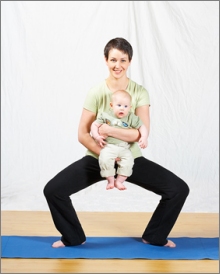
You would think that this sparkling list of benefits would be enough to sell out every gym membership in the country. Yet, more than half of U.S. adults don't exercise at levels recommended by public health agencies, according to a recent Forbes article, and worse, 24 percent of us aren't active at all!
What is keeping us from lacing up our jogging shoes and really getting our hearts pumping?
Time.
Or more specifically, a lack of it. This is the most common excuse people give to explain why they haven't been exercising, personal trainers say. And a Saint Louis University School of Public Health study found that women are even more likely to say they feel "too overloaded to find time to hit the gym."
The solution, experts say, is to schedule time workout time into your day, as you would any other important appointment. This is, indeed, excellent advice, yet, we understand that there are those days that don't seem to have ANY time leftover for something as self-indulgent as exercise. For those days, we've compiled a list of ideas you can use to get your workout in without having to do much, or any, finagling with your schedule.
Eight Ways to Fit Your Workout Into ANY Schedule
| Learn the 15 Most Effective Stretches, and All the Tips to Stretch Properly, in this Highly Acclaimed DVD by Jacques Gauthier! FREE SHIPPING ANYWHERE for a Limited Time! "Without a doubt, the simple stretching exercises on this DVD will add life to your years ... and years to your life!"
|
-
Walk fast. Anytime you need to get from point A to point B, consider it an opportunity to burn some calories and walk at a fast pace. Even better, create more opportunities to get walks in by parking far away from your destinations or walking to get your lunch instead of driving.
-
Stretch for 15 minutes. It takes just 15 stretches to stretch 95 percent of your body, according to stretching expert Jacques Gauthier. His Stretching Toward a Healthier Life DVD shows you all 15 of these most effective stretching exercises, and the full program takes just 15 to 20 minutes a day.
-
Take "exercise breaks." You find time for coffee breaks, right? Instead of standing around filling your mug, put on your walking shoes and climb the stairs in your office building. No stairs? Jog a few laps around the building, do jumping jacks or push-ups in your office or lunges down the hallway.
-
Exercise at your desk. Punch your arms over your head for 30 seconds, then tap your feet on the floor quickly for 30 seconds, and repeat. Or, as long as your desk is sturdy, try desk push-ups by standing, putting your hands on the desk, then walking backward. Now you're ready to start your push-ups!
-
Exercise with your baby. New moms tend to workout 1.3 hours less than they did before the baby, and men's activity levels fall by 4.5 hours, according to a University of Pittsburgh study. You can circumvent this drop in activity by exercising with your baby. Try:
-
Taking walks with your baby in a carrier, or jogging with them in a jogging stroller
-
Bouncing on a balance ball while holding your baby close to you
-
Lifting your baby carefully over your head to strengthen your arm muscles, or doing squats while holding your baby to workout your legs
-
Laying your baby on the floor and doing pushups over him (so your face is directly over his)
-
|
If you can get up an hour or even 30 minutes earlier, you'll have time to fit in a jog around your neighborhood. |

-
Make it a social event. Instead of getting together with your friends to see a movie, try doing something active like tennis, a bike ride or a game of touch football.
-
Get up earlier. If you can get up 30-45 minutes earlier, you can fit in a quick workout on an elliptical machine, jog around the neighborhood, or pop in an aerobics video.
-
Consider investing in some exercise equipment. With a treadmill, elliptical machine, or weight set right in your own home, it's easier to find 30 minutes or an hour to workout. You can even do it while you watch your favorite program on TV.
Thursday, October 30, 2008
Are you Sabotaging your plan to Exercise More?
Source: lifehack.org
You know exercise is good for you, right? But regular exercise is like pushing water uphill. You do it for a couple of days - and then try and forget about it, because it’s just too hard. Sounds familiar?
People who exercise regularly swear by it. They enjoy it. They can’t stop talking about it. But how did they manage to build a habit that sticks? Wouldn’t you like to know a painless and easy way of getting into the exercise habit? Read on to find out.
The reason we often fail when trying to implement a regular exercise routine is because we work against our instincts, instead of with them. What we are trying to do when we establish an exercise routine is do reverse a trend.
Imagine that you are a train driver driving at high speed. How are you going to do that? Are you going to simply crash your gear into reverse? If you did, the train would derail, passengers would get hurt or killed, and you would end up with a catastrophe.
There is a better way.
You could gently apply the brakes until the train is at a standstill, and then slowly start reversing the direction. Easy!
The example is very clear, isn’t it? And yet we do the opposite when trying to start exercising. We try and run for a mile, or go to the gym for an hour, or play a game of tennis - and then wonder why we feel so stiff and sore next day. Then we try it again, but the body hates it - and then we stop. Again.
As In her book “This year I will…”, Andy Ryan, an expert in collaborative thinking, spells out why such a gung-ho approach doesn’t work:
Whenever we initiate change, even a positive one, we activate fear in our emotional brain….If the fear is big enough, the fight-or-flight response will go off and we’ll run from what we’re trying to do.
We need a different approach. We need an approach that eases the body into exercise so gradually, so that we don’t trigger the flight response.
How do we create change so gently that we don’t take fright?
There is a very interesting Japanese philosophy called Kaizen which can help us do that. Kaizen focuses on continuous but small change.
Andy Ryan explains:
The small steps in Kaizen don’t set off fight or flight, but rather keep us in the thinking brain, where we have access to our creativity and playfulness.
Let’s take a look at how that could be applied to physical exercise. I’ll take running as an example. Could you run for 15 seconds? Most people can. With the philosophy of Kaizen, you could say that if can run for 15 seconds, you can learn to run for a minute - and even for an hour. How?
Follow this simple running plan. Add 15 seconds each day.
Day 1# Run for 15 seconds
Day 2# Run for 30 seconds
Day 3# Run for 45 seconds
And so on…
It will seem ridiculously easy! Do this for a about forty days, and you’ll be running for 10 minutes. A month later, and you’ll be running for 20 minutes. By that time your running habit will be well established. But it will have happened naturally!
You can apply the same principle to establishing any exercise. Whether it’s yoga, or swimming, or walking.
The important thing is keep to your plan. You may feel that you could easily do more than the prescribed amount of exercise, but please rein in your enthusiasm. Just do the requisite amount, and not more. This is the trick to establishing an exercise habit without stress or strain.
Exercise really is a miracle pill. This is what it can do for you:
1. Helps prevent or manage high blood pressure
2. Lowers the build-up of plaque in the arteries
3. Can help prevent type 2 diabetes
4. Can help prevent osteoporosis
5. Stimulates the immune response
6. Can help prevent certain kinds of cancer
7. Can help recover after illness.
8. Builds muscle tissue
9. Strengthens heart and lung function.
10. Helps manage weight
11. Promotes good sleep
12. Helps revitalize sex life
13. Improves mood
14. Calms and centers the mind
15. Keeps the brain in shape
You might want to stick this list on your fridge to remind you of the benefits of exercise.
There are a some important guidelines for exercising. As a general rule, the intensity of exercise should not exceed certain limits. If monitoring heart rate use the simple equation - 200 minus your age (in years) to estimate the working heart rate you should remain under.
If you don’t exercise, your fitness slips a little each day. The Keizan method of introducing exercise reverses that trend, little by little. Of course we want to feel the benefits of exercise all at once. However, we need to remember that the smaller the steps we take, the easier it is to establish an exercise habit. And that’s what this method is about: building a new exercise habit that sticks.
What’s your experience of exercising?
You know exercise is good for you, right? But regular exercise is like pushing water uphill. You do it for a couple of days - and then try and forget about it, because it’s just too hard. Sounds familiar?
People who exercise regularly swear by it. They enjoy it. They can’t stop talking about it. But how did they manage to build a habit that sticks? Wouldn’t you like to know a painless and easy way of getting into the exercise habit? Read on to find out.
The reason we often fail when trying to implement a regular exercise routine is because we work against our instincts, instead of with them. What we are trying to do when we establish an exercise routine is do reverse a trend.
Imagine that you are a train driver driving at high speed. How are you going to do that? Are you going to simply crash your gear into reverse? If you did, the train would derail, passengers would get hurt or killed, and you would end up with a catastrophe.
There is a better way.
You could gently apply the brakes until the train is at a standstill, and then slowly start reversing the direction. Easy!
The example is very clear, isn’t it? And yet we do the opposite when trying to start exercising. We try and run for a mile, or go to the gym for an hour, or play a game of tennis - and then wonder why we feel so stiff and sore next day. Then we try it again, but the body hates it - and then we stop. Again.
As In her book “This year I will…”, Andy Ryan, an expert in collaborative thinking, spells out why such a gung-ho approach doesn’t work:
Whenever we initiate change, even a positive one, we activate fear in our emotional brain….If the fear is big enough, the fight-or-flight response will go off and we’ll run from what we’re trying to do.
We need a different approach. We need an approach that eases the body into exercise so gradually, so that we don’t trigger the flight response.
How do we create change so gently that we don’t take fright?
There is a very interesting Japanese philosophy called Kaizen which can help us do that. Kaizen focuses on continuous but small change.
Andy Ryan explains:
The small steps in Kaizen don’t set off fight or flight, but rather keep us in the thinking brain, where we have access to our creativity and playfulness.
Let’s take a look at how that could be applied to physical exercise. I’ll take running as an example. Could you run for 15 seconds? Most people can. With the philosophy of Kaizen, you could say that if can run for 15 seconds, you can learn to run for a minute - and even for an hour. How?
Follow this simple running plan. Add 15 seconds each day.
Day 1# Run for 15 seconds
Day 2# Run for 30 seconds
Day 3# Run for 45 seconds
And so on…
It will seem ridiculously easy! Do this for a about forty days, and you’ll be running for 10 minutes. A month later, and you’ll be running for 20 minutes. By that time your running habit will be well established. But it will have happened naturally!
You can apply the same principle to establishing any exercise. Whether it’s yoga, or swimming, or walking.
The important thing is keep to your plan. You may feel that you could easily do more than the prescribed amount of exercise, but please rein in your enthusiasm. Just do the requisite amount, and not more. This is the trick to establishing an exercise habit without stress or strain.
Exercise really is a miracle pill. This is what it can do for you:
1. Helps prevent or manage high blood pressure
2. Lowers the build-up of plaque in the arteries
3. Can help prevent type 2 diabetes
4. Can help prevent osteoporosis
5. Stimulates the immune response
6. Can help prevent certain kinds of cancer
7. Can help recover after illness.
8. Builds muscle tissue
9. Strengthens heart and lung function.
10. Helps manage weight
11. Promotes good sleep
12. Helps revitalize sex life
13. Improves mood
14. Calms and centers the mind
15. Keeps the brain in shape
You might want to stick this list on your fridge to remind you of the benefits of exercise.
There are a some important guidelines for exercising. As a general rule, the intensity of exercise should not exceed certain limits. If monitoring heart rate use the simple equation - 200 minus your age (in years) to estimate the working heart rate you should remain under.
If you don’t exercise, your fitness slips a little each day. The Keizan method of introducing exercise reverses that trend, little by little. Of course we want to feel the benefits of exercise all at once. However, we need to remember that the smaller the steps we take, the easier it is to establish an exercise habit. And that’s what this method is about: building a new exercise habit that sticks.
What’s your experience of exercising?
Wednesday, October 15, 2008
Aging and Weight Gain: How NOT To Get Fatter As You Get Older
Aging and Weight Gain: How NOT to Get Fatter as You Get Older
by www.SixWise.com
You may remember your childhood years fondly as a time of bike rides, endless summers, and visits from the tooth fairy. Among these many pleasures from your younger years was also a seemingly endless metabolism -- and with it the ability to eat as many hamburgers, ice cream sandwiches, French fries and slices of birthday cake as you pleased without gaining a pound.
There's good news: weight gain as you age is NOT inevitable.
Sadly, as you get older, you lose this ability to burn off the calories as quickly, therefore holding on to those cupcakes and cheeseburgers far longer than you'd probably like to, and often in places you surely don't want to, such as your belly, hips and thighs. This begs the question -- why do we get fatter as we get older, and more importantly, can it be avoided?
Aging and Weight Gain -- Inevitable?
While there is no question that we tend to gain weight as we grow older, the big question still remains as to why this weight gain occurs and whether or not it is inevitable. There have been many studies devoted to discovering the causes of this weight gain.
One such study was conducted by Monash University researcher Dr. Zane Andrews, a neuroendocrinologist with the university's department of physiology. This study uncovered that one of the reasons the scale creeps up as you get older is that appetite-suppressing cells are attacked by free radicals after eating -- and this degeneration is more significant following meals rich in carbohydrates and sugars.
People between the ages of 25 and 50 are most at risk according to Dr. Andrews, as the neurons that tell people in this crucial age range not to overeat are being killed off. This reduction in appetite-suppressing cells could be one explanation for the complexity of adult-onset obesity.
What is also a factor is that the modern diet has become increasingly filled with sugars and carbohydrates, which is leading to premature cell deterioration.
Another reason that we gain weight as we get older is that muscles turn to fat as we age, decreasing our muscle mass and increasing body fat. This happens at around 30, when both men and women experience an up to 40% reduction in both muscle and bone mass.
This change, which begins at age 30 and reaches a plateau at about 60 or 70, coincides with a decrease in our physical abilities, affecting reaction time and rate at which we perform tasks. This causes many people to become less physically active, which sabotages their efforts to remain slim, as exercising and maintaining an active lifestyle are crucial to keeping an elevated metabolic rate and winning the battle of the bulge.
If you're between the ages of 25 and 50, eating a lot of carbs and sugar may deteriorate your appetite-suppressing cells.
Studies have shown that both men and women experience these changes similarly. However, women tend to have more difficulty with the weight issue, particularly after menopause, which occurs between the late-40s and early 50s. Around this time, about 60% of women experience some sort of weight gain, usually about a pound a year, most of it accumulating around the stomach. This is particularly frustrating for women due to the fact that the hormonal and metabolic changes that occur during menopause make it difficult, if not impossible, to shed this weight.
Another explanation for growing heavier as we grow older is simple genetics. If you're lucky enough to have a mother or grandmother who was naturally slim, even in their golden years, you might stay that way too. However, if you have relatives who got heavier as they got older, then chances are you may too.
A Weighty Issue
While staying slim is certainly more difficult as you age, for many weight gain is beginning in the younger years. There has been a steady increase in obesity rates among Americans over the last 20 years, according to the Center for Disease Control (CDC). In fact, Colorado is the only state in the union that has a prevalence of obesity less than 20%! And in 2007, the overall obesity rate jumped to nearly 26%, which is up from 24% in 2005.
While these numbers are distressing enough, what is even more alarming is the rate at which America's children are joining the ever-growing ranks of the obese. Perhaps due to poor diets and more time than ever spent in front of video games, computers, and TV sets, American children are heavier than ever, putting them at risk for diseases typically reserved for adults, such as type 2 diabetes, heart disease and hypertension.
To help address this crises, the CDC has launched a campaign called "Healthy People 2010," which seeks to decrease the number of obese Americans down to 15% by the year 2010 through a program of nutritional education and motivating people to get out and exercise more. In addition, many states such as New York have banned the use of dangerous trans fats in restaurants and require them to place calorie and fat information in all their menus.
Schools across the nation have begun to take vending machines off campuses and many have banned sugary foods such as cupcakes and candy from parties. And many campaigns, such as Boston's Metrowest Community Healthcare Foundation , have been established with the goal of educating parents about the severity of the problem and encouraging them to get their children away from the video games and out exercising, as well as eating better foods. This advice, while good for children, will also help parents to establish healthier lifestyle habits and hopefully keep to a healthy weight even as they get older.
Taking a Load Off
While weight gain is more likely to happen as you get older, it is not inevitable. There are many things you can do to help fight off those extra pounds. Staying active is key. While it may be tempting to forego physical activity as you age and perhaps your body starts to ache a bit more, exercise is crucial to not only staying slimmer, but to living longer and healthier lives.
The more physically fit you are, the easier it is to fend off disease. Regular exercise not only boosts your immune system, but it's good for your mental well-being too. The endorphins that are released during exercise even help stave off depression and anxiety, common problems faced as we grow older.
Along with exercise, you may also need to reevaluate your diet as you get older. Changing eating habits is never easy, especially if they've been engrained over several decades, but it is necessary if you want to maintain a healthy weight. While it's never good to eat that extra slice of pie on a regular basis, it is particularly important as you get older to avoid these "danger" foods and replace them with foods that cater more to the body's changing nutritional needs. If you are unsure of how best to tweak your diet, there are plenty of nutritionists that are willing to help construct a diet plan that will fit your needs.
For most of us, staying slim is no easy task, especially as we grow older and our bodies start to change. However, getting older doesn't have to equal getting heavier. Taking a few simple steps can help increase your odds of staying slim well into your golden years.
Recommended Reading
What Really Causes the "Beer Belly" in Men and How to Get Rid of Your Gut
Aging Gracefully: Enjoy a Vital, Fulfilling Life Regardless of Age
Sources
Science Daily August 2008
CDC: U.S. Obesity Trends
TheBostonChannel.com
by www.SixWise.com
You may remember your childhood years fondly as a time of bike rides, endless summers, and visits from the tooth fairy. Among these many pleasures from your younger years was also a seemingly endless metabolism -- and with it the ability to eat as many hamburgers, ice cream sandwiches, French fries and slices of birthday cake as you pleased without gaining a pound.
There's good news: weight gain as you age is NOT inevitable.
Sadly, as you get older, you lose this ability to burn off the calories as quickly, therefore holding on to those cupcakes and cheeseburgers far longer than you'd probably like to, and often in places you surely don't want to, such as your belly, hips and thighs. This begs the question -- why do we get fatter as we get older, and more importantly, can it be avoided?
Aging and Weight Gain -- Inevitable?
While there is no question that we tend to gain weight as we grow older, the big question still remains as to why this weight gain occurs and whether or not it is inevitable. There have been many studies devoted to discovering the causes of this weight gain.
One such study was conducted by Monash University researcher Dr. Zane Andrews, a neuroendocrinologist with the university's department of physiology. This study uncovered that one of the reasons the scale creeps up as you get older is that appetite-suppressing cells are attacked by free radicals after eating -- and this degeneration is more significant following meals rich in carbohydrates and sugars.
People between the ages of 25 and 50 are most at risk according to Dr. Andrews, as the neurons that tell people in this crucial age range not to overeat are being killed off. This reduction in appetite-suppressing cells could be one explanation for the complexity of adult-onset obesity.
What is also a factor is that the modern diet has become increasingly filled with sugars and carbohydrates, which is leading to premature cell deterioration.
Another reason that we gain weight as we get older is that muscles turn to fat as we age, decreasing our muscle mass and increasing body fat. This happens at around 30, when both men and women experience an up to 40% reduction in both muscle and bone mass.
This change, which begins at age 30 and reaches a plateau at about 60 or 70, coincides with a decrease in our physical abilities, affecting reaction time and rate at which we perform tasks. This causes many people to become less physically active, which sabotages their efforts to remain slim, as exercising and maintaining an active lifestyle are crucial to keeping an elevated metabolic rate and winning the battle of the bulge.
If you're between the ages of 25 and 50, eating a lot of carbs and sugar may deteriorate your appetite-suppressing cells.
Studies have shown that both men and women experience these changes similarly. However, women tend to have more difficulty with the weight issue, particularly after menopause, which occurs between the late-40s and early 50s. Around this time, about 60% of women experience some sort of weight gain, usually about a pound a year, most of it accumulating around the stomach. This is particularly frustrating for women due to the fact that the hormonal and metabolic changes that occur during menopause make it difficult, if not impossible, to shed this weight.
Another explanation for growing heavier as we grow older is simple genetics. If you're lucky enough to have a mother or grandmother who was naturally slim, even in their golden years, you might stay that way too. However, if you have relatives who got heavier as they got older, then chances are you may too.
A Weighty Issue
While staying slim is certainly more difficult as you age, for many weight gain is beginning in the younger years. There has been a steady increase in obesity rates among Americans over the last 20 years, according to the Center for Disease Control (CDC). In fact, Colorado is the only state in the union that has a prevalence of obesity less than 20%! And in 2007, the overall obesity rate jumped to nearly 26%, which is up from 24% in 2005.
While these numbers are distressing enough, what is even more alarming is the rate at which America's children are joining the ever-growing ranks of the obese. Perhaps due to poor diets and more time than ever spent in front of video games, computers, and TV sets, American children are heavier than ever, putting them at risk for diseases typically reserved for adults, such as type 2 diabetes, heart disease and hypertension.
To help address this crises, the CDC has launched a campaign called "Healthy People 2010," which seeks to decrease the number of obese Americans down to 15% by the year 2010 through a program of nutritional education and motivating people to get out and exercise more. In addition, many states such as New York have banned the use of dangerous trans fats in restaurants and require them to place calorie and fat information in all their menus.
Schools across the nation have begun to take vending machines off campuses and many have banned sugary foods such as cupcakes and candy from parties. And many campaigns, such as Boston's Metrowest Community Healthcare Foundation , have been established with the goal of educating parents about the severity of the problem and encouraging them to get their children away from the video games and out exercising, as well as eating better foods. This advice, while good for children, will also help parents to establish healthier lifestyle habits and hopefully keep to a healthy weight even as they get older.
Taking a Load Off
While weight gain is more likely to happen as you get older, it is not inevitable. There are many things you can do to help fight off those extra pounds. Staying active is key. While it may be tempting to forego physical activity as you age and perhaps your body starts to ache a bit more, exercise is crucial to not only staying slimmer, but to living longer and healthier lives.
The more physically fit you are, the easier it is to fend off disease. Regular exercise not only boosts your immune system, but it's good for your mental well-being too. The endorphins that are released during exercise even help stave off depression and anxiety, common problems faced as we grow older.
Along with exercise, you may also need to reevaluate your diet as you get older. Changing eating habits is never easy, especially if they've been engrained over several decades, but it is necessary if you want to maintain a healthy weight. While it's never good to eat that extra slice of pie on a regular basis, it is particularly important as you get older to avoid these "danger" foods and replace them with foods that cater more to the body's changing nutritional needs. If you are unsure of how best to tweak your diet, there are plenty of nutritionists that are willing to help construct a diet plan that will fit your needs.
For most of us, staying slim is no easy task, especially as we grow older and our bodies start to change. However, getting older doesn't have to equal getting heavier. Taking a few simple steps can help increase your odds of staying slim well into your golden years.
Recommended Reading
What Really Causes the "Beer Belly" in Men and How to Get Rid of Your Gut
Aging Gracefully: Enjoy a Vital, Fulfilling Life Regardless of Age
Sources
Science Daily August 2008
CDC: U.S. Obesity Trends
TheBostonChannel.com
Subscribe to:
Posts (Atom)