We all know that eating more fresh Raw vegan foods will help in the departments of being happier, healthier and reducing stress. But, here are 6 other ways that can help:
1. Gardening & Greenery
According to Patricia Farrell, PhD., surrounding yourself with nature's greenery can increase oxygen levels and help you experience more peace. In fact, one British study found that gardening can actually be as effective as pyschotherapy - and I suspect that anybody who gardens will agree!
2. Journaling
Turning to pen and paper is a great way to reduce stress. The simple act of putting your feelings and experiences down on paper and getting them out of your system can be cathartic. I've been journaling for years (and I've saved them all and they make for great reads years later!).
3. Painting, Drawing, Sewing, Knitting
These activities require concentration and can help you take your mind off issues that might be causing stress. It can become almost meditative, forcing you to be mindfully present.
4. Singing
This is one of my favorites! Singing has been shown to help boost your health by raising immunity-boosting white blood cells. Now, you might need to keep in mind the people you're around if your singing voice isn't so good or you might actually increase their stress - ha ha! - even though you're helping yours. Any one watch American Idol? You know what I mean.
5. Dancing
Oh yeah! This is another favorite of mine... that's a picture of me dancing in the produce department at Whole Foods (they haven't kicked me out yet so I guess they don't mind!). Dancing can release those awesome, high-inducing, feel-good endorphins. Dancing is exercise so it helps you lose weight, lower blood pressure and boost the flow of oxygen to your brain. Next time you want to boost your mood and health, put on some fun tunes (disco music for me) and shake your groove thing!
6. Nature
Spending time in nature can be such a calming experience. One of my favorite things to do is go on long nature walks or take short road trips. I find such peace, and my mind opens up to new ideas and inspiration. Taking time to do this is important, so be sure to make it at least a semi-regular ritual, such as once a month, if not more, depending on where you live.
Showing posts with label giy. Show all posts
Showing posts with label giy. Show all posts
Wednesday, August 11, 2010


Thursday, June 24, 2010
Fruit Harvesting Timetable
Fruit Harvesting Timetable
Know When to Expect to Start Harvesting Fruit
By Vanessa Richins, About.com Guide
http://treesandshrubs.about.
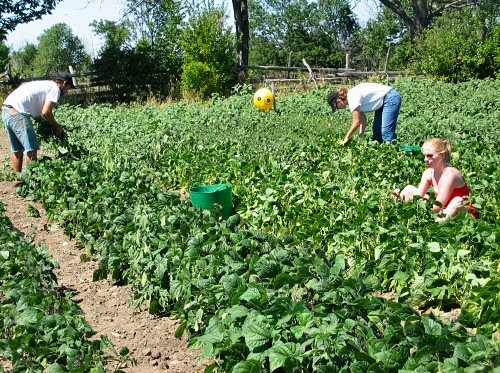
The best part about growing fruit trees and shrubs is, of course, harvesting the fruit! Learn when you can generally expect to harvest the different types of fruits with this handy time line. The exact times will vary depending on the variety you choose and your climate.
Apples: July-early November
Apricots: May-June for most varieties
Avocados: Guatemalan varieties: summer-autumn. Mexican varieties: autumn-spring in California, summer-winter in Florida
Bananas: Late summer-fall in mild climates
Blueberries: 60-80 days after blooming
Cherries: May-July
Citrus: Year round in mild climates
Currants: Late spring-summer
Figs: First crop June & July; second crop in August except in California, where it is in September
Gooseberries: Late spring-summer
Guavas: Autumn in California; June-October in Florida
Loquats: February-May in Florida; March-June in California
Mangoes: May-September in Florida; autumn-winter in California
Nectarines: June-September (as early as April in milder climates)
Olives: Fall in mild climates
Papayas: In California, approximately 8 months after flowering; 3-4 months after flowering in Florida
Peaches: June-September (as early as April in milder climates)
Pears: July-late October
Persimmons: Late autumn-winter
Plums: June-August
Pomegranates: Whenever fully colored
Raspberries: Early summer; everbearers can produce into autumn
Quince:Autumn
Tuesday, May 11, 2010
10 Ways to Spruce Up Your Outdoors for Spring
10 Ways to Spruce Up Your Outdoors for Spring
Sponsored by The Home Depot
Link to full article below
1. Plant an Edible Garden and Watch Your Savings Grow
Edible gardens are an enjoyable and economical form of gardening. By growing your own vegetables and herbs, you’ll save money while encouraging your family to eat healthier throughout the summer and early fall. Regardless of your yard size, you can include a raised vegetable bed for minimal cost and effort. Convenient, ready-to-assemble kits from The Home Depot make it easy. Create your own edible garden now to get a head start on the growing season, then watch your homegrown bounty flourish.
2. How to Plant a Hanging Wire Basket
Hanging wire baskets filled with flowers and cascading foliage are an easy and quick way to brighten up your outdoor space. They provide instant color and interest to your porch, patio or deck – and in your garden, they add visual appeal at eye level so your blooms aren’t limited to the soil. It’s easy to create your own hanging baskets with the right know-how and materials.
Please read the full article:
http://www.thedailygreen.com/
Share this on Facebook: Share
GIY - Growing Garlic
Garlic - Allium sativum
By Chester Aaron Link to full article below
Garlic is as beautiful in the garden as it is easy to grow.
Growing Guide
Soil preparation: Garlic will tolerate some shade but prefers full sun. While I've seen cloves sprout in gravel pits, garlic responds best in well-drained, rich, loamy soil amended with lots of organic matter. Raised beds are ideal, except in very dry regions.
Planting: To grow garlic, you plant the cloves, the sections of the bulb; each clove will produce a new bulb. The largest cloves generally yield the biggest bulbs. To get the cloves off to a strong start and protect them from fungal diseases, soak them in a jar of water containing one heaping tablespoon of baking soda and a tablespoon of liquid seaweed for a few hours before planting. Plant garlic in the fall.
Spacing: Place cloves in a hole or furrow with the flat or root end down and pointed end up, with each tip 2 inches beneath the soil. Set the cloves about 6 to 8 inches apart. Top the soil with 6 inches of mulch, such as straw or dried grass clippings mixed with leaves. You'll see shoots start growing right through the mulch in four to eight weeks, depending on your weather and the variety you've planted. They stop growing during winter, then start again in spring. Leave the mulch in place into spring; it conserves moisture and suppresses weeds (garlic competes poorly with weeds).
Watering: Garlic needs about an inch of water each week during spring growth. If you have to augment rainfall with the garden hose, stop watering by June 1 or when the leaves begin to yellow in order to let the bulbs firm up.
Please read the full article: http://www.organicgardening.com/featureprint/1,7759,s1-5-16-231,00.html
Share this on Facebook: Share
By Chester Aaron Link to full article below
Garlic is as beautiful in the garden as it is easy to grow.
Growing Guide
Soil preparation: Garlic will tolerate some shade but prefers full sun. While I've seen cloves sprout in gravel pits, garlic responds best in well-drained, rich, loamy soil amended with lots of organic matter. Raised beds are ideal, except in very dry regions.
Planting: To grow garlic, you plant the cloves, the sections of the bulb; each clove will produce a new bulb. The largest cloves generally yield the biggest bulbs. To get the cloves off to a strong start and protect them from fungal diseases, soak them in a jar of water containing one heaping tablespoon of baking soda and a tablespoon of liquid seaweed for a few hours before planting. Plant garlic in the fall.
Spacing: Place cloves in a hole or furrow with the flat or root end down and pointed end up, with each tip 2 inches beneath the soil. Set the cloves about 6 to 8 inches apart. Top the soil with 6 inches of mulch, such as straw or dried grass clippings mixed with leaves. You'll see shoots start growing right through the mulch in four to eight weeks, depending on your weather and the variety you've planted. They stop growing during winter, then start again in spring. Leave the mulch in place into spring; it conserves moisture and suppresses weeds (garlic competes poorly with weeds).
Watering: Garlic needs about an inch of water each week during spring growth. If you have to augment rainfall with the garden hose, stop watering by June 1 or when the leaves begin to yellow in order to let the bulbs firm up.
Please read the full article: http://www.organicgardening.
Share this on Facebook: Share
Monday, May 10, 2010
How to Start a Vegetable Garden from Seed in Your Home
How to Start a Vegetable Garden from Seed in Your Home
by Jennie Lyon
Tuesday, March 23, 2010
http://blog.cascadianfarm.com/category/living/veggies-101-how-to-start-a-vegetable-garden-from-seed-in-your-home.aspx?WT.mc_id=CF_Email_May10_Recipe
Did you know that you can start your own vegetable garden from seeds in your home? Not only is it true, but it is super budget friendly, green and fun for the entire family. When choosing the vegetables that you want to grow, remember that plants such as tomatoes, beans, cucumbers and peppers need a longer period of time to grow. Starting them from seeds in your home is a great way to grow plants that will produce a full harvest throughout the season.
What you will need to start growing at home:
* Assorted Organic Seeds.
* Reusable Plastic Greenhouses, Trays, Flats or Pots.
* Expandable Peat Pellets or Soil.
How to get started:
1. Place a pre-soaked peat pellet or moistened soil inside each container. Make a small hole in the center of the peat pellet or soil and sprinkle seeds into the holes. To determine the planting depth, consult the seed packet.
2. Cover the seeds with the recommended amount of moistened soil. Cover the seeds and place them in a sunny south facing windowsill. Label the containers with the name of each plant and the date that the seeds were planted.
3. In 7-10 days the seeds will sprout, at this time thin them until just one plant is remaining. Using a pair of tweezers will give you expert precision when thinning the seedlings.
How to transplant:
1. When the seedlings develop their adult leaves (usually within 4-8 weeks), it is time to transplant them into larger pots.
2. My family uses 4" reusable pots that are filled with potting soil that has been moistened. Choose a warm and sunny spot in your home for the plants to continue to grow. If you do not have somewhere for the larger potted plants to grow, you may want to consider growing them under fluorescent lights. My family has started our garden in our basement for many years using this method.
3. Once the plants are large enough to be moved outside, you will need to harden them off. Hardening them off means that you are getting the seedlings ready to be planted outside. In Springtime, to harden the seedlings off, you will need to sit them outside in a shady spot during the day and them bring them back into the warmth of your home at night. Gradually, move the seedlings to a sunny spot in your yard during the day. After 7-10 days of hardening, your seedlings will be ready for planting in your garden.
Keeping your veggies happy in the garden:
Once your vegetables are planted in your garden, you will want to provide them with a regular supply of water, keeping the soil moist, at least until the seedlings put down their roots. Using mulch in your garden is an excellent way to keep the soil moist. Remember to weed your garden on a regular basis and to use natural pest control remedies to keep the creepy critters at bay.
Share this on Facebook: Share
by Jennie Lyon
Tuesday, March 23, 2010
http://blog.cascadianfarm.com/
Did you know that you can start your own vegetable garden from seeds in your home? Not only is it true, but it is super budget friendly, green and fun for the entire family. When choosing the vegetables that you want to grow, remember that plants such as tomatoes, beans, cucumbers and peppers need a longer period of time to grow. Starting them from seeds in your home is a great way to grow plants that will produce a full harvest throughout the season.
What you will need to start growing at home:
* Assorted Organic Seeds.
* Reusable Plastic Greenhouses, Trays, Flats or Pots.
* Expandable Peat Pellets or Soil.
How to get started:
1. Place a pre-soaked peat pellet or moistened soil inside each container. Make a small hole in the center of the peat pellet or soil and sprinkle seeds into the holes. To determine the planting depth, consult the seed packet.
2. Cover the seeds with the recommended amount of moistened soil. Cover the seeds and place them in a sunny south facing windowsill. Label the containers with the name of each plant and the date that the seeds were planted.
3. In 7-10 days the seeds will sprout, at this time thin them until just one plant is remaining. Using a pair of tweezers will give you expert precision when thinning the seedlings.
How to transplant:
1. When the seedlings develop their adult leaves (usually within 4-8 weeks), it is time to transplant them into larger pots.
2. My family uses 4" reusable pots that are filled with potting soil that has been moistened. Choose a warm and sunny spot in your home for the plants to continue to grow. If you do not have somewhere for the larger potted plants to grow, you may want to consider growing them under fluorescent lights. My family has started our garden in our basement for many years using this method.
3. Once the plants are large enough to be moved outside, you will need to harden them off. Hardening them off means that you are getting the seedlings ready to be planted outside. In Springtime, to harden the seedlings off, you will need to sit them outside in a shady spot during the day and them bring them back into the warmth of your home at night. Gradually, move the seedlings to a sunny spot in your yard during the day. After 7-10 days of hardening, your seedlings will be ready for planting in your garden.
Keeping your veggies happy in the garden:
Once your vegetables are planted in your garden, you will want to provide them with a regular supply of water, keeping the soil moist, at least until the seedlings put down their roots. Using mulch in your garden is an excellent way to keep the soil moist. Remember to weed your garden on a regular basis and to use natural pest control remedies to keep the creepy critters at bay.
Share this on Facebook: Share
Tuesday, April 20, 2010
Now's the Time to Plan Your 2010 Organic Vegetable Garden
Now's the Time to Plan Your 2010 Organic Vegetable Garden
By Leah Zerbe [abridged; link to full article below]
Forget about using lumber to frame raised beds; simply mounding up the soil is better—and easier.
RODALE NEWS, EMMAUS, PA—If you've been dreaming of starting a vegetable garden this year, it's time to stop dreaming and start planning. Because if you plan things right, you can enjoy as much as 100 pounds of fresh, organic vegetables from just a 50-square-foot gardening area, spending a fraction of what you'd shell out at the grocery store for that much produce. Your goal might not be that ambitious, but the point is that you don't need a huge yard to enjoy a great gardening season. "It's amazing what you could grow in small space," says Eileen Weinsteiger, regenerative garden design specialist at the Rodale Institute, leaders in organic farming and gardening research.
Make your gardening daydreams a reality with these simple steps:
• Pick the perfect spot. Ideally, your garden spot will receive at least eight to 10 hours of full sun a day on the south side of your home...
Please read the full article:
http://www.rodale.com/plan-garden?cm_mmc=DailyNewsNL-_-2010_04_16-_-Top5-_-NA
Share this on Facebook: Share
By Leah Zerbe [abridged; link to full article below]
Forget about using lumber to frame raised beds; simply mounding up the soil is better—and easier.
RODALE NEWS, EMMAUS, PA—If you've been dreaming of starting a vegetable garden this year, it's time to stop dreaming and start planning. Because if you plan things right, you can enjoy as much as 100 pounds of fresh, organic vegetables from just a 50-square-foot gardening area, spending a fraction of what you'd shell out at the grocery store for that much produce. Your goal might not be that ambitious, but the point is that you don't need a huge yard to enjoy a great gardening season. "It's amazing what you could grow in small space," says Eileen Weinsteiger, regenerative garden design specialist at the Rodale Institute, leaders in organic farming and gardening research.
Make your gardening daydreams a reality with these simple steps:
• Pick the perfect spot. Ideally, your garden spot will receive at least eight to 10 hours of full sun a day on the south side of your home...
Please read the full article:
http://www.rodale.com/plan-
Share this on Facebook: Share
Wednesday, February 24, 2010
How to Grow Your Own Tea
How to Grow Your Own Tea
Get your daily antioxidant dose by growing tea in your backyard garden.
By Emily Main
Look for the right varietals and plant an easy-to-grow tea plant in your yard.
LINK TO FULL ARTICLE BELOW
RODALE NEWS, EMMAUS, PA—Tea drinkers may already know that drinking tea may help prevent strokes, heart disease, and cancer, and a report in the most recent Journal of Nutrition states that tea is the number one source of flavonoids (those cancer- and cholesterol-busting antioxidants) in the American diet. But if you're buying your tea at the store, you're missing an opportunity to set yourself up with a lifetime supply of tea that's as fresh and pure as you can make it.
The Camellia plant genus, from which all forms of tea are harvested, is amazingly resilient and adaptable, says Douglas Ruhren, a horticulturist at the American Camellia Society. And while most forms of the camellia bush are decorative, the varieties used to grow tea are getting to be just as popular among home gardeners. "I know a number of people who have camellia nurseries, and for some of them, tea bushes are their biggest-selling camellias."
To read the full article: http://www.rodale.com/print/3316
Get your daily antioxidant dose by growing tea in your backyard garden.
By Emily Main
Look for the right varietals and plant an easy-to-grow tea plant in your yard.
LINK TO FULL ARTICLE BELOW
RODALE NEWS, EMMAUS, PA—Tea drinkers may already know that drinking tea may help prevent strokes, heart disease, and cancer, and a report in the most recent Journal of Nutrition states that tea is the number one source of flavonoids (those cancer- and cholesterol-busting antioxidants) in the American diet. But if you're buying your tea at the store, you're missing an opportunity to set yourself up with a lifetime supply of tea that's as fresh and pure as you can make it.
The Camellia plant genus, from which all forms of tea are harvested, is amazingly resilient and adaptable, says Douglas Ruhren, a horticulturist at the American Camellia Society. And while most forms of the camellia bush are decorative, the varieties used to grow tea are getting to be just as popular among home gardeners. "I know a number of people who have camellia nurseries, and for some of them, tea bushes are their biggest-selling camellias."
To read the full article: http://www.rodale.com/print/
Sunday, January 3, 2010
Edible Landscaping - Beautifies your yard, Fills the world with beauty & food, & helps animals!
| Fruitful Hedges Come in All Shapes and Sizes! | |
|---|---|
| Tall Evergreen Screens: | Espalier Fruiting Hedges: |
| Short Evergreen Screens: | Outstanding Flower and Fruit Shows: |
GIY: Sprout your own cotton seeds!

Sprout your own cotton seeds!
Learn how:
http://berenguel.blogspot.com/2009/06/cotton-seed-germination.html

GIY: Grow your own lemon trees FROM SEED!
 Learn how to germinate your own lemon seeds!
http://berenguel.blogspot.com/2009/06/lemon-seed-germination.html


Germinate your own apple trees from seed!! :)
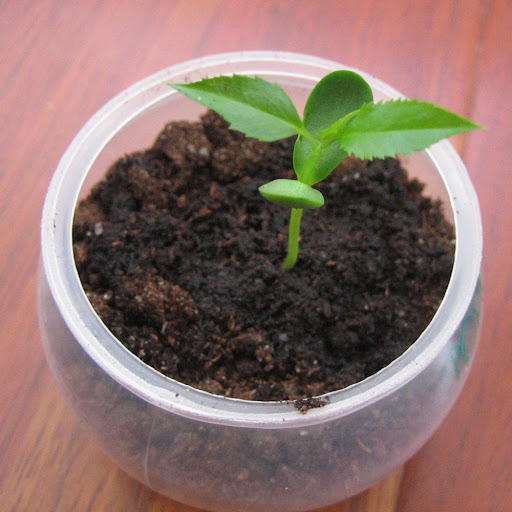
Read how to do it - apple seed germination!
http://berenguel.blogspot.com/2008/07/apple-seed-germination.html

Monday, December 28, 2009
25 Ways to Cut Costs on Just About Everything
25 Ways to Cut Costs on Just About Everything
Save a little here; save a little there. It all adds up to real money.
By Russell Wild
March-April 2003
Since we're always trying to save money, I thought I'd share these ideas
provided by:
http://www.magatopia.com/magazines/AARP_Magazine.html?page=lifestyles.html
Think you know everything there is to know about saving money? Bet you
didn't know about the Amish mail-order catalog that practically charges thrift store prices for brand new clothes. Or about how to take a luxury cruise for just $28 a day. Read on to save a bundle.
_________________
Sweat For Less. One way to get in shape cheap: Sign up for a class at a
local community college (as little as $35 a semester). Then, use your ID to work out at the gym. Save $255 on the typical annual cost of a gym membership.
_________________
Tee Off. Like golf? Buy clubs, shoes, and other gear for 20 percent less
than retail at www.golfdiscount.com (call 888-394-4653), says Elizabeth Cline, author of The Bargain Buyer's Guide.
_________________
Blow Cold. A solar attic fan (about $375) pushes hot air out of your
attic, cutting the work required of your air conditioner and typically trimming your electric bills by about $100 a summer.
_________________
Fly Right. Take a working vacation with Volunteers for Peace
(802-259-2759; www.vfp.org). The full cost (excluding transportation overseas): about $200 per two-to-three-week program. A bonus: It's tax-deductible.
_________________
Dress Amish. For simple, sturdy clothes, check out Gohn Brothers, which
caters mainly to the Amish but sells to anyone. You'll usually save one-third off retail prices. Get a pair of denim pants for $21 (that's at least $10 right there). For catalog, send $1 to P.O. Box 1110, Middlebury, IN 46540.
_________________
Slow Down. What's the rush? Driving 55 mph burns 15 percent less gas per
mile than driving 65. The typical driver can save $135 a year this way.
_________________
Follow The Sun. A solar roof panel might cost $2,500 or more to buy and
install, but it can cut your annual water-heating bills by about $400. Find a contractor through the Solar Energy Industries Association (202-628-7745; www.seia.org).
_________________
Wear It Well. Find beautiful clothes in consignment shops—but not just
any consignment shops. "Go to the shops closest to the richest neighborhoods," suggest Ken and Daria Dolan, who host the syndicated radio show The Dolans. Snag a $250 designer dress for $70.
_________________
Sail Away. If you're a single man, 45 to 72, a hot dancer, and the owner
of a suitable wardrobe, the Gentlemen Host Program (708-301-7535) may put you on a cruise for just $28 a day.
_________________
Cut A Deal. The Video Learning Library (800-383-8811;
www.videolearning.com) stocks 20,000 how-to videos to rent or buy. One we like: "Haircutting at Home."
Tape rentals: just $8 for two weeks, plus $10 for roundtrip shipping. Save
$72 a year on haircuts alone this way..
_________________
Become A Writer. Always jot down a list before heading to the supermarket.
Then stick to it. You'll avoid such costly and frivolous items as premade
caramel apple "wrap" and instant bacon. You can save hundreds over the course of a year.
_________________
Pack It In. Traveling overseas? Sell your baggage space to a courier
company to save up to 85 percent on your next flight. For information on reputable companies, contact the International Association of Air Travel Couriers (308-632-3273; www.courier.org).
_________________
Bank Better. Want the lowest-cost mortgage, the lowest-interest credit
card, or the highest rates on CDs? Visit www.bankrate.com. Plug in your desired deal, and see what pops up. One recent example: a Mastercard with a 4.25 percent interest rate.
_________________
Take A Seat. Season tickets at The Austin (Texas) Symphony cost up to
$275, but thrifty music lovers get in free by serving as ushers.. Many concert halls and theaters across the nation do the same. Call your local theater to find out if it needs help. Or search the Internet, using the keywords "volunteer," "usher," plus your hometown.
_________________
Bundle Up. If possible, insure your car and your home with the same firm..
Buying insurance in bulk has two benefits. First, you'll save money. Second, if you have an accident, you're less likely to get dropped, since your insurer wants to keep all your business. Trim up to 15 percent off combined annual auto and home insurance.
_________________
Get Well. Having trouble paying for medications? Contact the
Pharmaceutical Research and Manufacturers of America (800-762-4636; www.phrma.org) for its free "Directory of Prescription Drug Patient Assistance Programs." Income restrictions apply. Save $1,050 on a year's supply of Vioxx.
_________________
Add Some Spice. Seasonings usually come in packages that are tiny. Buy
them in one-pound bags from the Atlantic Spice Co. (800-316-7965;
www.atlanticspice.com) to save up to 90 percent off list. Minimum order: $30.
_________________
Ditch The Fir. Must your next Christmas tree be fresh-cut? Pick a large
houseplant—a ficus, say—and decorate it just like a spruce. Put $35 in
your stocking.
_________________
Beat The Crowds. Always shop for holiday cards, decorations, and gift wrap
as the season ends, and keep them for next year. Save 75 percent or more.
(Just don't forget where you stored them.)
_________________
Score Points. Go shopping during major sporting events like the World
Series or Super Bowl Sunday. Stores are empty, and salespeople are eager to dicker.
Knock at least 2 percent off list price.
_________________
Call Late. The best airline fares typically go to those who call just
after midnight, East Coast time. That's when airlines decide whether a flight is full and begin slashing prices if it's not. Fares can drop by anywhere from $50 to $400.
_________________
Move In. Considering a new home? The best time to buy is in the dead of
winter, when other buyers huddle inside. (Likewise, in the Sunbelt, wait until summer's dog days.) You can save 5 percent off the peak-season price.
_________________
Check It Out. Your bank may charge up to $20 for a box of replacement
checks.
Use independent printers instead. Checks Unlimited (800-426-0822;
www.checksunlimited.com), for one, charges as little as $8.95. Or try
Checks in the Mail (800-733-4443; www.checksinthemail.com).
_________________
See Double. Share three magazine subscriptions with a like-minded friend
to save at least $20.
_________________
Trim The Fat. Once a year, put all your finances under a microscope. A
prime cost-cutting target: unnecessary insurance. For instance, you may be able to drop the credit-life insurance that is often buried in the contracts for cars, major appliances, or mortgage loans. Sure, doing this might save you as little as $4 monthly, but you'll reap a bigger benefit: that special sense of satisfaction that you get from dumping something you don't need.
Save a little here; save a little there. It all adds up to real money.
By Russell Wild
March-April 2003
Since we're always trying to save money, I thought I'd share these ideas
provided by:
http://www.magatopia.com/
Think you know everything there is to know about saving money? Bet you
didn't know about the Amish mail-order catalog that practically charges thrift store prices for brand new clothes. Or about how to take a luxury cruise for just $28 a day. Read on to save a bundle.
_________________
Sweat For Less. One way to get in shape cheap: Sign up for a class at a
local community college (as little as $35 a semester). Then, use your ID to work out at the gym. Save $255 on the typical annual cost of a gym membership.
_________________
Tee Off. Like golf? Buy clubs, shoes, and other gear for 20 percent less
than retail at www.golfdiscount.com (call 888-394-4653), says Elizabeth Cline, author of The Bargain Buyer's Guide.
_________________
Blow Cold. A solar attic fan (about $375) pushes hot air out of your
attic, cutting the work required of your air conditioner and typically trimming your electric bills by about $100 a summer.
_________________
Fly Right. Take a working vacation with Volunteers for Peace
(802-259-2759; www.vfp.org). The full cost (excluding transportation overseas): about $200 per two-to-three-week program. A bonus: It's tax-deductible.
_________________
Dress Amish. For simple, sturdy clothes, check out Gohn Brothers, which
caters mainly to the Amish but sells to anyone. You'll usually save one-third off retail prices. Get a pair of denim pants for $21 (that's at least $10 right there). For catalog, send $1 to P.O. Box 1110, Middlebury, IN 46540.
_________________
Slow Down. What's the rush? Driving 55 mph burns 15 percent less gas per
mile than driving 65. The typical driver can save $135 a year this way.
_________________
Follow The Sun. A solar roof panel might cost $2,500 or more to buy and
install, but it can cut your annual water-heating bills by about $400. Find a contractor through the Solar Energy Industries Association (202-628-7745; www.seia.org).
_________________
Wear It Well. Find beautiful clothes in consignment shops—but not just
any consignment shops. "Go to the shops closest to the richest neighborhoods," suggest Ken and Daria Dolan, who host the syndicated radio show The Dolans. Snag a $250 designer dress for $70.
_________________
Sail Away. If you're a single man, 45 to 72, a hot dancer, and the owner
of a suitable wardrobe, the Gentlemen Host Program (708-301-7535) may put you on a cruise for just $28 a day.
_________________
Cut A Deal. The Video Learning Library (800-383-8811;
www.videolearning.com) stocks 20,000 how-to videos to rent or buy. One we like: "Haircutting at Home."
Tape rentals: just $8 for two weeks, plus $10 for roundtrip shipping. Save
$72 a year on haircuts alone this way..
_________________
Become A Writer. Always jot down a list before heading to the supermarket.
Then stick to it. You'll avoid such costly and frivolous items as premade
caramel apple "wrap" and instant bacon. You can save hundreds over the course of a year.
_________________
Pack It In. Traveling overseas? Sell your baggage space to a courier
company to save up to 85 percent on your next flight. For information on reputable companies, contact the International Association of Air Travel Couriers (308-632-3273; www.courier.org).
_________________
Bank Better. Want the lowest-cost mortgage, the lowest-interest credit
card, or the highest rates on CDs? Visit www.bankrate.com. Plug in your desired deal, and see what pops up. One recent example: a Mastercard with a 4.25 percent interest rate.
_________________
Take A Seat. Season tickets at The Austin (Texas) Symphony cost up to
$275, but thrifty music lovers get in free by serving as ushers.. Many concert halls and theaters across the nation do the same. Call your local theater to find out if it needs help. Or search the Internet, using the keywords "volunteer," "usher," plus your hometown.
_________________
Bundle Up. If possible, insure your car and your home with the same firm..
Buying insurance in bulk has two benefits. First, you'll save money. Second, if you have an accident, you're less likely to get dropped, since your insurer wants to keep all your business. Trim up to 15 percent off combined annual auto and home insurance.
_________________
Get Well. Having trouble paying for medications? Contact the
Pharmaceutical Research and Manufacturers of America (800-762-4636; www.phrma.org) for its free "Directory of Prescription Drug Patient Assistance Programs." Income restrictions apply. Save $1,050 on a year's supply of Vioxx.
_________________
Add Some Spice. Seasonings usually come in packages that are tiny. Buy
them in one-pound bags from the Atlantic Spice Co. (800-316-7965;
www.atlanticspice.com) to save up to 90 percent off list. Minimum order: $30.
_________________
Ditch The Fir. Must your next Christmas tree be fresh-cut? Pick a large
houseplant—a ficus, say—and decorate it just like a spruce. Put $35 in
your stocking.
_________________
Beat The Crowds. Always shop for holiday cards, decorations, and gift wrap
as the season ends, and keep them for next year. Save 75 percent or more.
(Just don't forget where you stored them.)
_________________
Score Points. Go shopping during major sporting events like the World
Series or Super Bowl Sunday. Stores are empty, and salespeople are eager to dicker.
Knock at least 2 percent off list price.
_________________
Call Late. The best airline fares typically go to those who call just
after midnight, East Coast time. That's when airlines decide whether a flight is full and begin slashing prices if it's not. Fares can drop by anywhere from $50 to $400.
_________________
Move In. Considering a new home? The best time to buy is in the dead of
winter, when other buyers huddle inside. (Likewise, in the Sunbelt, wait until summer's dog days.) You can save 5 percent off the peak-season price.
_________________
Check It Out. Your bank may charge up to $20 for a box of replacement
checks.
Use independent printers instead. Checks Unlimited (800-426-0822;
www.checksunlimited.com), for one, charges as little as $8.95. Or try
Checks in the Mail (800-733-4443; www.checksinthemail.com).
_________________
See Double. Share three magazine subscriptions with a like-minded friend
to save at least $20.
_________________
Trim The Fat. Once a year, put all your finances under a microscope. A
prime cost-cutting target: unnecessary insurance. For instance, you may be able to drop the credit-life insurance that is often buried in the contracts for cars, major appliances, or mortgage loans. Sure, doing this might save you as little as $4 monthly, but you'll reap a bigger benefit: that special sense of satisfaction that you get from dumping something you don't need.
Friday, December 18, 2009
EXCELLENT ARTICLE: How to Make a Home Garden Greenhouse, Like Michelle Obama
How to Make a Home Garden Greenhouse, Like Michelle Obama
Video: Keeping a garden alive through the winter, with a zero-energy hoop house you can build yourself.
Gardens are great. Except in winter, when they're gray and lifeless, like the gray and lifeless lawn, set amid the gray and lifeless trees and the gray and... well, you get the point.
It doesn't have to be this way. You can build a hoop house, and enjoy winter vegetables all year round, even in some of the coldest parts of the country. And you can do it yourself, cheaply and with minimal effort.
Michelle Obama knows this. In the South Lawn garden the First Lady created, White House chef Sam Kass and Department of Agriculture staff, including organic and local food champion Kathleen Merrigan, built a hoop house, making this video in the process:
If you want to make your own hoop house, look no further. We've partnered with Roger Doiron, founder of Kitchen Garden International, to show us how. One of The Daily Green's 2009 Heart of Green Award winners, Doiron and KGI were instrumental in encouraging the First Lady to build the White House garden in the first place. A public campaign, including an innovative Facebook petition drive, helped convince Michelle Obama to team up with Sam Kass, the USDA and White House staff to plant the organic garden. KGI continues to inspire home gardeners to grow more of their own food -- something a hoop house helps you accomplish.
How to Make a Hoop House, an Easy Home Garden Greenhouse
by Roger Doiron
Worth the effort
Building a hoop house is a bit like having children: there's a lot of pleasure involved with the idea's conception, but very poor knowledge of the real work involved down the road. But just as it is difficult for me as a family man to imagine living without my children, I'd have a tough time living without my hoop house. It is a central part of my gardening life, not to mention a favorite hangout for my little boys. These instructions are meant to give you the inspiration and know-how to start a hoop house project of your own.
Weatherproof gardening
First, a few words of inspiration: tomatoes, melons and peppers. Need I say more? A hoop house provides the extra heat units you need to realize your wildest kitchen gardening fantasies. It allows you to have an earlier start, a later finish and lots of extra warmth in between. The first year I had mine up, I was so excited about all the possibilities that I gardened right through the year and was harvesting Mache and Claytonia salads in the dead of winter which is not bad seeing that I live in Maine (Northeast USA). As if that weren't enough, here's the showstopper: With a hoop house, you can garden in the rain and not get wet!
PLEASE READ THE FULL ARTICLE - AND START GARDENING :)
http://www.thedailygreen.com/green-homes/latest/how-make-garden-greenhouse-47121701?src=nl&mag=tdg&list=dgr&kw=ist
Video: Keeping a garden alive through the winter, with a zero-energy hoop house you can build yourself.
Gardens are great. Except in winter, when they're gray and lifeless, like the gray and lifeless lawn, set amid the gray and lifeless trees and the gray and... well, you get the point.
It doesn't have to be this way. You can build a hoop house, and enjoy winter vegetables all year round, even in some of the coldest parts of the country. And you can do it yourself, cheaply and with minimal effort.
Michelle Obama knows this. In the South Lawn garden the First Lady created, White House chef Sam Kass and Department of Agriculture staff, including organic and local food champion Kathleen Merrigan, built a hoop house, making this video in the process:
If you want to make your own hoop house, look no further. We've partnered with Roger Doiron, founder of Kitchen Garden International, to show us how. One of The Daily Green's 2009 Heart of Green Award winners, Doiron and KGI were instrumental in encouraging the First Lady to build the White House garden in the first place. A public campaign, including an innovative Facebook petition drive, helped convince Michelle Obama to team up with Sam Kass, the USDA and White House staff to plant the organic garden. KGI continues to inspire home gardeners to grow more of their own food -- something a hoop house helps you accomplish.
How to Make a Hoop House, an Easy Home Garden Greenhouse
by Roger Doiron
Worth the effort
Building a hoop house is a bit like having children: there's a lot of pleasure involved with the idea's conception, but very poor knowledge of the real work involved down the road. But just as it is difficult for me as a family man to imagine living without my children, I'd have a tough time living without my hoop house. It is a central part of my gardening life, not to mention a favorite hangout for my little boys. These instructions are meant to give you the inspiration and know-how to start a hoop house project of your own.
Weatherproof gardening
First, a few words of inspiration: tomatoes, melons and peppers. Need I say more? A hoop house provides the extra heat units you need to realize your wildest kitchen gardening fantasies. It allows you to have an earlier start, a later finish and lots of extra warmth in between. The first year I had mine up, I was so excited about all the possibilities that I gardened right through the year and was harvesting Mache and Claytonia salads in the dead of winter which is not bad seeing that I live in Maine (Northeast USA). As if that weren't enough, here's the showstopper: With a hoop house, you can garden in the rain and not get wet!
PLEASE READ THE FULL ARTICLE - AND START GARDENING :)
http://www.thedailygreen.com/green-homes/latest/how-make-garden-greenhouse-47121701?src=nl&mag=tdg&list=dgr&kw=ist
Saturday, October 3, 2009
Leaf It for Compost: Instead of bagging up all those pretty fall leaves and stacking them out at the curb, turn them into compost, and save energy and
Leaf It for Compost
Instead of bagging up all those pretty fall leaves and stacking them out at the curb, turn them into compost, and save energy and landfill space.
By Brian Clark Howard
Instead of bagging up all those pretty fall leaves and stacking them out at the curb, turn them into compost, and save energy and landfill space.
Yard waste is the second-largest component of our trash stream (behind paper), according to the EPA, and makes up roughly 20 percent of most communities' haul. Plus, trucking all those bulky bags from homes to the dump requires a lot of fuel, not to mention heaving and sweating by waste collectors.
The kicker is that the leaves of one large shade tree can be worth as much as $50 of plant food and humus, according to CompostGuide.com. Dead leaves are rich in minerals that can help your garden and landscaping grow.
To read the full article: http://www.thedailygreen.com/going-green/tips/7058?src=nl&mag=tdg&list=dgr&kw=ist
Instead of bagging up all those pretty fall leaves and stacking them out at the curb, turn them into compost, and save energy and landfill space.
By Brian Clark Howard
Instead of bagging up all those pretty fall leaves and stacking them out at the curb, turn them into compost, and save energy and landfill space.
Yard waste is the second-largest component of our trash stream (behind paper), according to the EPA, and makes up roughly 20 percent of most communities' haul. Plus, trucking all those bulky bags from homes to the dump requires a lot of fuel, not to mention heaving and sweating by waste collectors.
The kicker is that the leaves of one large shade tree can be worth as much as $50 of plant food and humus, according to CompostGuide.com. Dead leaves are rich in minerals that can help your garden and landscaping grow.
To read the full article: http://www.thedailygreen.com/going-green/tips/7058?src=nl&mag=tdg&list=dgr&kw=ist
Thursday, August 20, 2009
FRUIT & VEGETABLE GARDENING – More about Pots
FRUIT & VEGETABLE GARDENING – More about Pots
by Diana Greenwood Mead
August 11, 2009 Link to full article below
This is the time of the year when most things in the garden are going well – flowers are flowering as though the sun would always shine, and the fruit & vegetables are ripe for picking – some of them growing with such enthusiasm that you can’t keep up with the picking!
Now is a good time to take stock and decide what should be changed or added to next year – not that you should move plants when they are at the height of their production, but it is helpful to make a few notes and take a some cuttings. I grow great swathes of lavender as I love hanging bags of the dried flowers in my closets and layering more in drawers and on shelves, but I’ve realized that in my tiny garden the bushes are just in the wrong place, so I’m taking a dozen cuttings to be ready for planting out next spring.
To read the full article: http://www.supermarketguru.com/index.cfm/go/sg.viewArticle/articleId/663
******************************************************
If you enjoyed this, would you please make a donation?
Even $1 or $5 helps us to serve you.
by Diana Greenwood Mead
August 11, 2009 Link to full article below
This is the time of the year when most things in the garden are going well – flowers are flowering as though the sun would always shine, and the fruit & vegetables are ripe for picking – some of them growing with such enthusiasm that you can’t keep up with the picking!
Now is a good time to take stock and decide what should be changed or added to next year – not that you should move plants when they are at the height of their production, but it is helpful to make a few notes and take a some cuttings. I grow great swathes of lavender as I love hanging bags of the dried flowers in my closets and layering more in drawers and on shelves, but I’ve realized that in my tiny garden the bushes are just in the wrong place, so I’m taking a dozen cuttings to be ready for planting out next spring.
To read the full article: http://www.supermarketguru.
If you enjoyed this, would you please make a donation?
Even $1 or $5 helps us to serve you.
Saturday, July 25, 2009
Aquaponics
If you enjoyed this, would you please make a donation?
Even $1 or $5 helps us to serve you.
Sunday, July 5, 2009
How does your city garden grow?
How does your city garden grow?
Seed sales are way up, and raising your own food is all the rage. It's a good time to be an urban farmer By Amy Benfer Jul. 04, 2009
Link to full article below
To get to the apartment I share with my boyfriend and teenage daughter, the directions go something like this: Take the R train to Brooklyn. When you get out, you will see a check-cashing place on your right, and a discount coffin outlet to your left. Go straight, past the abandoned gas station, toward the Brooklyn-Queens Expressway. When you reach the building between the abandoned house and the tire shop, you have arrived...
In one corner is a flowering mimosa tree; in the other, a rosebush with bright fuchsia flowers that when we first moved in were the only spot of color amid the dirt, discarded toys and 4-foot-tall weeds that we cut down and replaced with a patio made from scavenged bricks, then laid by hand. Running all around the perimeter is our garden: two 16-foot-long raised beds with a dozen heads of lettuce, 10 kinds of heirloom tomatoes, Brussels sprouts, Italian striped zucchini, eggplants, cucumbers, chard and French breakfast radishes, most of which we bought as seedlings at the Polish grocery down the street. We have a Meyer lemon tree, a pomegranate tree and a pineapple, all in large pots that I found at a garden shop in Brooklyn’s Chinatown. Edamame, snap peas, nasturtiums and alpine strawberries snake up the metal utility pole. In early spring, we have lilacs and peonies; by midsummer, we’ll see the star lilies and blueberries and raspberries.
To read the full article: http://www.salon.com/mwt/feature/2009/07/04/city_gardening/index.html?source=newsletter
******************************************************
We are monks, & we offer these with love. If you enjoyed this, would you please make a donation? Even $1 or $5 helps us to serve you.
Seed sales are way up, and raising your own food is all the rage. It's a good time to be an urban farmer By Amy Benfer Jul. 04, 2009
Link to full article below
To get to the apartment I share with my boyfriend and teenage daughter, the directions go something like this: Take the R train to Brooklyn. When you get out, you will see a check-cashing place on your right, and a discount coffin outlet to your left. Go straight, past the abandoned gas station, toward the Brooklyn-Queens Expressway. When you reach the building between the abandoned house and the tire shop, you have arrived...
In one corner is a flowering mimosa tree; in the other, a rosebush with bright fuchsia flowers that when we first moved in were the only spot of color amid the dirt, discarded toys and 4-foot-tall weeds that we cut down and replaced with a patio made from scavenged bricks, then laid by hand. Running all around the perimeter is our garden: two 16-foot-long raised beds with a dozen heads of lettuce, 10 kinds of heirloom tomatoes, Brussels sprouts, Italian striped zucchini, eggplants, cucumbers, chard and French breakfast radishes, most of which we bought as seedlings at the Polish grocery down the street. We have a Meyer lemon tree, a pomegranate tree and a pineapple, all in large pots that I found at a garden shop in Brooklyn’s Chinatown. Edamame, snap peas, nasturtiums and alpine strawberries snake up the metal utility pole. In early spring, we have lilacs and peonies; by midsummer, we’ll see the star lilies and blueberries and raspberries.
To read the full article: http://www.salon.com/mwt/feature/2009/07/04/city_gardening/index.html?source=newsletter
We are monks, & we offer these with love. If you enjoyed this,
Subscribe to:
Posts (Atom)