The 15 Most Important Fruits and Vegetables to Buy Organic
by www.SixWise.com
As many shoppers trim their food budgets in response to the economy, you may also be scaling back on organic purchases, which are sometimes (though not always) more costly than conventional food products.
Unfortunately, non-organic fruits and vegetables are grown with potentially toxic chemicals, including pesticides, herbicides and chemical fertilizers. Those chemical residues remain not only on the skin of the fruit, but also can be absorbed into the inner flesh.
Even low levels of pesticide consumed over time can be problematic. A study in the journal Occupational and Environmental Medicine, for instance, found that people who had been exposed to low levels of pesticides were 1.13 times as likely to have Parkinson's disease as those who had never been exposed. Other studies have also linked pesticides to health problems including:
* Cancer
* Fertility problems
* Brain tumors
* Childhood leukemia
* Non-Hodgkin's lymphoma
* Birth defects
* Irritation to skin and eyes
* Hormone or endocrine system problems
* Nervous system damage
Children, whose bodies are still developing, are especially at risk from pesticides, as are pregnant women, whose unborn children are extremely susceptible to damage from these toxic chemicals.
And if you eat produce, there's a good chance you're being exposed. According to Hazardous Pesticides in the European Parliament, released October 2007, the eight food samples they tested, which ranged from oranges to strawberries to grapes, contained 28 different pesticide residues, with an average of almost five per fruit!
Among them were 10 known carcinogens, 3 neurotoxins, 3 reproductive or developmental toxins, 8 suspected endocrine disrupters, and 2 contaminants classified as "Highly Hazardous" by the World Health Organization.
Three of the eight food samples contained pesticide residues so high they were technically illegal to sell, and the oranges contained illegally high levels of imazalil, a carcinogen. By eating just one orange, a 5-year-old would receive 70 percent of the "Acute Reference Dose" for that chemical.
Which Fruits and Veggies are MOST Contaminated?
Every year the Environmental Working Group (EWG), a not-for-profit environmental research organization, releases a list of fruits and vegetables that are most and least contaminated with pesticide residues (you can view this year’s full list here).
By eating some of the most contaminated fruits and vegetables, you and your children are exposed to about 10 different pesticides a day, according to EWG. Fortunately, by avoiding the most-contaminated produce out there, and concentrating on the least contaminated instead, you can reduce your exposure to pesticides by almost 80 percent, and be exposed to less than 2 pesticides per day, EWG says.
With that in mind, if you’re trying to decide which food products to buy organic, focusing on those on the following 2009 list of the MOST contaminated fruits and vegetables would be money well spent.
The MOST Contaminated Fruits and Veggies (Buy These Organic)
1. Peach
2. Apple
3. Sweet Bell Pepper
4. Celery
5. Nectarine
6. Strawberries
7. Cherries
8. Kale
9. Lettuce
10. Grapes - Imported
11. Carrot
12. Pear
13. Collard Greens
14. Spinach
15. Potato
Peaches and apples had the most pesticides detected on a single sample, with nine pesticides on a single sample, followed by strawberries and imported grapes where eight pesticides were found on a single sample of each fruit, according to EWG.
On the flipside, the produce with the LEAST amount of pesticide residues were:
1. Onion
2. Avocado
3. Sweet corn (frozen)
4. Pineapple
5. Mango
6. Asparagus
7. Sweet peas (frozen)
8. Kiwi
9. Cabbage
10. Eggplant
11. Papaya
12. Watermelon
13. Broccoli
14. Tomato
15. Sweet potato
To read the full article: http://www.sixwise.com/Newsletters/2009/April/01/The-15-Most-Important-Fruits-and-Vegetables-to-Buy.htm
Showing posts with label healthy: organic not conventional. Show all posts
Showing posts with label healthy: organic not conventional. Show all posts
Thursday, April 2, 2009


Friday, January 30, 2009
Less Tasty & Not As Good For You - Industrially grown produce shows long-term nutritional decline
Less tasty -- and not as good for you
Industrially grown produce shows long-term nutritional decline
by Tom Philpott
28 Jan 2009
http://gristmill.grist.org/print/2009/1/27/165445/631?show_comments=no
http://gristmill.grist.org/story/2009/1/27/165445/631?source=daily
Talk to old-timers, and they'll often tell you that the tomatoes you find in supermarket produce sections don't taste anything like the ones they had in their childhoods in the '30s and '40s.
Turns out, they're probably not as nutritious, either.
In an article [PDF] published in the February 2009 issue of the HortScience Review, University of Texas researcher Donald R. Davis compiles evidence that points to declines in nutrition in vegetables and (to a lesser extent) fruits over the past few decades.
For example:
[T]hree recent studies of historical food composition data found apparent median declines of 5% to 40% or more in some minerals in groups of vegetables and perhaps fruits; one study also evaluated vitamins and protein with similar results.
He points to another study in which researchers planted low- and high-yielding varieties of broccoli and grain side-by-side. The high-yielding varieties showed less protein and minerals.
The principle seems to be that when plants are nudged to produce as much as possible -- whether through lots of synthetic fertilizers and pesticides or through selective breeding -- they deliver fewer nutrients. It evidently isn't just the flavor that's become diluted in those bland supermarket tomatoes.
This is a fascinating insight. We should reflect that for at least 50 years, the best-funded agricultural researchers are the ones work to maximize yield -- that is, gross output per acre. Even now, the Bill & Melinda Gates Foundation is expending hundreds of millions of dollars in an effort to increase yields in Africa.
Rather than isolate and fetishize yield, perhaps ag researchers should learn to take a whole-systems approach: study how communities can develop robust food systems that build healthy soil and produce nutritious food.
(It should also be noted that last year the Organic Center compiled peer-reviewed studies finding that organically grown produce tends to deliver significantly higher nutrient levels than conventional.)
Industrially grown produce shows long-term nutritional decline
by Tom Philpott
28 Jan 2009
http://gristmill.grist.org/print/2009/1/27/165445/631?show_comments=no
http://gristmill.grist.org/story/2009/1/27/165445/631?source=daily
Talk to old-timers, and they'll often tell you that the tomatoes you find in supermarket produce sections don't taste anything like the ones they had in their childhoods in the '30s and '40s.
Turns out, they're probably not as nutritious, either.
In an article [PDF] published in the February 2009 issue of the HortScience Review, University of Texas researcher Donald R. Davis compiles evidence that points to declines in nutrition in vegetables and (to a lesser extent) fruits over the past few decades.
For example:
[T]hree recent studies of historical food composition data found apparent median declines of 5% to 40% or more in some minerals in groups of vegetables and perhaps fruits; one study also evaluated vitamins and protein with similar results.
He points to another study in which researchers planted low- and high-yielding varieties of broccoli and grain side-by-side. The high-yielding varieties showed less protein and minerals.
The principle seems to be that when plants are nudged to produce as much as possible -- whether through lots of synthetic fertilizers and pesticides or through selective breeding -- they deliver fewer nutrients. It evidently isn't just the flavor that's become diluted in those bland supermarket tomatoes.
This is a fascinating insight. We should reflect that for at least 50 years, the best-funded agricultural researchers are the ones work to maximize yield -- that is, gross output per acre. Even now, the Bill & Melinda Gates Foundation is expending hundreds of millions of dollars in an effort to increase yields in Africa.
Rather than isolate and fetishize yield, perhaps ag researchers should learn to take a whole-systems approach: study how communities can develop robust food systems that build healthy soil and produce nutritious food.
(It should also be noted that last year the Organic Center compiled peer-reviewed studies finding that organically grown produce tends to deliver significantly higher nutrient levels than conventional.)
Thursday, January 8, 2009
5 Easy Ways to Go Organic
5 Easy Ways to Go Organic
The NY Times recently featured an article explaining 5 key foods that are worth spending the extra money on organic varieties. 07_13_58---Apples_freefoto.jpg
1. Milk: "When you choose a glass of conventional milk, you are buying into a whole chemical system of agriculture," says Dr. Greene. People who switch to organic milk typically do so because they are concerned about the antibiotics, artificial hormones and pesticides used in the commercial dairy industry.
2. Potatoes: A simple switch to organic potatoes has the potential to have a big impact because commercially-farmed potatoes are some of the most pesticide-contaminated vegetables.
3. Peanut Butter: More than 99 percent of peanut farms use conventional farming practices, including the use of fungicide to treat mold, a common problem in peanut crops.
4. Ketchup: Recent research has shown organic ketchup has about double the antioxidants of conventional ketchup.
5. Apples: Apples are also one of the most pesticide-contaminated fruits and vegetables.
The NY Times recently featured an article explaining 5 key foods that are worth spending the extra money on organic varieties. 07_13_58---Apples_freefoto.jpg
1. Milk: "When you choose a glass of conventional milk, you are buying into a whole chemical system of agriculture," says Dr. Greene. People who switch to organic milk typically do so because they are concerned about the antibiotics, artificial hormones and pesticides used in the commercial dairy industry.
2. Potatoes: A simple switch to organic potatoes has the potential to have a big impact because commercially-farmed potatoes are some of the most pesticide-contaminated vegetables.
3. Peanut Butter: More than 99 percent of peanut farms use conventional farming practices, including the use of fungicide to treat mold, a common problem in peanut crops.
4. Ketchup: Recent research has shown organic ketchup has about double the antioxidants of conventional ketchup.
5. Apples: Apples are also one of the most pesticide-contaminated fruits and vegetables.
Thursday, November 20, 2008
Simple Ways To Afford Your Green Lifestyle! - by Heather Havey, M.A.
Simple Ways to Afford Your Green Lifestyle! - by Heather Havey, M.A.
The economy may be challenged, and our own wallets may also be challenged, during these times. However, we still would like to eat right. It is more important than simply a desire to eat well; it is a non-negotiable. It is your Life we are talking about!
That said, the NUMBER ONE excuse that I hear from people is that they "can't afford to eat healthy." I have a few responses to this that I hope will really help us all!
So you understand where I am coming from: We are all in this together, and I feel your pain. I live as a monk, a very simple lifestyle with very few possessions and low income, and I understand the challenges that can be presented for our wallets in this endeavor towards healthy, holy living. But, we can do it! Here are some helpful tips...
(1) Pay now, or pay later! You can pay a little more now for organic produce and natural foods lifestyle, or you will pay later in feeling tired, feeling bad, and having high medical bill potentials.
(2) Buy local, from farmers...or grow your own organic vegetables/fruits. Local farmers are going to charge you significantly less for their products than you would pay in a grocery store, health food store, or coop. So seek out your local organic farmers, CSA farms (Community Supported Agriculture), and so on. Another option is to grow your own organic vegetable garden. Local foods do not have to be shipped cross country or around the world, so they can be sold to you much cheaper. It is okay to choose local produce that does not have organic certification, as long as they grew them "unsprayed" (without applying pesticides).
(3) Plant fruit and nut trees all over your property. Not only will this make the birds and squirrels happy, but trees protect smaller shrubs and crops from harsh weather conditions, and provide healthy habitat for many types of life. Also, you will get hundreds of fruits each year off of every single healthy tree. Planting trees helps not only your and your family, helps not only the animals and plants, but it also helps the world to combat greenhouse gases and global warming! Trees release more Oxygen into the atmosphere, and we are clear-cutting the entire planet right now. WE DESPERATELY NEED TREES! And they will lower your grocery bills! If you have enough trees, you could even sell your fruits and nuts locally, and MAKE money off your trees.
(4) Buy bulk! Bulk bins make items SO much more affordable, and they give us the double benefit of saving on packaging materials and plastic bags. Many, many items - ranging from cereals, beans, grains, chocolates and desserts, herbs, spices, honey, nut butters, and even household items like soaps, shampoos, and cleaning products are available at health food stores in bulk bins.
(5) Eat Natural Foods. Though organic foods may SEEM expensive, really they are a much better deal than conventional produce. The reason for this is that they are far higher in nutritional value than conventional produce, so you get far more nutrition for your penny. Also, they have no poisons within them, so they are not filling your muscle tissues with small amounts of poison that build up over time to break down your health. Also, the most expensive food choices out there tend to be the most highly processed, and least healthy, ones. So when you go shopping, simply choose the most natural, whole, raw, and organic choices that you can.
Some ideas include eating fruit salad, vegetable salads, smoothies, juices, and sandwiches or wraps that you make yourself at home. These options are endless, are all natural, support your own health and the health of the planet, and cost less overall. Meat and dairy are the most expensive choices out there that you can make.
(6) Adopt a vegetarian or vegan diet. Diet is a personal choice that everyone must make, but veg choices are the healthiest and the most afforable choices out there.
(7) Grow your own food. It is actually very easy to grow food. It does not take much time after you set things up. All you really need is a small pot or seed sprouting tray, some basic soil, a little soil nutrient (organic fertilizer or compost or manure compost), seeds, and love. You can grow quite a few things indoors. Pepper plants (bell, or jalapeno, or other types) grow very beautifully and well indoors. So do most herbs and many other plants. I am currently even growing starfruit trees all over my room because it is too cold at nights for baby trees where I live right now. Plants need sunlight, water every few days, nutrients occasionally, and love. With half an acre of land, you could grow enough food for six families or more. A little land, and a little love for it, can go a LONG way. To get started, get some organic or heirloom seeds from Seeds of Change.
(8) Prepare your food at home rather than eating out. You will save a lot of money doing this - on gas, on tips, on restaurant food costs, and so on. It is easy, it is fun, and it is a wonderful bonding experience to either cook for your family/friends or cook with your family/friends.
(9) Bring your lunch to work/school rather than eating out there. You can ensure that you eat much more healthy choices this way, and it will cost you far less than it would to eat out everyday at work or school.
(10) Live simply, and eat simply. The more simple the meals you make, the less they will cost. Also, simpler meals tend to be healthier meals. The simplest and easiest lifestyle, and one of the world's healthiest, is to be an organic raw foodist grazer. This means that you eat only raw, organic fruits, vegetables, nuts, seeds, and grains, and you simply snack on items whenever you feel like it. Your body will become cleaner and healthier, you will feel more energy, and you will lose weight if you need to. You will feel great. Simplicity and quality are the keys.
(11) Love, Love, Love. This is the answer for everything: for your own body and health, for the plants and trees and wildlife, for our friends and family, for the soil, for the entire world. The more we live with love and regard for others in our hearts, the happier and healthier our worlds will be. And best news yet! Love is totally free and an unlimited resource.
Aloha, have a blessed day, Heather Havey
Please send ecards to your friends and family.
The economy may be challenged, and our own wallets may also be challenged, during these times. However, we still would like to eat right. It is more important than simply a desire to eat well; it is a non-negotiable. It is your Life we are talking about!
That said, the NUMBER ONE excuse that I hear from people is that they "can't afford to eat healthy." I have a few responses to this that I hope will really help us all!
So you understand where I am coming from: We are all in this together, and I feel your pain. I live as a monk, a very simple lifestyle with very few possessions and low income, and I understand the challenges that can be presented for our wallets in this endeavor towards healthy, holy living. But, we can do it! Here are some helpful tips...
(1) Pay now, or pay later! You can pay a little more now for organic produce and natural foods lifestyle, or you will pay later in feeling tired, feeling bad, and having high medical bill potentials.
(2) Buy local, from farmers...or grow your own organic vegetables/fruits. Local farmers are going to charge you significantly less for their products than you would pay in a grocery store, health food store, or coop. So seek out your local organic farmers, CSA farms (Community Supported Agriculture), and so on. Another option is to grow your own organic vegetable garden. Local foods do not have to be shipped cross country or around the world, so they can be sold to you much cheaper. It is okay to choose local produce that does not have organic certification, as long as they grew them "unsprayed" (without applying pesticides).
(3) Plant fruit and nut trees all over your property. Not only will this make the birds and squirrels happy, but trees protect smaller shrubs and crops from harsh weather conditions, and provide healthy habitat for many types of life. Also, you will get hundreds of fruits each year off of every single healthy tree. Planting trees helps not only your and your family, helps not only the animals and plants, but it also helps the world to combat greenhouse gases and global warming! Trees release more Oxygen into the atmosphere, and we are clear-cutting the entire planet right now. WE DESPERATELY NEED TREES! And they will lower your grocery bills! If you have enough trees, you could even sell your fruits and nuts locally, and MAKE money off your trees.
(4) Buy bulk! Bulk bins make items SO much more affordable, and they give us the double benefit of saving on packaging materials and plastic bags. Many, many items - ranging from cereals, beans, grains, chocolates and desserts, herbs, spices, honey, nut butters, and even household items like soaps, shampoos, and cleaning products are available at health food stores in bulk bins.
(5) Eat Natural Foods. Though organic foods may SEEM expensive, really they are a much better deal than conventional produce. The reason for this is that they are far higher in nutritional value than conventional produce, so you get far more nutrition for your penny. Also, they have no poisons within them, so they are not filling your muscle tissues with small amounts of poison that build up over time to break down your health. Also, the most expensive food choices out there tend to be the most highly processed, and least healthy, ones. So when you go shopping, simply choose the most natural, whole, raw, and organic choices that you can.
Some ideas include eating fruit salad, vegetable salads, smoothies, juices, and sandwiches or wraps that you make yourself at home. These options are endless, are all natural, support your own health and the health of the planet, and cost less overall. Meat and dairy are the most expensive choices out there that you can make.
(6) Adopt a vegetarian or vegan diet. Diet is a personal choice that everyone must make, but veg choices are the healthiest and the most afforable choices out there.
(7) Grow your own food. It is actually very easy to grow food. It does not take much time after you set things up. All you really need is a small pot or seed sprouting tray, some basic soil, a little soil nutrient (organic fertilizer or compost or manure compost), seeds, and love. You can grow quite a few things indoors. Pepper plants (bell, or jalapeno, or other types) grow very beautifully and well indoors. So do most herbs and many other plants. I am currently even growing starfruit trees all over my room because it is too cold at nights for baby trees where I live right now. Plants need sunlight, water every few days, nutrients occasionally, and love. With half an acre of land, you could grow enough food for six families or more. A little land, and a little love for it, can go a LONG way. To get started, get some organic or heirloom seeds from Seeds of Change.
(8) Prepare your food at home rather than eating out. You will save a lot of money doing this - on gas, on tips, on restaurant food costs, and so on. It is easy, it is fun, and it is a wonderful bonding experience to either cook for your family/friends or cook with your family/friends.
(9) Bring your lunch to work/school rather than eating out there. You can ensure that you eat much more healthy choices this way, and it will cost you far less than it would to eat out everyday at work or school.
(10) Live simply, and eat simply. The more simple the meals you make, the less they will cost. Also, simpler meals tend to be healthier meals. The simplest and easiest lifestyle, and one of the world's healthiest, is to be an organic raw foodist grazer. This means that you eat only raw, organic fruits, vegetables, nuts, seeds, and grains, and you simply snack on items whenever you feel like it. Your body will become cleaner and healthier, you will feel more energy, and you will lose weight if you need to. You will feel great. Simplicity and quality are the keys.
(11) Love, Love, Love. This is the answer for everything: for your own body and health, for the plants and trees and wildlife, for our friends and family, for the soil, for the entire world. The more we live with love and regard for others in our hearts, the happier and healthier our worlds will be. And best news yet! Love is totally free and an unlimited resource.
Aloha, have a blessed day, Heather Havey
Please send ecards to your friends and family.
What To Do With Your Leftover Food - by Heather Havey, M.A.
What To Do With Your Leftover Food by Heather Havey, M.A.
When you eat, firstly and most importantly, EAT ORGANIC FOOD. This is EXTREMELY important, because any other choice is filled with some degree of poison. In some cases, up to 30 or more poisons are used on a single crop!!! In my opinion, eating a conventional vegetarian or vegan diet (one that is not organic), is JUST as dangerous for your health, if not more so, than eating meat and dairy and lots of processed foods.
Secondly, what should you do with your leftover ORGANIC food? =)
The answer is Simple, and Wonderful!
YOUR LEFTOVER FOOD CAN FEED EITHER THE SOIL OR THE ANIMALS.
Birds love to eat seeds, breads, anything made with flour, chunks of fruit or nuts, pasta, and so on.
Squirrels also love nuts, seeds, and vegetables.
If you dump food, do it away from your house, because rats and mice and other animals ALSO love food remains, so you don't want those lingering around and digging holes under your house...simply because it can cause challenges for you in a garden or even with plumbing or electrical if they get into walls or dig under the house.
Throw food remains into nearby woods, if that is an option.
Also, if you compost, simply throw the food remains into your compost bin. Then the micro-organisms and insects will help you to build healthy, new soil for use in your garden.
It's really quite wonderful to consider how you can feed and support local wildlife and health of your own soil, simply by giving all your food remains back to nature.
Aloha; have a blessed day, Heather Havey
Send your friends uplifting and beautiful ecards.
When you eat, firstly and most importantly, EAT ORGANIC FOOD. This is EXTREMELY important, because any other choice is filled with some degree of poison. In some cases, up to 30 or more poisons are used on a single crop!!! In my opinion, eating a conventional vegetarian or vegan diet (one that is not organic), is JUST as dangerous for your health, if not more so, than eating meat and dairy and lots of processed foods.
Secondly, what should you do with your leftover ORGANIC food? =)
The answer is Simple, and Wonderful!
YOUR LEFTOVER FOOD CAN FEED EITHER THE SOIL OR THE ANIMALS.
Birds love to eat seeds, breads, anything made with flour, chunks of fruit or nuts, pasta, and so on.
Squirrels also love nuts, seeds, and vegetables.
If you dump food, do it away from your house, because rats and mice and other animals ALSO love food remains, so you don't want those lingering around and digging holes under your house...simply because it can cause challenges for you in a garden or even with plumbing or electrical if they get into walls or dig under the house.
Throw food remains into nearby woods, if that is an option.
Also, if you compost, simply throw the food remains into your compost bin. Then the micro-organisms and insects will help you to build healthy, new soil for use in your garden.
It's really quite wonderful to consider how you can feed and support local wildlife and health of your own soil, simply by giving all your food remains back to nature.
Aloha; have a blessed day, Heather Havey
Send your friends uplifting and beautiful ecards.
Thursday, November 6, 2008
Monday, November 3, 2008
10 Reasons Why Organic Can Feed The World
10 reasons why organic can feed the world
Ed Hamer & Mark Anslow 01/03/2008
source: http://www.theecologist.org/pages/archive_detail.asp?content_id=1184
Can organic farming feed the world? Ed Hamer and Mark Anslow say yes, but we must farm and eat differently
Ed Hamer & Mark Anslow 01/03/2008
source: http://www.theecologist.org/pages/archive_detail.asp?content_id=1184
Can organic farming feed the world? Ed Hamer and Mark Anslow say yes, but we must farm and eat differently
1. Yield
Switching to organic farming would have different effects according to where in the world you live and how you currently farm.
Studies show that the less-industrialised world stands to benefit the most. In southern Brazil, maize and wheat yields doubled on farms that changed to green manures and nitrogenfixing leguminous vegetables instead of chemical fertilisers.1 In Mexico, coffee-growers who chose to move to fully organic production methods saw increases of 50 per cent in the weight of beans they harvested. In fact, in an analysis of more than 286 organic conversions in 57 countries, the average yield increase was found to be an impressive 64 per cent.2
The situation is more complex in the industrialised world, where farms are large, intensive facilities, and opinions are divided on how organic yields would compare.
Research by the University of Essex in 1999 found that, although yields on US farms that converted to organic initially dropped by between 10 and 15 per cent, they soon recovered, and the farms became more productive than their all-chemical counterparts.3 In the UK, however, a study by the Elm Farm Research Centre predicted that a national transition to all-organic farming would see cereal, rapeseed and sugar beet yields fall by between 30 and 60 per cent.4 Even the Soil Association admits that, on average in the UK, organic yields are 30 per cent lower than non-organic.
So can we hope to feed ourselves organically in the British Isles and Northern Europe? An analysis by former Ecologist editor Simon Fairlie in The Land journal suggests that we can, but only if we are prepared to rethink our diet and farming practices.5 In Fairlie’s scenario, each of the UK’s 60 million citizens could have organic cereals, potatoes, sugar, vegetables and fruit, fish, pork, chicken and beef, as well as wool and flax for clothes and biomass crops for heating. To achieve this we’d each have to cut down to around 230g of beef (½lb), compared to an average of 630g (1½lb) today, 252g of pork/bacon, 210g of chicken and just under 4kg (9lb) of dairy produce each week – considerably more than the country enjoyed in 1945. We would probably need to supplement our diet with homegrown vegetables, save our food scraps as livestock feed and reform the sewage system to use our waste as an organic fertiliser.
2. Energy
Currently, we use around 10 calories of fossil energy to produce one calorie of food energy. In a fuel-scarce future, which experts think could arrive as early as 2012, such numbers simply won’t stack up. Studies by the Department for Environment, Food and Rural affairs over the past three years have shown that, on average, organically grown crops use 25 per cent less energy than their chemical cousins. Certain crops achieve even better reductions,including organic leeks (58 per cent less energy) and broccoli (49 per cent less energy). When these savings are combined with stringent energy conservation and local distribution and consumption (such as organic box schemes), energy-use dwindles to a fraction of that needed for an intensive, centralised food system. A study by the University of Surrey shows that food from Tolhurst Organic Produce, a smallholding in Berkshire, which supplies 400 households with vegetable boxes, uses 90 per cent less energy than if non-organic produce had been delivered and bought in a supermarket.
Far from being simply ‘energy-lite’, however, organic farms have the potential to become self-sufficient in energy – or even to become energy exporters. The ‘Dream Farm’ model, first proposed by Mauritius-born agroscientist George Chan, sees farms feeding manure and waste from livestock and crops into biodigesters, which convert it into a methane-rich gas to be used for creating heat and electricity. The residue from these biodigesters is a crumbly, nutrient-rich fertiliser, which can be spread on soil to increase crop yields or further digested by algae and used as a fish or animal feed.
3. Greenhouse gas emissions and climate change
Despite organic farming’s low-energy methods, it is not in reducing demand for power that the techniques stand to make the biggest savings in greenhouse gas emissions.
The production of ammonium nitrate fertiliser, which is indispensable to conventional farming, produces vast quantities of nitrous oxide – a greenhouse gas with a global warming potential some 320 times greater than that of CO2. In fact, the production of one tonne of ammonium nitrate creates 6.7 tonnes of greenhouse gases (CO²e), and was responsible for around 10 per cent of all industrial greenhouse gas emissions in Europe in 2003.6
The techniques used in organic agriculture to enhance soil fertility in turn encourage crops to develop deeper roots, which increase the amount of organic matter in the soil, locking up carbon underground and keeping it out of the atmosphere. The opposite happens in conventional farming: high quantities of artificially supplied nutrients encourage quick growth and shallow roots. A study published in 1995 in the journal Ecological Applications found that levels of carbon in the soils of organic farms in California were as much as 28 per cent higher as a result.7 And research by the Rodale Institute shows that if the US were to convert all its corn and soybean fields to organic methods, the amount of carbon that could be stored in the soil would equal 73 per cent of the country’s (would-be) Kyoto targets for CO² reduction.8
Organic farming might also go some way towards salvaging the reputation of the cow, demonised in 2007 as a major source of methane at both ends of its digestive tract. There’s no doubt that this is a problem: estimates put global methane emissions from ruminant livestock at around 80 million tonnes a year,9 equivalent to around two billion tonnes of CO²,10 or close to the annual CO² output of Russia and the UK combined.11 But by changing the pasturage on which animals graze to legumes such as clover or birdsfoot trefoil (often grown anyway by organic farmers to improve soil nitrogen content), scientists at the Institute of Grassland and Environmental Research believe that methane emissions could be cut dramatically. Because the leguminous foliage is more digestible, bacteria in the cow’s gut are less able to turn the fodder into methane. Cows also seem naturally to prefer eating birdsfoot trefoil to ordinary grass.
4. Water use
Agriculture is officially the most thirsty industry on the planet, consuming a staggering 72 per cent of all global freshwater at a time when the UN says 80 per cent of our water supplies are being overexploited.12,13
This hasn’t always been the case. Traditionally, agricultural crops were restricted to those areas best suited to their physiology, with drought-tolerant species grown in the tropics and water-demanding crops in temperate regions.14 Global trade throughout the second half of the last century led to a worldwide production of grains dominated by a handful of high-yielding cereal crops, notably wheat, maize and rice. These thirsty cereals – the ‘big three’ – now account for more than half of the world’s plant-based calories and 85 per cent of total grain production.15
Organic agriculture is different. Due to its emphasis on healthy soil structure, organic farming avoids many of the problems associated with compaction, erosion, salinisation and soil degradation, which are prevalent in intensive systems.16 Organic manures and green mulches are applied even before the crop is sown, leading to a process known as ‘mineralisation’ – literally the fixing of minerals in the soil. Mineralised organic matter, conspicuously absent from synthetic fertilisers, is one of the essential ingredients required physically and chemically to hold water on the land.
Organic management also uses crop rotations, undersowing and mixed cropping to provide the soil with near-continuous cover. By contrast, conventional farm soils may be left uncovered for extended periods prior to sowing, and again following the harvest, leaving essential organic matter fully exposed to erosion by rain, wind and sunlight. In the US, a 25-year Rodale Institute experiment on climatic extremes found that, due to improved soil structure, organic systems consistently achieve higher yields during periods both of drought and flooding.17
5. Localisation
The globalisation of our food supply, which gives us Peruvian apples in June and Spanish lettuces in February, has seen our food reduced to a commodity in an increasingly volatile global marketplace. Although year-round availability makes for good marketing in the eyes of the biggest retailers, the costs to the environment are immense.
Friends of the Earth estimates that the average meal in the UK travels 1,000 miles from plot to plate.18 In 2005, Defra released a comprehensive report on food miles in the UK, which valued the direct environmental, social and economic costs of food transport in Britain at £9 billion each year. In addition, food transport accounted for more than 30 billion vehicle kilometres, 25 per cent of all HGV journeys and 19 million tonnes of carbon dioxide emissions in 2002 alone.19
The organic movement was born out of a commitment to provide local food for local people, and so it is logical that organic marketing encourages localisation through veg boxes, farm shops and stalls. Between 2005 and 2006, organic sales made through direct marketing outlets such as these increased by 53 per cent, from £95 to £146 million, more than double the sales growth experienced by the major supermarkets.20 As we enter an age of unprecedented food insecurity, it is essential that our consumption reflects not only what is desirable, but also what is ultimately sustainable. While the ‘organic’ label itself may inevitably be hijacked, ‘organic and local’ represents a solution with which the global players can simply never compete.
6. Pesticides
It is a shocking testimony to the power of the agrochemical industry that in the 45 years since Rachel Carson published her pesticide warning Silent Spring, the number of commercially available synthetic pesticides has risen from 22 to more than 450.21
According to the World Health Organization there are an estimated 20,000 accidental deaths worldwide each year from pesticide exposure and poisoning.22 More than 31 million kilograms of pesticide were applied to UK crops alone in 2005, 0.5 kilograms for every person in the country.23 A spiralling dependence on pesticides throughout recent decades has resulted in a catalogue of repercussions, including pest resistance, disease susceptibility, loss of natural biological controls and reduced nutrient-cycling.24
Organic farmers, on the other hand, believe that a healthy plant grown in a healthy soil will ultimately be more resistant to pest damage. Organic systems encourage a variety of natural methods to enhance soil and plant health, in turn reducing incidences of pests, weeds and disease.
First and foremost, because organic plants grow comparatively slower than conventional varieties they have thicker cell walls, which provide a tougher natural barrier to pests. Rotations or ‘break-crops’, which are central to organic production, also provide a physical obstacle to pest and disease lifecycles by removing crops from a given plot for extended periods.25 Organic systems also rely heavily on a rich agro-ecosystem in which many agricultural pests can be controlled by their natural predators.
Inevitably, however, there are times when pestilence attacks are especially prolonged or virulent, and here permitted pesticides may be used. The use of organic pesticides is heavily regulated and the International Federation of Organic Agriculture Movements (IFOAM) requires specific criteria to be met before pesticide applications can be justified.26
There are in fact only four active ingredients permitted for use on organic crops: copper fungicides, restricted largely to potatoes and occasionally orchards; sulphur, used to control additional elements of fungal diseases; Retenone, a naturally occurring plant extract, and soft soap, derived from potassium soap and used to control aphids. Herbicides are entirely prohibited.
7. Ecosystem impact
Farmland accounts for 70 per cent of UK land mass, making it the single most influential enterprise affecting our wildlife.27 Incentives offered for intensification under the Common Agricultural Policy are largely responsible for negative ecosystem impacts over recent years. Since 1962, farmland bird numbers have declined by an average of 30 per cent. During the same period more than 192,000 kilometres of hedgerows have been removed, while 45 per cent of our ancient woodland has been converted to cropland.28
By contrast, organic farms actively encourage biodiversity in order to maintain soil fertility and aid natural pest control. Mixed farming systems ensure that a diversity of food and nesting sites are available throughout the year, compared with conventional farms where autumn sow crops leave little winter vegetation available.29
Organic production systems are designed to respect the balance observed in our natural ecosystems. It is widely accepted that controlling or suppressing one element of wildlife, even if it is a pest, will have unpredictable impacts on the rest of the food chain. Instead, organic producers regard a healthy ecosystem as essential to a healthy farm, rather than a barrier to production.
In 2005, a report by English Nature and the RSPB on the impacts of organic farming on biodiversity reviewed more than 70 independent studies of flora, invertebrates, birds and mammals within organic and conventional farming systems. It concluded that biodiversity is enhanced at every level of the food chain under organic management practices, from soil micro-biota right through to farmland birds and the largest mammals.30
8. Nutritional benefits
While an all-organic farming system might mean we’d have to make do with slightly less food than we’re used to, research shows that we can rest assured it would be better for us.
In 2001, a study in the Journal of Complementary Medicine found that organic crops contained higher levels of 21 essential nutrients than their conventionally grown counterparts, including iron, magnesium, phosphorus and vitamin C. The organic crops also contained lower levels of nitrates, which can be toxic to the body.31
Other studies have found significantly higher levels of vitamins – as well as polyphenols and antioxidants – in organic fruit and veg, all of which are thought to play a role in cancer-prevention within the body.32
Scientists have also been able to work out why organic farming produces more nutritious food. Avoiding chemical fertiliser reduces nitrates levels in the food; better quality soil increases the availability of trace minerals, and reduced levels of pesticides mean that the plants’ own immune systems grow stronger, producing higher levels ofantioxidants. Slower rates of growth also mean that organic food frequently contains higher levels of dry mass, meaning that fruit and vegetables are less pumped up with water and so contain more nutrients by weight than intensively grown crops do.33
Milk from organically fed cows has been found to contain higher levels of nutrients in six separate studies, including omega-3 fatty acids, vitamin E, and beta-carotene, all of which can help prevent cancer. One experiment discovered that levels of omega-3 in organic milk were on average 68 per cent higher than in non-organic alternatives.34
But as well as giving us more of what we do need, organic food can help to give us less of what we don’t. In 2000, the UN Food and Agriculture Organization (FAO) found that organically produced food had ‘lower levels of pesticide and veterinary drug residues’ than non-organic did.35 Although organic farmers are allowed to use antibiotics when absolutely necessary to treat disease, the routine use of the drugs in animal feed – common on intensive livestock farms – is forbidden. This means a shift to organic livestock farming could help tackle problems such as the emergence of antibiotic-resistant bacteria.
9. Seed-saving
Seeds are not simply a source of food; they are living testimony to more than 10,000 years of agricultural domestication. Tragically, however, they are a resource that has suffered unprecedented neglect. The UN FAO estimates that 75 per cent of the genetic diversity of agricultural crops has been lost over the past 100 years.36
Traditionally, farming communities have saved seeds year-on-year, both in order to save costs and to trade with their neighbours. As a result, seed varieties evolved in response to local climatic and seasonal conditions, leading to a wide variety of fruiting times, seed size, appearance and flavour. More importantly, this meant a constant updating process for the seed’s genetic resistance to changing climatic conditions, new pests and diseases.
By contrast, modern intensive agriculture depends on relatively few crops – only about 150 species are cultivated on any significant scale worldwide. This is the inheritance of the Green Revolution, which in the late 1950s perfected varieties Filial 1, or F1 seed technology, which produced hybrid seeds with specifically desirable genetic qualities.37 These new high-yield seeds were widely adopted, but because the genetic makeup of hybrid F1 seeds becomes diluted following the first harvest, the manufacturers ensured that farmers return for more seed year on year.
With its emphasis on diversity, organic farming is somewhat cushioned from exploitation on this scale, but even Syngenta, the world’s third-largest biotech company, now offers organic seed lines. Although seedsaving is not a prerequisite for organic production, the holistic nature of organics lends itself well to conserving seed.
In support of this, the Heritage Seed Library, in Warwickshire, is a collection of more than 800 open-pollinated organic varieties, which have been carefully preserved by gardeners across the country. Although their seeds are not yet commercially available, the Library is at the forefront of addressing the alarming erosion of our agricultural diversity.
Seed-saving and the development of local varieties must become a key component of organic farming, giving crops the potential to evolve in response to what could be rapidly changing climatic conditions. This will help agriculture keeps pace with climate change in the field, rather than in the laboratory.
10. Job creation
There is no doubt British farming is currently in crisis. With an average of 37 farmers leaving the land every day, there are now more prisoners behind bars in the UK than there are farmers in the fields.38
Although it has been slow, the decline in the rural labour force is a predictable consequence of the industrialisation of agriculture. A mere one per cent of the UK workforce is now employed in land-related enterprises, compared with 35 per cent at the turn of the last century.39
The implications of this decline are serious. A skilled agricultural workforce will be essential in order to maintain food security in the coming transition towards a new model of post-fossil fuel farming. Many of these skills have already been eroded through mechanisation and a move towards more specialised and intensive production systems.
Organic farming is an exception to these trends. By its nature, organic production relies on labour-intensive management practices. Smaller, more diverse farming systems require a level of husbandry that is simply uneconomical at any other scale. Organic crops and livestock also demand specialist knowledge and regular monitoring in the absence of agrochemical controls.
According to a 2006 report by the University of Essex, organic farming in the UK provides 32 per cent more jobs per farm than comparable non-organic farms. Interestingly, the report also concluded that the higher employment observed could not be replicated in non-organic farming through initiatives such as local marketing. Instead, the majority (81 per cent) of total employment on organic farms was created by the organic production system itself. The report estimates that 93,000 new jobs would be created if all farming in the UK were to convert to organic.
Organic farming also accounts for more younger employees than any other sector in the industry. The average age of conventional UK farmers is now 56, yet organic farms increasingly attract a younger more enthusiastic workforce, people who view organics as the future of food production. It is for this next generation of farmers that Organic Futures, a campaign group set up by the Soil Association in 2007, is striving to provide a platform.
Ed Hamer is a freelance journalist
Mark Anslow is the Ecologist’s senior reporter
References
1 Andre Leu, ‘Organic Agriculture Can Feed the World’ in Organic Farming, Winter 2007, citing Jules Pretty, 2001
2 Pretty, 2006. http://www.rimisp.org/getdoc.php?docid=6440
3 Pretty, 1999, ‘The Living Land’.
4 Cited in Woodward, 2003. http://www.efrc.com/?i=articles.php&art_id=42&highlight=organic
5 Fairlie, 2007, ‘Can Britain Feed Itself?’, The Land, Winter 2007-8.
6 EEA data for EU-15, 2003, for nitric acid production cited by Soil Association
7 Drinkwater LE et al. ‘Fundamental differences between conventional and organic tomato agroecosystems in California’, Ecological Applications 1995, 5(4), 1098-1112.
8 http://www.newfarm.org/depts/NFfield_trials/1003/carbonsequest.shtml
9 US EPA, 1998, ‘Ruminant Livestock and the Global Environment’
10 Using a multiplier factor of 24.5
11 Russia annual CO2 emissions: 1,524,993,000 tonnes; UK annual CO2 emissions: 587,261,000 tonnes.
12 Weis, T. (2007) The global food economy: the battle for the future of farming, Zed Books, London.
13 UNESCO (2006) United Nations Educational Scientific and Cultural Organisation, World Water Development Report 2006: http://www.unesco.org/water/wwap/wwdr/index.shtml
14 Alteiri, M. (1987) Agroecology: The Scientific Basis of Alternative Agriculture, Westview Press, Boulder.
15 FAO (1997) The State of the World’s Plant Genetic Resources for Food and Agriculture, Food Agriculture Organisation of the United Nations, Rome.
16 Lampkin, N. (1990) Organic Farming, Farming Press Books, Ipswich.
17 Lim Li Ching (2005) Organic Outperforms Conventional in Climate Extremes, web accesses: http://www.i-sis.org.uk/OrganicOutperforms.php
18 FOE (2006) http://www.foe.co.uk/resource/press_releases/green_new_year_resolutions_08122006
19 Defra (2005) The Validity of Food Miles as an Indicator of Sustainable Development: Final report, Department of Environment Food and Rural Affairs.
20 Soil Association (2006) Organic Market Report 2006, Executive Summary, Soil Association, Bristol.
21 Whitehead, R. (1999) UK Pesticide Guide, British Crop Protection Council, CABI Publishing, Cambridge.
22 World Health Organisation (1990) The Public Health Impact of Pesticides Used in Agriculture, WHO, Geneva
23 Pesticide Action Network UK (2007) Pesticides on a Plate, A consumer guide to pesticide issues in the food chain, PAN UK, London
24 Sustain (2003) Myth and Reality, Organic vs. non-organic: the facts, Sustain, London.
25 Francis, C. A. & Clegg, M. D. (1990) Crop Rotations in Sustainable Production Systems, Sustainable Agriculture Systems 107-122
26 International Federation of Organic Agriculture Movements (1998) Basic Standards for Organic Production and Processing, IFOAM, Germany
27 Soil Association (2006) How does organic farming benefit wildlife? Soil Association 2006.
28 Spencer, J. & Kirby, K. (1992) An inventory of ancient woodland for England and Wales, Biological Conservation 62, 77-93.
29 IFOAM (2003) Organic Agriculture and Biodiversity information sheet, International Federation of Organic Agriculture and Management.
30 Hole, A. G., Perkins, A. J., Wilson, J. D., Alexander, I. H., Grice, P. V., Evans, A. D. (2005) Does Organic Farming Benefit Biodiversity? Biological Conservation, 122, 113-130.
31 Worthington V. Nutritional quality of organic versus conventional fruits, vegetables, and grains. Journal of Complimentary Medicine 2001; 7 No. 2: 161–173
32 Soil Association, 2008: http://tinyurl.com/3aye3g
33 Gundual Azeez, Policy Manager, Soil Association, Personal Communication 01/2008.
34 Soil Association, 2007: http://tinyurl.com/3e3fby
35 Food and Agriculture Organisation, Food Safety & Quality as Affected by Organic Farming, Report of the 22nd regional conference for Europe, Portugal, 24-28 July 2000.
36 FAO (1997) The State of the World’s Plant Genetic Resources for Food and Agriculture, Food Agriculture Organisation of the United Nations, Rome.
37 Shiva, V. & Gitanjali, B. (2002) Sustainable Agriculture and Food Security, The Impact of globalisation, Sage Publications, London.
38 Soil Association (2006) Organic Works Report: An investigation into employment on organic farms conducted by University of Essex 2005.
39 ISEC (2002) Bringing the Food Economy Home: Local Alternatives to Global Agribusiness, Zed Books, London.
Friday, October 31, 2008
Saturday, October 18, 2008
Advantages of Organic Farming
- If organic farming methods were practiced on all the planet’s food-growing land, it would be like taking more than 1.5 billion cars off the road.
- You can increase your antioxidant intake by 30 percent by choosing organic.
- The average child in America is exposed to five pesticides daily in their food and drinking water.
- The U.S. water system is regularly contaminated above safe limits immediately following chemical fertilizer applications to farm fields.
- Farms in developing countries that use organic techniques produce an average of 79% more than farms that don’t.
I got this in an email from the Organic Consumers Association.
Thursday, October 16, 2008
The Top 12 Most Contaminated Fruits and Vegetables
source: fredericpatenaude.com">fredericpatenaude.com
"The Top 12 Most Contaminated Fruits & Vegetables"
by Frederic Patenaude
We know that pesticides are definitely dangerous to human health. We also know that one of the best things we can do to avoid pesticides is to consume organic food. However, this isn't always possible due to several restraints: availability, price, etc.
There's another thing we can do, however, to reduce our pesticide exposure: avoid the fruits and vegetables that are the most contaminated.
When organic is not available, eat fruits and vegetables with consistently low pesticide loads.
It's been shown that you can lower your pesticide exposure simply by avoiding the top 12 most contaminated types of fruit and vegetables, and eating the least contaminated instead.
Eating the 12 most contaminated fruits and vegetables will expose a person to nearly 20 pesticides per day, on average. Eating the 12 least contaminated will expose a person to a fraction over 2 pesticides per day.
------------------------------
The Black List
------------------------------
So, what are the most contaminated fruits and vegetables? Here's the black list, according to the most recent data analysed:
---> The top 4 are fruits, in the following order:
#1 (Most Contaminated): Peach
#2: Strawberry
#3: Apple
#4: Nectarine
---> The other highly contaminated fruits in the top 12 are:
#5 Pears
#6 Cherrie
#7 Red raspberries
#8 Imported grapes (Chile, Mexico, etc.)
Some of these fruits, such as peaches and nectarines and raspberries, can contain up to 45 different pesticides! Overall, studies show that those fruits have a high chance of being contaminated with a good number of different pesticide residues.
As for the vegetables, those that are the most likely to expose you to pesticide residues are:
#1 Celery
#2 Spinach
#3 Potatoes
#4 Sweet Bell Pepper
Those vegetables have a high chance of containing pesticide residues, some of them containing several!
------------------------------
The Least Contaminated Produce
------------------------------
---> Now, for the "good" vegetables, here's the top, least contaminated, in order of purity:
- Sweet corn
- Avocado
- Cauliflower
- Asparagus
- Onions
- Peas
- Broccoli
---> The least contaminated fruits are:
- Pineapples
- Mangoes
- Bananas
- Kiwi
- Papaya
Very few mangoes and pineapple have pesticide residues on them, and when they do they usually contain only one type. Bananas do often contain pesticide residues, but rarely multiple ones.
------------------------------
Conclusion
------------------------------
To avoid pesticides, the best thing is to consume organic foods. When that is not possible, select the foods that have the least pesticides on them, and avoid those on the "black list."
---> Other importance tricks to help reduce our pesticide exposure:
* Peel non-organic fruits, whenever possible*: That means pears, apples, etc. I know many nutritionists say that the peel contains the most vitamins, but it isn't quite true. The peel of fruits is indigestible, so even though it may contain many vitamins, they are not assimilated as well as the vitamins in the flesh of the fruits.
*Wash your produce with a non-toxic soap*. You can buy a non-toxic soap for washing produce in most health food stores. Use this soap to wash your non-organic peaches, or other fruits if you happen to buy them.
Remember however that eating non-organic fruits and vegetables is still better than drinking organic beer or eating organic pizza!
Friday, October 10, 2008
Organic Produce May Soon Be Cheaper Than Conventional Produce
Organic produce may soon be cheaper than conventional produce
http://eartheasy.com/article_organic_produce_cheaper.html
The inexorable rise in oil prices leads to higher costs for chemical fertilizers.
A study by the British Soil Association suggests that the rising price of oil could soon make cereal crops grown with chemical fertilizers more expensive than those produced more naturally.
As oil becomes scarcer and prices rise, local and international economic forces will increasingly begin to favor organic farming over conventional farming. In 2007, the price worldwide for chemical fertilizers rose 200%. Average prices paid by U.S. farmers reached record levels recently at 113% higher than the average price in August 2007.
Industrial farming relies on fossil fuels to mine, manufacture and transport fertilisers which replace nutrients in the soil. Organic farming, however, improves soil fertility through crop rotations, and is therefore less affected by oil prices. Organic farming methods also use less energy, generally emit fewer greenhouse gases, can sequester carbon in the soil, provide more jobs and support more wildlife.
With oil predicted to reach $200 a barrel within five to 10 years, the profit margin on organic wheat, barley and oil seed rape could soon be significantly higher than for the same crops produced by non-organic methods.
References:
MongaBay.com
http://news.mongabay.com/2008/0220-fertilizers.html
The Fertilizer Institute
http://www.tfi.org/publications/pricespaper.pdf
http://eartheasy.com/article_organic_produce_cheaper.html
The inexorable rise in oil prices leads to higher costs for chemical fertilizers.
A study by the British Soil Association suggests that the rising price of oil could soon make cereal crops grown with chemical fertilizers more expensive than those produced more naturally.
As oil becomes scarcer and prices rise, local and international economic forces will increasingly begin to favor organic farming over conventional farming. In 2007, the price worldwide for chemical fertilizers rose 200%. Average prices paid by U.S. farmers reached record levels recently at 113% higher than the average price in August 2007.
Industrial farming relies on fossil fuels to mine, manufacture and transport fertilisers which replace nutrients in the soil. Organic farming, however, improves soil fertility through crop rotations, and is therefore less affected by oil prices. Organic farming methods also use less energy, generally emit fewer greenhouse gases, can sequester carbon in the soil, provide more jobs and support more wildlife.
With oil predicted to reach $200 a barrel within five to 10 years, the profit margin on organic wheat, barley and oil seed rape could soon be significantly higher than for the same crops produced by non-organic methods.
References:
MongaBay.com
http://news.mongabay.com/2008/0220-fertilizers.html
The Fertilizer Institute
http://www.tfi.org/publications/pricespaper.pdf
Wednesday, October 1, 2008
CANNED FOODS ARE NOT SAFE TO EAT
Are Canned Foods Safe? What are Their Potential Risks and Healthier Options Instead?
by www.SixWise.com
Ever since 1812, when the first canning facility opened in the United States and began canning everything from oysters to meats to fruits and vegetables, canned foods have become a mainstay of American life.
|
Canned goods have been treasured for their convenience and shelf life for nearly two centuries! |
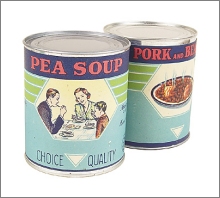
No one can deny that they're convenient, economical and handy to have on hand for a last-minute dinner, but are canned foods really safe, or ideal?
Well, many health advocates say that fresh foods are best, followed by frozen and bringing up the rear are canned goods. Why? Largely because of the heat involved in the processing, and the potential toxins in the cans themselves.
What Does High Heat do to Canned Foods?
When a food is packed into a can, it is then heated to an extreme temperature to kill all known microorganisms. There is some debate as to what extent this form of pasteurization degrades nutrients and destroys enzymes in the food, but it is known to destroy at least some.
According to the U.S. Food and Drug Administration (FDA), "The heating process during canning destroys from one-third to one-half of vitamins A and C, riboflavin, and thiamin. For every year the food is stored, canned food loses an additional 5 to 20% of these vitamins. However, the amounts of other vitamins are only slightly lower in canned food than in fresh food."
The argument for canned food proponents is that canned facilities are usually just a few miles from the point of harvest, meaning foods are canned quite quickly after being picked. Fresh foods, meanwhile, may lose nutrients as they sit in shipping warehouses and during transportation.
"Most produce will begin to lose some of its nutrients when harvested. When produce is handled properly and canned quickly after harvest, it can be more nutritious than fresh produce sold in stores," says the FDA. "When refrigerated, fresh produce will lose half or more of some of its vitamins within 1 to 2 weeks. If it's not kept chilled or preserved, nearly half of the vitamins may be lost within a few days of harvesting. For optimum nutrition, it is generally recommended that a person eat a variety of foods."
|
Like canned foods, soda cans also typically contain BPA in their lining. |
The Known Downside to Canned Foods
Assuming that many nutrient levels in canned foods are similar to fresh ones, why might you STILL want to opt for fresh or frozen over canned? Because of Bisphenol A (BPA).
BPA is a chemical used in countless plastic food and beverage containers, including plastic bottles and also the linings of most tin cans and soda cans. Not only has BPA been linked to fertility and reproductive problems and cancer, but recently it was also linked to an increased risk of heart disease, diabetes and liver disease.
Companies began using BPA in metal can linings in the 1950s and 1960s, and now there is widespread concern that chronic exposure to low doses of the chemical is causing serious health problems.
The FDA estimates that 17 percent of the U.S. diet is composed of canned foods, yet there are currently no government safety standards limiting the amount of BPA in canned food. However, a study by the Environmental Working Group (EWG) found some concerning findings.
| Keep Your Healthy Fruits and Veggies Fresh Longer! Once you invest in fresh produce for the health of your family, protect your investment using the MiniMate Refrigerator Unit. The MiniMate deodorizes (replacing baking soda boxes in the fridge) and kills potentially dangerous food-borne bacteria. This extends the freshness and life of many foods 3 to 4 times longer! Plus, the MiniMate:
|

The group contracted a national analytic laboratory to test 97 cans of food purchased at three major chain supermarkets in the United States. Thirty brands of food were tested, including varieties such as soda, canned tuna, peaches, pineapples, green beans, corn, infant formula and tomato and chicken noodle soups. What did they find?
-
One in 10 cans of food tested -- and one in three cans of infant formula -- contained enough BPA in a single serving to expose a woman or infant to BPA levels more than 200 times the government's traditional safe level of exposure for industrial chemicals.
-
Among the worst foods tested -- chicken soup, infant formula and ravioli -- just one to three servings of the food contained levels of BPA that caused serious adverse effects in animal tests.
-
The bulk of BPA exposure definitely comes from food," says Jovana Ruzicic, a spokesperson for the Environmental Working Group.
As an aside, many canned goods also contain additives such as MSG, artificial flavors, preservatives, salt and artificial colors.
What are Your Options for Truly Safe Food?
If you choose to limit canned foods in your diet either because of nutrient concerns or the potential of toxic BPA, there are many other options. The top tips include:
-
Choose fresh produce that's locally grown. This way the produce is just-picked and the nutrients are still at their peak. To keep your produce fresher, longer, simply put a MiniMate Refrigerator Unit in your fridge (it keeps food fresh for three to four times longer than normal!).
-
Choose glass instead of cans. Many popular canned foods, such as soup, beans, soda and more, are available in glass jars or bottles.
-
Choose frozen veggies instead of canned varieties. They're just as convenient, without the plastic tin-can linings.
-
If you do buy canned foods, try to buy organic varieties and always read labels. Watch out for excess amounts of salt, sugar, corn syrup or any artificial ingredients and preservatives.
Recommended Reading
Warning: Diabetes, Liver, and Heart Disease Linked to Everyday Plastics What's Your Exposure Level?!
12 Dangerous Food Additives: The Dirty Dozen Food Additives You Really Need to be Aware Of
Sources
Environmental Working Group March 5, 2007
Subscribe to:
Posts (Atom)